How Anti-Fraud AI Protects Your Business?
Learn how Anti-Fraud AI protects your business by detecting suspicious activity, reducing risks, and strengthening security measures.

Every day, many businesses lose money to fraud, scams, and fake transactions, not because they don’t care about security, but because old fraud detection methods are too slow and easy to bypass.
Companies are now seeing the need for solutions that are smarter, faster, and able to learn from new fraud patterns. This is why Anti-Fraud AI is becoming a top choice, not only in finance and banking but also in retail, e-commerce, travel, insurance, and even healthcare.
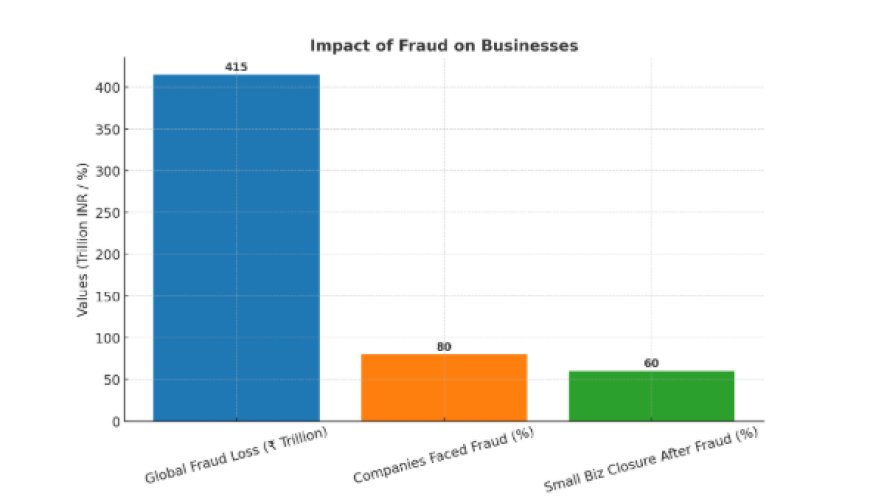
In fact, studies show that businesses lose over ₹415 trillion globally to fraud each year, and more than 80% of companies have faced at least one fraud attempt in the past year. Even more alarming, 60% of small businesses shut down within six months of a major fraud incident.
PayPal, one of the world’s largest digital payment platforms, processes billions of transactions each year. With such high volumes, fraudsters often try to exploit weak points. Earlier, PayPal relied heavily on manual checks and rule-based systems, which slowed down fraud detection and sometimes allowed fake transactions to slip through.
To solve this, PayPal implemented Anti-Fraud AI. The system analyzes transactions in real time, studying patterns, customer behavior, and location data. If any suspicious activity is detected, like an unusual login location or rapid high-value purchases, the AI flags it immediately and blocks the transaction.
As a result, PayPal reduced fraudulent transactions by over 50%, while also cutting down on false alerts. Customers now enjoy a smoother payment experience with stronger security, helping PayPal protect its reputation and keep customer trust intact.
What Is Anti-Fraud AI and How Does It Work?
Fraud today is not limited to fake emails or stolen credit cards, it has become far more complex. Businesses now face threats like account takeovers, synthetic identities, and fraudulent online payments. Traditional systems, which mostly depend on fixed rules, often fail to spot these new and sophisticated advanced tricks.
This is where Anti-Fraud AI steps in. In simple words, Anti-Fraud AI is the use of artificial intelligence to detect and prevent fraud in real time. Instead of following rigid rules, it learns from large sets of data, understands patterns of normal behavior, and immediately flags anything unusual.
Here’s how it usually works in practice:
-
Analyzing Data at Speed: AI scans thousands or even millions of transactions within seconds.
-
Spotting Irregular Behavior: If a customer usually makes small local purchases but suddenly spends a large amount overseas, AI detects the change instantly.
-
Stopping Fraud in Real Time: The system can block suspicious transactions or alert security teams before the damage is done.
-
Learning Over Time: With every fraud attempt, successful or not, AI becomes smarter, improving its ability to protect against future risks.
The Key Benefits of Using Anti-Fraud AI
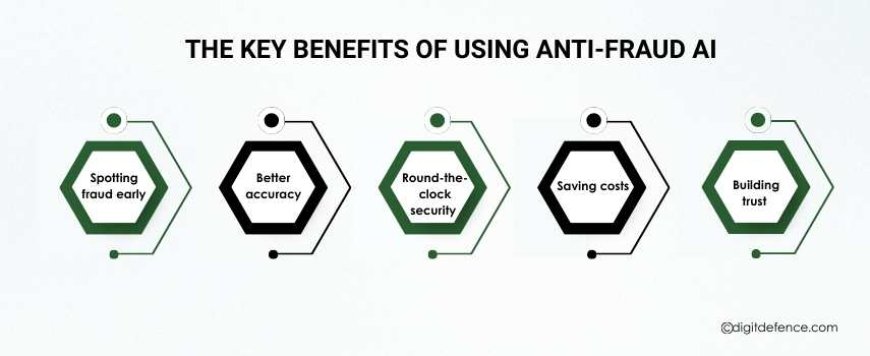 For any business, fraud is not just about losing money, it also puts reputation and customer trust at risk. This is where Anti-Fraud AI makes a real difference. Instead of reacting after fraud happens, it works in real time, scanning transactions and spotting unusual behavior that people might easily overlook.
Some clear benefits include:
-
Spotting fraud early – AI quickly picks up unusual activity and stops it before it turns into a major problem.
-
Better accuracy – By learning from huge amounts of data, AI reduces mistakes and avoids blocking genuine customer actions.
-
Round-the-clock security – Fraud doesn’t wait for business hours, and neither does AI. It keeps watch all the time.
-
Saving costs – Preventing fraud saves money that would otherwise be lost to scams, legal cases, or customer claims.
-
Building trust – Customers feel safer knowing their data and transactions are being protected.
How Fraud Impacts Business Growth and Reputation
Fraud is not just about financial loss, it directly slows down growth and damages how customers see your business.
-
Financial Damage
Fraud drains money that could have been invested in expansion, hiring, or innovation. For example, chargeback fraud in e-commerce forces companies to refund payments while losing the product, causing double losses.
-
Customer Trust Loss
When customers feel their data or money is unsafe, they stop engaging with the brand. A single fraud incident can drive loyal customers toward competitors.
-
Reputation Damage
Negative news spreads fast. A brand known for weak security risks can cause long-term reputational harm, which is harder to repair than financial loss.
-
Operational Slowdown
Companies spend time, money, and resources handling fraud investigations and compliance issues instead of focusing on growth.
How Anti-Fraud AI Protects Your Business?
Anti-Fraud AI protects your business by using advanced artificial intelligence tools to detect, stop, and prevent fraud in real time. Unlike traditional fraud detection methods that rely on static rules or delayed manual reviews, AI systems analyze large volumes of data instantly and adapt to new threats.
Here’s how Anti-Fraud AI keeps businesses safe:
-
Detects Unusual Behavior – It monitors customer actions, login attempts, or payment activities. If something looks suspicious, like a sudden change in location or an unusually high transaction, it raises an alert immediately.
-
Stops Fraud in Real Time – Anti-Fraud AI works 24/7, scanning thousands of activities per second. This allows it to block fraudulent transactions before they are completed, saving your business from financial loss.
-
Learns and Adapts – Fraud tactics change quickly. Unlike manual checks, Anti-Fraud AI learns from new fraud patterns and improves accuracy over time. This means your security only gets stronger.
-
Protects Customer Trust – By keeping customer data and payments safe, businesses earn loyalty and confidence, which is often harder to rebuild after a breach.
-
Supports Compliance – Many industries require strict security standards. Anti-Fraud AI helps businesses stay compliant with data protection and financial regulations.
Anti-Fraud AI vs. Manual Fraud Detection
|
Factor |
Manual Fraud Detection |
Anti-Fraud AI |
|
Speed |
Slow, reactive fraud is often detected after the loss occurs |
Instant, real-time detection before damage spreads |
|
Accuracy |
Prone to errors and false alerts |
High accuracy, fewer false positives through machine learning |
|
Scalability |
Limited by manpower and workload |
Scales effortlessly with growing data and transactions |
|
Cost |
High staffing, training, and oversight expenses |
Lower long-term cost; prevents losses, reduces staffing needs |
|
Adaptability |
Struggles to track evolving fraud tactics |
Learns from new fraud attempts and adapts automatically |
The Future of Fraud Prevention with AI
Fraud is not just an issue of the present, it’s an ever-changing challenge. As digital payments, e-commerce, and online banking grow, fraudsters are using more sophisticated techniques to exploit businesses. This is where Anti-Fraud AI is shaping the future of fraud prevention.
1. Real-Time Predictive Analysis
Unlike traditional systems that react after fraud happens, AI uses predictive analytics to stop fraud before it occurs. By analyzing user behavior, spending patterns, and anomalies in real time, AI can forecast potential fraud attempts and block them instantly.
2. Advanced Machine Learning Models
AI systems learn from millions of past transactions, continuously updating themselves. As fraudsters invent new tricks, like deepfake identities or synthetic accounts, AI adapts, making it harder for criminals to stay ahead.
3. Integration with Biometric Security
Future fraud prevention won’t just rely on passwords and PINs. AI-driven biometrics such as facial recognition, voice analysis, and behavioral biometrics (like typing speed or mobile gestures) will add extra layers of security for businesses and customers.
4. Collaboration Across Industries
AI can link fraud data across industries, banking, e-commerce, insurance, and retail, creating a shared intelligence network. This collective approach ensures fraud detected in one sector can be prevented in another, closing gaps that fraudsters often exploit.
5. Cost Efficiency and Customer Trust
By reducing false positives and preventing large-scale fraud losses, AI saves businesses huge costs in the long run. More importantly, customers feel safe when their transactions are smooth and secure, strengthening trust and loyalty.
Fraud is a growing risk for every business, regardless of its size. It can drain money, harm reputation, and reduce customer trust. But with Anti-Fraud AI, companies can stay one step ahead of fraudsters. AI enables faster, smarter, and more accurate fraud detection, providing your business with the protection it needs to grow safely.
Now is the right time to act before fraud becomes a problem for your business.
Reach out to our experts at [email protected] and learn how Anti-Fraud AI can keep your business secure and trusted.