
Stop Falling for Spoofing - Here’s What to Do
Understand what spoofing is, how it tricks users, and learn simple, effective ways to detect, prevent, and stay protected from spoofing attacks.
Ever got an email from your “bank” asking you to verify your account details?
Or a call from “IT support” saying your system’s at risk?
Maybe even a text claiming you’ve won a prize - but need to click a link to claim it?
If any of these sound familiar, you’ve probably encountered spoofing - one of the most deceptive tricks in modern cybercrime.
Spoofing isn’t new, but it’s becoming smarter, faster, and more personal.
And the worst part? Most people don’t realize they’ve been spoofed until it’s too late.
The Silent Impersonator: What Spoofing Really Means
Let’s start simple.
Spoofing means pretending to be someone else online, over the phone, or even through fake websites to trick you into revealing confidential information or taking harmful actions.
It’s digital impersonation.
But unlike a bad movie disguise, spoofing is nearly impossible to notice at first glance.
Cybercriminals use clever tricks to make their fake messages, websites, or calls look exactly like the real thing.
Their goal is simple: get you to trust them just long enough to slip up.
The Different Faces of Spoofing
Spoofing comes in many forms -each one targeting a different weak spot.
-
Email Spoofing
Attackers forge sender addresses to make emails look like they’re from someone you know — your boss, your bank, or a familiar brand.
Example: A fake invoice from “[email protected]” (with a hidden extra letter or domain tweak).
-
Caller ID Spoofing
Cybercriminals manipulate phone numbers to make calls appear from trusted sources - police, banks, or even your own company’s number.
-
Website Spoofing
Fake websites mimic real ones to collect passwords or credit card details.
These pages often have small spelling errors in URLs - invisible when you’re in a hurry.
-
IP and DNS Spoofing
More technically, these attacks trick systems into trusting false IP addresses or DNS data, allowing hackers to reroute, intercept, or steal sensitive information.
-
Social Media Spoofing
Fraudsters clone public profiles of executives or brands to trick employees or followers into sharing private information.
In short, spoofing can reach you anywhere - your inbox, your phone, or even your favorite app.
Why Spoofing Works So Well
The genius of spoofing isn’t in the technology - it’s in the psychology.
Spoofing thrives on human trust and urgency.
It preys on your instinct to respond quickly - especially when the message sounds important or threatening.
Think about it:
You get an email that says, “Your account will be suspended in 24 hours unless you verify now.”
Before your logic kicks in, your fear does.
You click. You respond. You share.
That’s how spoofing wins - not by hacking computers, but by hacking emotions.
The Real-World Impact of Spoofing
Spoofing isn’t just a digital nuisance - it’s a billion-dollar crime.
-
According to the FBI’s Internet Crime Report (2024), spoofing-related scams caused over ₹504 billion in losses worldwide.
-
83% of companies reported at least one spoofing or phishing attempt last year.
-
On average, businesses lose ₹1.14 crore per successful attack.
And here’s the scary part - most attacks go unreported.
In one case, a small logistics company in India lost ₹42 lakh in minutes after an employee received a spoofed email from what appeared to be their CEO’s ID.
It looked urgent, professional, and entirely believable.
By the time IT verified the message, the funds were gone - transferred to an offshore account.
One small lapse. One fake message.
That’s all it takes.
A Human Story: The Cost of One Click
Let’s make it personal.
Imagine this:
You’re working late. Your inbox dings with a message from your “HR team.”
“Hey, we’re updating our salary portal - please confirm your bank details before midnight.”
It’s been a long day. You don’t think twice.
You click, enter your details, and go home.
The next morning, your account is empty.
That’s how spoofing works - it catches you when you’re tired, distracted, or too trusting.
It doesn’t just steal money - It steals confidence and the sense of security.
How to Spot a Spoof Before It Strikes
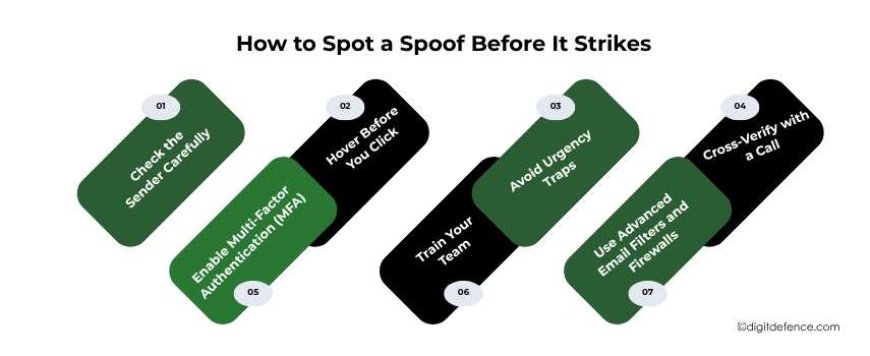
Now for the good news: you can stop most spoofing attempts with a bit of awareness and caution.
Here’s how to spot the warning signs:
-
Check the Sender Carefully
Look closely at the email domain - small spelling errors (like gmai1.com instead of gmail.com) are red flags.
-
Hover Before You Click
Always hover over links to see where they lead. If the URL looks suspicious or doesn’t match the brand, don’t click.
-
Avoid Urgency Traps
“Act now,” “Immediate action required,” “Verify today” - these are emotional bait lines. Legitimate institutions rarely rush you.
-
Cross-Verify with a Call
If you receive an urgent message from a boss, client, or service provider - call them directly before acting.
-
Enable Multi-Factor Authentication (MFA)
Even if someone steals your password, Multi-factor Authentication ensures they can’t access your account without a second code.
-
Train Your Team
Businesses should run spoofing simulations and training sessions regularly. The best firewall is an alert employee.
-
Use Advanced Email Filters and Firewalls
Security tools with built-in spoofing detection (like SPF, DKIM, and DMARC) can block many fake emails automatically.
How Businesses Can Fight Back
Spoofing isn’t just a personal risk- it’s a corporate nightmare.
One employee’s mistake can compromise entire systems.
Here’s what every organization should be doing:
-
Implement Email Authentication Protocols
Use SPF, DKIM, and DMARC to verify legitimate senders and block impersonators.
-
Deploy Endpoint and Network Monitoring
Real-time monitoring tools detect suspicious activity before it becomes a crisis.
-
Encrypt Communication Channels
Especially for sensitive transactions or data sharing.
-
Create a Response Plan
If a spoofing attempt succeeds, know who to contact, what to isolate, and how to minimize damage.
-
Promote Cyber Awareness Culture
Make cybersecurity everyone’s responsibility - not just the IT department’s
Why You Can’t Ignore Spoofing Any Longer
Spoofing isn’t going away.
In fact, with the rise of AI voice cloning and deepfake emails, it’s changing faster than ever.
What used to be easy to detect - poor grammar, weird fonts, suspicious links is now shockingly convincing.
Attackers can now mimic your voice, your writing style, even your email tone.
So if you’re still thinking, “It won’t happen to me,”
Remember: every person who got spoofed thought the same.
Prevention Pays. Delay Costs.
Cyber attacks don’t wait - so why should you?
That’s why taking action now matters more than ever.
Spoofing thrives in silence. Every untrained employee, every unchecked email, every outdated filter is an open door.
So don’t just react - prepare.
-
Audit your systems.
-
Educate your team.
-
Partner with experts who live and breathe cybersecurity.
Because the best way to fight deception is with detection.
The Future of Digital Trust
As technology grows, so does manipulation.
But here’s the good news - awareness is catching up.
Businesses that invest in cyber awareness and strong verification systems are 80% less likely to suffer spoofing losses.
And companies that combine human training with tech solutions recover faster and build stronger customer trust.
That’s the real win - not just safety, but reputation.
Don’t Just Be Secure - Be Aware
Cybersecurity isn’t just about firewalls and software.
It’s about people - you, your team, your customers - making small, smart decisions every day.
So before you click, confirm.
Before you share, verify.
And before you trust, think twice.
Because once you fall for spoofing, it’s not just your inbox that’s at risk - It’s your brand, your business, and your reputation.
Ready to Stay Ahead of Cyber Deception?
Don’t wait for the next fake message to teach you a costly lesson.
Learn how to detect, respond, and prevent spoofing before it strikes.
Start your cybersecurity journey with DigitDefence today.
We help individuals and businesses build digital confidence - one smart decision at a time.