
How Can Automation Security Prevent Data Leaks?
Find out how Automation Security protects sensitive data, prevents leaks, provides real-time monitoring, automated responses, and error reduction.

Have you ever wondered how quickly a data leak can happen?
Or how one small mistake, like clicking the wrong link or sharing the wrong file, can expose an entire company?
Today, businesses handle huge amounts of data every single second. Customer details, financial records, confidential documents, passwords, everything today moves very fast because most of our work, data, and communication now happens online. And as the volume of data grows, so do cyberthreats. A single leak can cost a company money, trust, and reputation.
This is where Automation Security steps in. It protects your data automatically, without depending only on manual work, and reduces human errors- the biggest reason data leaks happen.
What Is Automation Security?
Automation Security means using technology, tools, and systems that automatically detect threats, block risks, and protect sensitive data without waiting for human action.
Instead of manual monitoring and human decision-making, security tasks are handled by:
-
AI tools
-
Automated alert systems
-
Machine learning models
-
Real-time monitoring
-
Auto-response systems
The goal is simple: protect data faster than humans can react.
Because cyber criminals work 24/7, companies also need security that works 24/7 without breaks, tiredness, or delays.
Why Data Leaks Are a Big Problem Today
Data leaks are no longer rare. They happen every day.
Here are a few reasons:
1. Human mistakes
More than 80% of data leaks start because of a simple human error, like:
-
Sending data to the wrong person
-
Weak passwords
-
Falling for phishing emails
-
Misconfiguring a system
2. Too much data
Companies generate and store huge amounts of data.
More data = more opportunity for attackers.
3. Slow manual security
Manual monitoring takes time. Attackers do not.
4. Smarter cybercriminals
Hackers now use AI tools to break systems faster than before.
This is why businesses need faster, smarter, and automated protection.
How Automation Security Prevents Data Leaks
Automation Security protects businesses in several powerful ways.
Here are the most important benefits:
1. Real-Time Threat Detection
Without automated Data Security, teams may take hours to identify a threat. With automation, the system detects threats instantly.
For example:
-
If a strange login happens at midnight
-
If a user tries to download confidential files
-
If an unknown device accesses a system
The automated system raises an alert in seconds.
Why this matters:
Fast detection = less damage.
2. Automated Incident Response
Sometimes a cyber threats needs an immediate reaction.
Automated Data Security can take actions instantly, such as:
-
Blocking a suspicious user
-
Closing an infected file
-
Stopping data transfer
-
Locking an account
-
Isolating a device from the network
This prevents the leak before it happens.
3. Reducing Human Errors
Human errors cause most breaches.
Automated Data Security removes this risk by handling repetitive tasks, such as:
-
Password checks
-
Access control
-
System updates
-
Monitoring user activity
When systems manage these tasks automatically, mistakes drop sharply.
4. Strong Access Control
Data leaks often happen when the wrong person gains access to sensitive information.
Automated Data Security helps by:
-
Checking user permissions
-
Monitoring access levels
-
Blocking unusual access
-
Granting permissions only when needed
This ensures only the right people access the right data.
5. Continuous Monitoring 24/7
Humans cannot watch systems all day. But automated systems can.
Automated Data Security constantly checks:
-
Network activity
-
File movements
-
Login patterns
-
Data transfers
This constant monitoring keeps your organisation safe every second.
6. Automatic Patch and Update Management
Outdated software is one of the biggest targets for attackers.
Automated Data Security ensures all systems, applications, and servers are updated automatically.
This removes vulnerabilities before hackers find them.
7. Predictive Analysis with AI
Automated Data Security uses AI to predict risks before they occur.
It studies:
-
User behaviour
-
Past attacks
-
Patterns
-
System weaknesses
Then it alerts security teams even before an attack begins.
This turns security from reactive to proactive.
How a Major Retail Brand Prevented a Data Leak
Let’s take a real example from a global retail brand, Target.
Target faced a major cyberattack in 2013, where millions of customer credit cards were stolen. After that incident, they invested heavily in automated security tools.
Here is what automation did for them:
-
Detected unusual file movements
-
Sent real-time alerts to the security team
-
Automatically blocked suspicious accounts
-
Prevented further data theft
Later reports showed that automated Data Security reduced data breach attempts by more than 40% in the next few years.
This example shows how automation can change the entire security structure of a company.
Key Features of Automation Security
Here are the tools and features that make automated Data Security powerful:
-
AI-driven threat detection
-
Automated alerts and responses
-
Behaviour-based analysis
-
Access control automation
-
Cloud security automation
-
Endpoint security automation
-
Identity and permission management
-
Continuous compliance checks
Each tool plays a role in preventing leaks.
Benefits of Using Automation Security
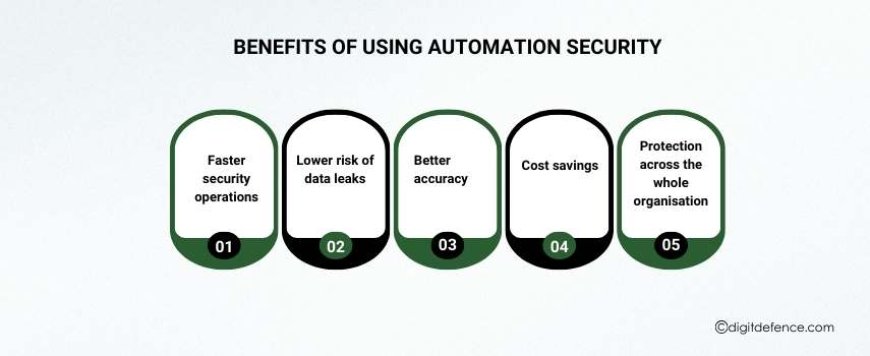
1. Faster security operations
No delays, no waiting, everything happens instantly.
2. Lower risk of data leaks
Automated systems catch issues humans miss.
3. Better accuracy
AI reduces false alerts and improves decision-making.
4. Cost savings
Preventing a data leak saves millions.
5. Protection across the whole organisation
From emails to files to networks, everything stays secure.
Why Automation Security Is Important for Every Business
Whether a company is large or small, digital data is valuable.
Here’s why Automation Security is necessary for all businesses:
-
Cyberattacks are rising every year
-
Attackers use advanced tools
-
Remote work increases risks
-
Manual monitoring is slow
-
Data is stored across multiple platforms
Automated Data Security keeps organisations safe, no matter where the data lives.
Future of Automation Security
In the future, Automated Data Security will grow even stronger with:
-
Smarter AI algorithms
-
More predictive security models
-
Fully automated response systems
-
Stronger identity verification
-
Better cloud security automation
Cybersecurity is moving toward “zero-touch security” systems that work with almost no human intervention.
Data leaks are increasing, and attackers are getting smarter. But businesses can stay ahead by adopting Automated Data Security, which protects data automatically, without depending on slow manual processes.
With features like real-time monitoring, auto-response, predictive analysis, and strong access control, Automated Data Security reduces human errors and stops threats before they cause damage.
Automation has become a must. Using Automation Security helps businesses stay safe and trusted.