
How Supply Chain Security Enables Predictive Analytics
Discover how supply chain security strengthens predictive analytics, helping businesses stay ahead with smarter, data-driven decisions.

Have you ever wondered how companies can predict delays, risks, or even customer demand before they happen? And what if the missing link in achieving this accuracy is Supply Chain Security?
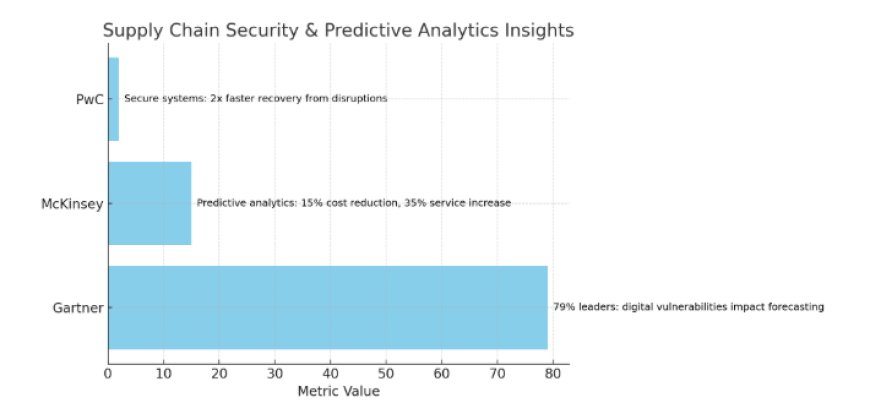
According to Gartner, 79% of supply chain leaders say digital vulnerabilities directly impact forecasting accuracy. A McKinsey study shows that predictive analytics can reduce supply chain costs by 15% and increase service levels by 35%. Meanwhile, PwC found that companies with secure and integrated data systems are twice as likely to recover quickly from disruptions.
IBM launched the Sterling Supply Chain Suite to help global companies manage complex supply chains. The suite integrates AI, blockchain, and predictive analytics, complemented by robust Supply Chain Security features. Its goal was to give businesses better visibility, protect sensitive trade data, and reduce risks in real-time operations.
Many companies struggled with fragmented supply chain data spread across multiple partners and systems. This lack of visibility made it difficult to detect risks such as supplier delays, cyberattacks, or fraudulent activities. Traditional systems relied on reactive responses, often leading to costly disruptions and customer dissatisfaction
IBM’s Sterling Suite secured data exchange across partners using blockchain and advanced security protocols. By embedding predictive analytics, the system forecasted supplier risks, shipment delays, and demand fluctuations before they happened. This proactive approach reduced downtime, protected sensitive data, and allowed businesses to shift from reacting to problems to making smarter, predictive decisions.
What is Supply Chain Security and Why It Matters
Supply Chain Security refers to the strategies, processes, and technologies implemented to safeguard the flow of goods, data, and services throughout the supply chain. It encompasses physical security, cyber protection, and regulatory compliance, ensuring that products and information reach their destinations safely and efficiently. In an era where supply chains are increasingly interconnected, even minor disruptions can lead to significant financial and reputational losses.
The importance of supply chain security extends beyond protecting assets; it directly impacts a company’s operational efficiency, resilience, and competitiveness.
Key Benefits of Integrating Security with Predictive Analytics
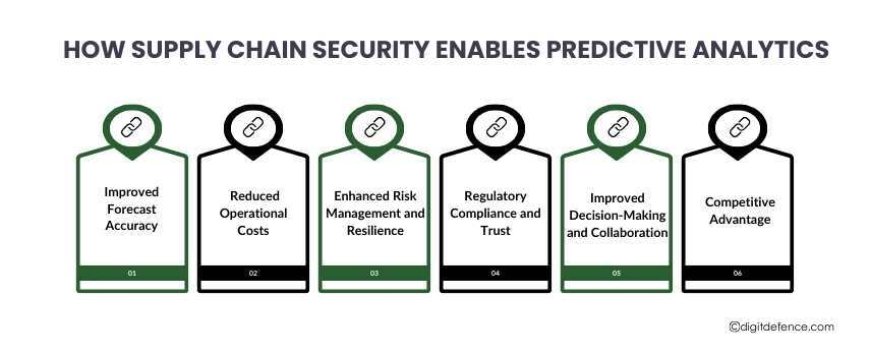
Integrating supply chain security with predictive analytics creates a synergy that enables organizations to make smarter, faster, and more reliable decisions.
1. Improved Forecast Accuracy
Secure data ensures that predictive analytics models are fed with precise, trustworthy information. This improves the accuracy of demand forecasts, inventory planning, and production scheduling.
2. Reduced Operational Costs
Predictive analytics powered by secure supply chain data allows organizations to identify inefficiencies and optimize resource allocation. By anticipating potential disruptions, businesses can proactively address them, minimizing delays, reducing wastage, and lowering overall operational expenses.
3. Enhanced Risk Management and Resilience
Integrating Supply Chain Cybersecurity with predictive analytics equips businesses to detect vulnerabilities and potential threats early. From supplier failures to cyber-attacks, organizations can take preemptive action to mitigate risks before they escalate.
4. Regulatory Compliance and Trust
Supply Chain Cybersecurity ensures that all data handling complies with industry standards and regulations. This compliance not only reduces legal risks but also enhances trust among stakeholders, partners, and customers.
5. Improved Decision-Making and Collaboration
Secure data sharing facilitates better collaboration among supply chain partners. When stakeholders can trust the information they receive, predictive analytics insights can be acted upon swiftly.
6. Competitive Advantage
Organizations that effectively combine Supply Chain Cybersecurity with predictive analytics gain a competitive edge. They can respond faster to market changes, anticipate customer demands, and minimize disruptions.
How Supply Chain Security Strengthens Predictive Analytics
Supply Chain Security plays a pivotal role in enhancing the effectiveness of predictive analytics. Without secure, accurate, and reliable data, predictive models cannot deliver actionable insights.
1. Ensuring Data Integrity and Accuracy
Secure supply chains guarantee that the data collected from suppliers, logistics partners, and internal systems remains unaltered and accurate. Data integrity is critical because predictive analytics relies on historical and real-time data to generate forecasts.
2. Real-Time Data Availability
Modern Supply Chains Cybersecurity solutions, such as IoT-enabled sensors, blockchain technology, and secure cloud platforms, provide real-time visibility into operations. This ensures that predictive analytics models are continuously fed with up-to-date, validated information.
3. Risk Identification and Proactive Mitigation
Predictive analytics can identify potential risks in supply chains, from supplier failures to cyber threats. When Supply Chain Cybersecurity protocols are in place, these risk signals are protected and can be acted upon swiftly. A secure system enables businesses to proactively mitigate issues before they escalate, such as rerouting shipments, adjusting production schedules, or alerting stakeholders about potential disruptions.
4. Enhanced Collaboration and Compliance
Secure supply chains allow organizations to share data confidently with suppliers, logistics providers, and other stakeholders. This collaborative approach ensures that everyone in the supply chain works with accurate and secure information, improving the reliability of predictive models.
5. Building Trust for Analytics-Driven Decisions
A secure supply chain fosters trust in the predictive analytics process. Decision-makers can rely on the insights generated without fearing data breaches, tampering, or inaccuracies. This trust is crucial for implementing predictive recommendations effectively, whether it involves inventory adjustments, production planning, or risk mitigation strategies.
Challenges in Implementing Supply Chain Security and Predictive Analytics
While the integration of Supply Chain Cybersecurity and predictive analytics offers immense benefits, businesses often face significant hurdles during implementation.
1. Data Silos and Fragmentation
One of the most common barriers is fragmented data spread across different systems, suppliers, and regions. When supply chain data is not centralized or standardized, predictive analytics models struggle to deliver accurate insights. Moreover, without strong Supply Chain Cybersecurity, this scattered data is at risk of breaches and manipulation.
2. High Implementation Costs
Establishing secure data systems, integrating advanced analytics platforms, and training employees require substantial financial investment. Many mid-sized businesses hesitate to adopt such solutions due to the initial costs, even though the long-term benefits outweigh the expenses.
3. Cybersecurity Threats
Supply chains are frequent targets for cyber-attacks, including ransomware, phishing, and insider threats. Predictive analytics tools depend on real-time, trustworthy data. If attackers compromise the data pipeline, businesses risk making flawed predictions and decisions. Ensuring robust Supply Chain Cybersecurity is essential but often challenging due to constantly evolving cyber risks.
How Businesses Can Get Started with Secure Predictive Analytics
For many organizations, the thought of integrating Supply Chain Cybersecurity with predictive analytics feels overwhelming. However, by taking a structured approach, businesses can begin small and gradually scale.
1. Assess Current Supply Chain Security Measures
Before diving into predictive analytics, businesses must evaluate their existing security framework. This includes reviewing access controls, data encryption, third-party supplier risks, and compliance with industry standards. A strong security foundation ensures that predictive models are built on reliable, tamper-proof data.
2. Consolidate and Cleanse Data
Predictive analytics thrives on quality data. Organizations should centralize fragmented supply chain information from ERP, CRM, logistics, and partner systems. Data cleansing, removing duplicates, errors, or outdated entries, is equally important to avoid inaccurate predictions.
3. Invest in the Right Tools and Technologies
Select platforms that combine predictive analytics with built-in Supply Chain Cybersecurity features, such as real-time monitoring, anomaly detection, and secure APIs. Cloud-based solutions with AI and machine learning capabilities often provide scalability and faster implementation.
4. Pilot Programs Before Full-Scale Deployment
Rather than implementing predictive analytics across the entire supply chain at once, businesses should start with pilot projects. For instance, predictive demand forecasting or logistics optimization in a specific region can serve as a test case. This minimizes risks and allows teams to refine processes before scaling.
Future Trends in Supply Chain Security and Predictive Analytics
Emerging technologies and changing practices are reshaping how organizations safeguard their operations while gaining foresight into risks and opportunities. Here are the key trends to watch:
1. AI-Driven Predictive Security Models
Artificial Intelligence (AI) and Machine Learning (ML) are taking predictive analytics to the next level. Future systems will not just forecast demand or disruptions but also predict potential cyberattacks on supply chain data pipelines. By integrating AI with Supply Chain Cybersecurity, businesses can identify anomalies and threats before they escalate.
2. Blockchain for Data Integrity
Blockchain technology is gaining momentum as a solution for ensuring transparency and immutability in supply chains. By securely recording every transaction, blockchain enables predictive analytics tools to work on verified, tamper-proof data. This dual role strengthens trust and enhances supply chain resilience.
3. IoT and Real-Time Risk Monitoring
The Internet of Things (IoT) will expand visibility across logistics and manufacturing. Smart sensors will feed real-time data into predictive models, helping businesses anticipate delays, shortages, or risks. However, this also means IoT devices must be secured under a strong Supply Chain Cybersecurity framework to prevent exploitation.
4. Digital Twins for Secure Scenario Planning
Digital twin technology, virtual replicas of physical supply chains, will become more common. Businesses can run predictive “what-if” scenarios on digital twins to identify vulnerabilities and optimize responses. When combined with cybersecurity protocols, this approach ensures that simulations remain reliable and secure.
5. Zero Trust Security in Supply Chains
Zero Trust is evolving from IT networks into supply chains. Instead of assuming trust within partner networks, Zero Trust models continuously verify identities and access points for data. This ensures that predictive analytics insights are not compromised by unauthorized access.
Integrating supply chain security with predictive analytics is no longer optional but a necessity in today's dynamic business environment. By ensuring data integrity, enabling real-time insights, and proactively managing risks, businesses can enhance their operational efficiency and resilience. As technology continues to change, the synergy between security and analytics will be the cornerstone of successful supply chain management.
Ready to secure your supply chain with predictive analytics?
Contact us today at [email protected] and discover how our experts can help you build a smarter, safer, and future-ready supply chain.