The Real Cost of Ignoring ICS Security Services
Protect your industrial systems with ICS security services, including risk assessment, network monitoring, access control, SCADA, PLC, DCS, and incident response.
Industrial systems quietly run the backbone of modern life. Electricity, water supply, manufacturing, oil and gas, transportation, and even food production depend on Industrial Control Systems (ICS). These systems control machines, monitor processes, and ensure operations run safely and smoothly.
Yet, many businesses still treat industrial cybersecurity as a low priority. The focus often remains on IT security, emails, websites, and office networks, while operational systems are left exposed. This gap creates a serious risk.
Ignoring ICS Security Services may not show immediate damage, but the long-term impact can be severe. Financial losses, safety incidents, legal trouble, and reputation damage often follow. The real cost is far greater than most organizations expect.
Understanding Industrial Control Systems and Their Role
Industrial Control Systems are used to manage physical operations. They include technologies such as SCADA systems, Programmable Logic Controllers (PLCs), and Distributed Control Systems (DCS). These tools control real-world actions like pressure, temperature, speed, and chemical flow.
In the past, ICS environments were isolated. They ran on closed networks and were rarely connected to the outside world. Today, this has changed. Businesses connect industrial systems to IT networks, cloud platforms, and remote access tools to improve efficiency, visibility, and automation.
Common Types of Industrial Control Systems
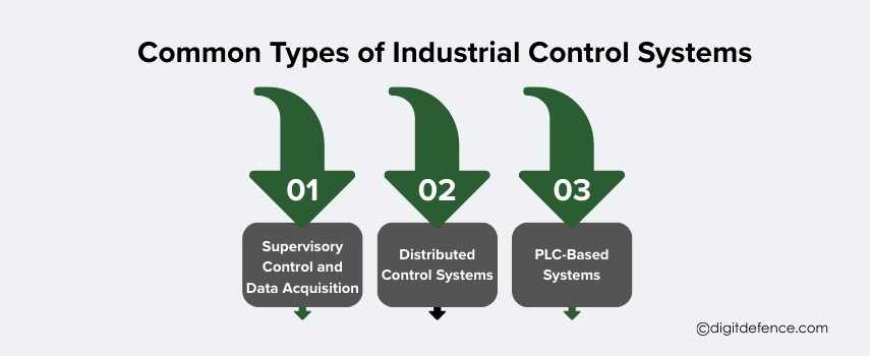 SCADA (Supervisory Control and Data Acquisition)
SCADA systems monitor and control operations across large geographic areas. They are widely used in power grids, water utilities, pipelines, and transportation networks.
DCS (Distributed Control Systems)
DCS systems manage localized industrial processes such as chemical plants and refineries. Control functions are distributed across multiple controllers for reliability and speed.
PLC-Based Systems
Programmable Logic Controllers handle specific automation tasks like motor control, valve operations, and safety monitoring in factories and plants.
Each system plays a critical role, and each introduces unique security risks.
Why Industrial Systems Are Targeted by Cyber Attackers
Cyber attackers aim for systems that create maximum impact.
When an office system is attacked, productivity slows.
When an industrial system is attacked, operations stop.
Attackers know that:
-
Downtime costs industries heavily
-
Safety failures create pressure
-
Critical services cannot afford long outages
Without ICS Security Services, attackers can move quietly inside industrial networks, often staying hidden until major damage occurs.
Step-by-Step Approach to ICS Security
Step 1: Asset Inventory
Create a complete list of all ICS components, software, and communication paths. Knowing what exists helps identify vulnerabilities and plan security measures effectively.
Step 2: Risk Prioritization
Assess which systems are most critical to safety and operations. Focus security efforts on the components that could cause the most damage if compromised.
Step 3: Network Segmentation
Separate industrial networks from IT and external connections. This limits attackers’ ability to move between systems and reduces overall risk.
Step 4: Access Control
Restrict access to ICS based on roles and responsibilities. Only authorized personnel should interact with critical systems to prevent misuse or accidental errors.
Step 5: Secure Remote Access
Ensure all remote connections are encrypted, monitored, and time-limited. This protects ICS from unauthorized access while allowing safe remote operations.
Step 6: Monitoring and Detection
Continuously track system activity for unusual behavior. Early detection of anomalies helps prevent attacks or operational disruptions.
Main ICS Security Challenges Every Business Must Know
1. Legacy Systems and Outdated Technology
Many industrial systems run on old hardware and software that were never designed with cybersecurity in mind.
-
Lack of built-in encryption or authentication
-
Difficulty in applying software patches
-
Limited logging and monitoring capabilities
These legacy systems make ICS networks highly vulnerable to attacks and malware.
2. Convergence of IT and OT Networks
Modern businesses connect Operational Technology (OT) with IT systems for better efficiency and monitoring.
-
IT networks are frequently exposed to the internet
-
OT systems now inherit IT vulnerabilities
-
A breach in IT can spread to critical operational systems
This integration increases the attack surface and makes security management more complex.
3. Limited Visibility and Monitoring
Industrial networks often lack continuous monitoring tools.
-
Many ICS networks do not generate logs like IT systems
-
Suspicious activity can go unnoticed for weeks or months
-
Detection systems may not understand ICS-specific protocols
This makes identifying threats before they cause damage extremely difficult.
4. Insider Threats
Employees, contractors, or partners with authorized access can unintentionally or intentionally compromise ICS security.
-
Misconfigurations and human error
-
Malicious insiders exploiting weak access controls
-
Lack of awareness about cybersecurity best practices
Insider threats are particularly dangerous because attackers already have legitimate access to critical systems.
5. Remote Access Vulnerabilities
Remote operations and monitoring are increasingly common.
-
Weak or shared passwords
-
Unsecured VPNs or remote desktop connections
-
Lack of multi-factor authentication
Remote access, if not properly secured, provides attackers an easy entry point into industrial networks.
6. Lack of Security Standards Across Facilities
Many industrial operations span multiple sites and vendors.
-
Inconsistent security policies
-
Varying levels of staff training
-
Unstandardized equipment and protocols
Without uniform security standards, gaps appear that attackers can exploit.
Security Is an Operational Responsibility
Industrial systems support services that society depends on daily. Protecting them is not just an IT task, it is an operational duty.
Strong industrial security protects:
-
Production continuity
-
Human safety
-
Regulatory compliance
-
Brand reputation
Companies that make cybersecurity part of their everyday operations, not just something extra, are ready for the future. Ignoring ICS Security Services is a risk businesses cannot afford.
By investing in ICS Security Services, businesses can protect their operations, ensure safety, comply with rules, and build trust. Treating cybersecurity as part of daily operations is not optional anymore, it is necessary for a safe and successful future.