Bitcoin Scams Rise 45% in India: Steps to Secure Your Wallet
Protect your crypto from scams! Learn to spot fake wallets, phishing, and Ponzi schemes while keeping your Bitcoin and digital assets safe.
Everyone wants quick money in crypto, right? High returns, fast profits, sounds easy. But what if that “easy money” disappears overnight?
Bitcoin scams in India are up 45% this year. People are losing thousands, sometimes their full savings.
The question is: are you ready to protect yourself? Or will you be the next victim?
THE GOOD NEWS: there are clear steps to secure your wallet, spot scams, and keep your money safe. Let’s break it down.
The Rising Threat of Bitcoin Scams in India
Bitcoin Adaption and crypto are booming, but with growth comes risk. Scammers see India as a goldmine.
Ask yourself:
-
Are you checking platforms before investing?
-
Do you verify wallet addresses and transactions?
-
Are you cautious with links, messages, or calls about crypto?
Why scams are increasing:
-
Rapid adoption
-
Many new investors join without understanding wallets or blockchain.
-
Social media hype pushes impulsive decisions.
-
Fear of missing out (FOMO) in the cryptocurrency market leads to ignoring warning signs.
-
Fake platforms
-
Apps or exchanges appear professional but steal deposits.
-
Unverified trading platforms lure users with bonuses or “easy profits.”
-
Phishing attacks
-
Fake emails or messages impersonating exchanges or influencers.
-
Links lead to websites asking for login credentials or private keys.
-
Too-good-to-be-true promises
-
Instant high returns, giveaways, or VIP offers are traps.
-
Ponzi-like schemes convince users to send more money.
-
Social engineering tactics
-
Scammers create urgency: “Act now or miss this chance!”
-
Emotional appeals pressure victims to share sensitive information.
Impact:
-
Thousands of investors lose money every day.
-
Even experienced users can fall for sophisticated scams.
-
Awareness and caution are critical for protecting your assets.
Stay alert, double-check everything, and never rush. These small steps drastically reduce the risk of falling victim to Bitcoin scams.
A notable instance is the WazirX crypto hack in July 2024. Around US $230 million (≈ ₹2,000 crore) was stolen from a wallet. Withdrawals were paused, and after a partial recovery plan, users could get back up to 85% of their portfolio value. This shows that even major platforms can be vulnerable, making prevention the key strategy.
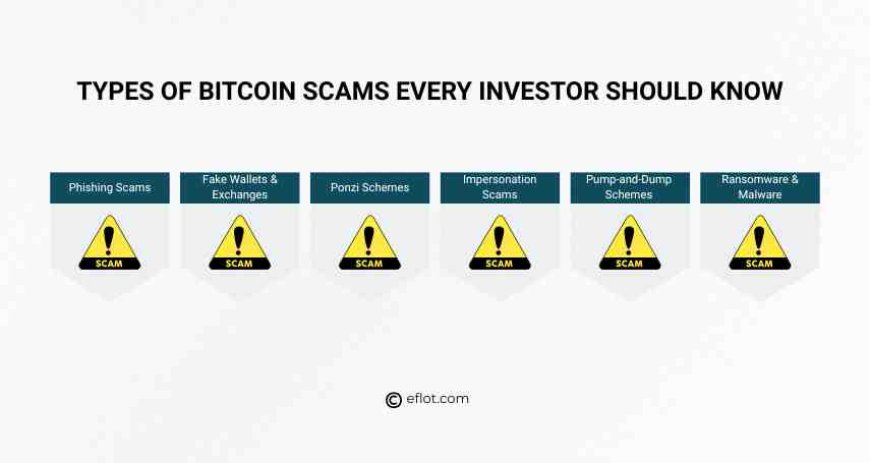
Types of Bitcoin Scams Every Investor Should Know
Knowing the scam types is your first shield. Common scams include:
-
Phishing Scams
Phishing Scams such as Fake emails, messages, or websites ask for passwords.
Always double-check links before clicking.
-
Fake Wallets & Exchanges
Platforms look real but steal deposits instantly.
Verify every exchange before depositing funds.
-
Ponzi Schemes
Promises of high returns that never materialize.
Old investors’ money pays new ones.
-
Impersonation Scams
Scammers pose as influencers or officials.
Always confirm identities on official channels.
-
Pump-and-Dump Schemes
Fake hype inflates coin prices temporarily.
Investors get left with losses.
-
Ransomware & Malware
Malicious software can access wallets or accounts.
Only download apps from trusted sources.
Pro tip: If it seems too good to be true, pause and verify. Small caution now can save huge losses later.
How to Identify a Fake Bitcoin Transaction?
Spot scams fast by asking:
-
Did I initiate this transaction?
-
Is the wallet address correct?
-
Is someone rushing me to act?
Signs of a Fake Transaction
-
Unknown wallet addresses – One wrong character can steal funds.
-
Suspicious links – Emails or social messages may be traps.
-
Promises of instant profits – Too-good-to-be-true offers are red flags.
-
Requests for private keys/passwords – Legit platforms never ask.
-
Urgency tactics – Fake countdowns or pressure messages.
-
Unexpected confirmations – Transactions you didn’t initiate.
-
Unverified platforms – Only use trusted exchanges/wallets.
Quick Safety Tips
-
Verify wallet addresses multiple times before sending funds.
-
Ignore unsolicited links or messages to avoid phishing attacks.
-
Use small test transactions before transferring large amounts.
-
Keep records of all transactions for tracking and reporting.
-
With the help of cyber security services, these steps make it easier to protect digital assets effectively.
Is It Possible to Recover Your Wallet After a Bitcoin Scam?
-
Recovery is very difficult once Bitcoin is sent.
-
Authorities can help, but tracing funds is slow and complex.
-
Limited insurance may be offered by some exchanges, but it’s not guaranteed.
-
Legal action is possible, yet it takes time with no certain outcome.
Key takeaway: Prevention matters most.
-
Always verify transactions.
-
Double-check wallet addresses.
-
Never share private keys.
Small, consistent habits greatly reduce the risk of losing funds.
Best Practices for Securing Digital Assets
|
Practice |
How it Helps |
|
Use Hardware Wallets |
Keeps coins offline and safe from hacks. |
|
Enable Two-Factor Authentication (2FA) |
Adds an extra layer of login security. |
|
Verify Exchanges |
Only trade on trusted, verified platforms. |
|
Update Software Regularly |
Keeps wallet apps and devices patched and secure. |
|
Never Share Private Keys |
Treat them like a bank PIN, never disclose. |
|
Stay Informed |
Follow crypto news, alerts, and trends to spot risks early. |
Why it matters:
-
Regular checks prevent most common hacks.
-
Verified platforms and updated apps reduce technical vulnerabilities.
-
Simple habits, done consistently, protect investments effectively.
-
Staying alert helps spot scams before losses happen.
Bitcoin and crypto offer big opportunities but come with serious risks. Even major platforms can be targeted, so protecting your assets is essential. Stay cautious, verify everything, and use secure practices to reduce the chance of loss.