
XDR vs Traditional Security: Which is Best for Business?
Compare XDR and traditional security to see which one fits your business needs best. Find out the pros and cons in simple terms.
When it comes to picking the right cybersecurity method, many businesspeople wonder:
How can I keep my data safe as online threats keep changing?
Is there a better way to spot and stop threats faster than the old security tools?
That’s where understanding the difference between XDR in cybersecurity and traditional security comes in. XDR gives a clearer view of what’s happening across all systems and helps react faster to threats, while older tools often miss hidden attacks or take longer to respond.
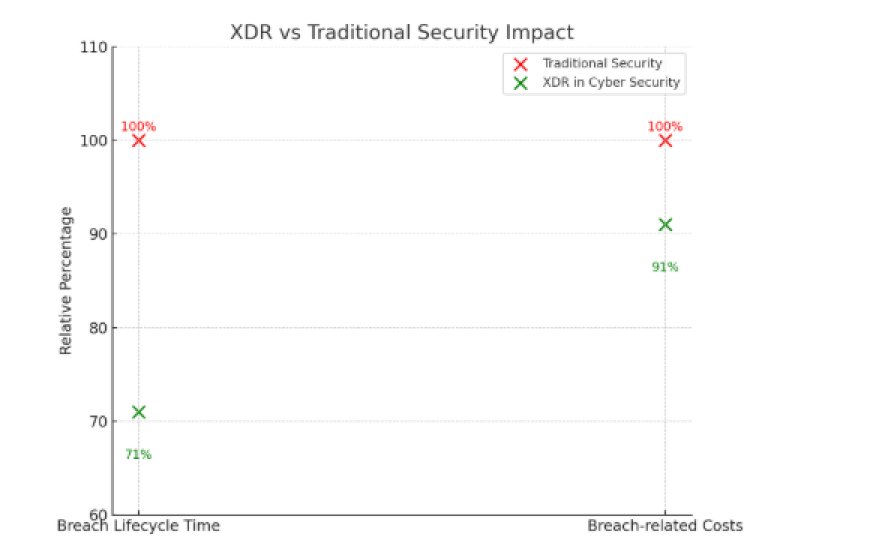
Companies that use XDR in cybersecurity are doing much better. They’ve been able to reduce the time it takes to find and stop a data breach by 29%. This helps avoid bigger problems and recover faster. Also, the cost of fixing cyberattacks has dropped by around 9% for businesses using XDR compared to those using old-style tools.
And when it comes to reacting quickly, XDR helps companies detect and stop cyber threats 54% faster. That means less risk and more peace of mind.
Weigel’s, established in 1931 with 68 retail locations, faced rising cybersecurity challenges. Their existing antivirus tools were no longer enough to stop advanced threats. By adopting XDR in cybersecurity, they achieved:
-
Real-time, continuous threat monitoring across network locations
-
Automated alerting and filtering aligned with company policies
-
24/7 security monitoring from dedicated cybersecurity experts
As a result, Weigel’s significantly reduced downtime risks from ransomware and gained confidence in its ability to respond swiftly to threats, demonstrating the real-world value of XDR.
Understanding Traditional Security and Its Limitations
Traditional security solutions, such as antivirus software, firewalls, and endpoint detection tools, have long formed the backbone of business defense strategies. These systems primarily focus on specific points or layers of the network perimeter, individual endpoints, or particular applications. They often rely on signature-based detection, meaning they identify threats based on known attack patterns or malicious code signatures.
While traditional security can effectively block many known threats, it suffers from limited visibility across a complex IT environment and slower response times. Because these tools operate largely in isolation, businesses can experience blind spots where threats move laterally across systems unnoticed. The reactive nature of traditional security means that potential breaches may be discovered only after damage has begun, increasing risk and recovery costs.
What is XDR in Cyber Security and Why Does It Matter?
Extended Detection and Response (XDR) represents a significant evolution in cybersecurity. Unlike traditional tools focused on isolated layers, XDR in Cyber Security integrates telemetry and security event data from across an entire organization’s environment, endpoints, networks, cloud services, email, and identity platforms into a unified system.
This broad visibility enables the correlation of seemingly unrelated alerts and logs into comprehensive threat narratives. Powered by advanced analytics, machine learning, and threat intelligence, XDR detects sophisticated attacks in real-time, including those that bypass traditional defenses. Automated response capabilities quickly isolate compromised devices or block malicious activity, reducing the dwell time of threats.
For businesses,
-
Unified Visibility: A centralized, holistic view of all security events, breaking down silos and eliminating blind spots.
-
Improved Detection Accuracy: Correlating data from many sources, XDR reduces false alarms and identifies multi-stage attacks.
-
Faster Incident Response: Automated workflows and playbooks accelerate containment and remediation.
-
Operational Efficiency: Security teams can focus on proactive threat hunting instead of chasing fragmented alerts.
Key Differences Between XDR and Traditional Security
|
Aspect |
Traditional Security |
XDR in Cyber Security |
|
Coverage |
Isolated layers (endpoint, firewall, etc.) |
Integrated across endpoints, network, cloud, email, and identity |
|
Detection Method |
Signature-based, rule-based detection |
Analytics-driven, behavioral, threat intelligence-enriched |
|
Visibility |
Limited, siloed data sources |
Unified, correlated telemetry for full attack context |
|
Response |
Largely manual, reactive to confirmed threats |
Automated, proactive, and orchestrated response |
|
Alert Volume |
High false positives, fragmented alerts |
Prioritized, correlated incidents with reduced noise |
|
Risk Mitigation Speed |
Slower, dependent on human analysts |
Rapid detection and containment via automation |
|
Operational Impact |
Higher overhead, manual effort |
Streamlined SOC operations, cost-effective scaling |
Why XDR is Best for Modern Businesses
In an era of increasing cybersecurity complexity, threats are more sophisticated and persistent. Business digital assets span cloud security services, mobile devices, remote workstations, and traditional IT infrastructure. Traditional tools struggle to keep pace with this diversity, leading to slower detection and increased risk.
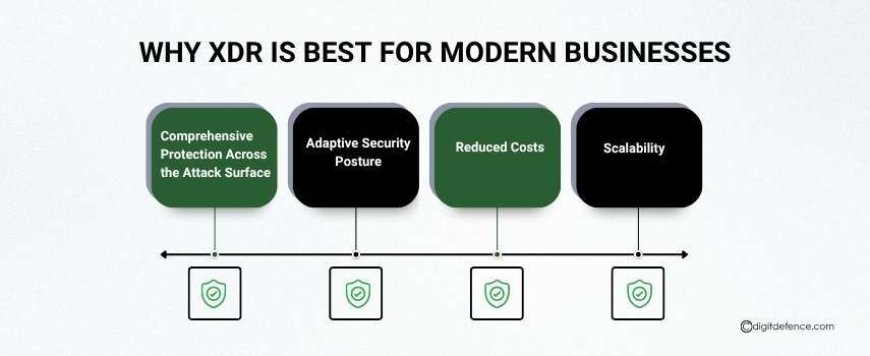
XDR in Cyber Security addresses these challenges by offering:
-
Comprehensive Protection Across the Attack Surface: From phishing and malware to cloud misconfigurations and lateral movement.
-
Adaptive Security Posture: XDR continuously learns from new threat behaviors using machine learning.
-
Reduced Costs: Shorter breach lifecycles and faster containment mean lower financial and reputational damage.
-
Scalability: Cloud-native XDR platforms support businesses of all sizes with seamless deployment and expansion.
For businesses evaluating their cybersecurity investments, understanding the difference between XDR and traditional security is essential. Traditional solutions still have a role, but they are increasingly limited in the face of today’s fast-changing threats.
XDR in Cyber Security offers a powerful, integrated, and modern approach that enhances visibility, speeds up detection, and automates response across all attack surfaces. With reduced risks, improved efficiency, and the ability to scale with growing IT demands, XDR is not just an upgrade; it’s a business necessity.
Looking to strengthen your business's cybersecurity posture? XDR is the smart move.
Get started today — contact us at [email protected]