How Hybrid Cloud Security Solutions Protect Your Business
Learn how hybrid cloud security solutions safeguard data, ensure compliance, and protect businesses from evolving cyber threats.

Are you worried about the increasing cyber threats targeting hybrid cloud environments?
Wondering how you can protect your sensitive business data while still using the flexibility of both public and private clouds? Hybrid Cloud Security offers a powerful solution that balances agility with robust protection.
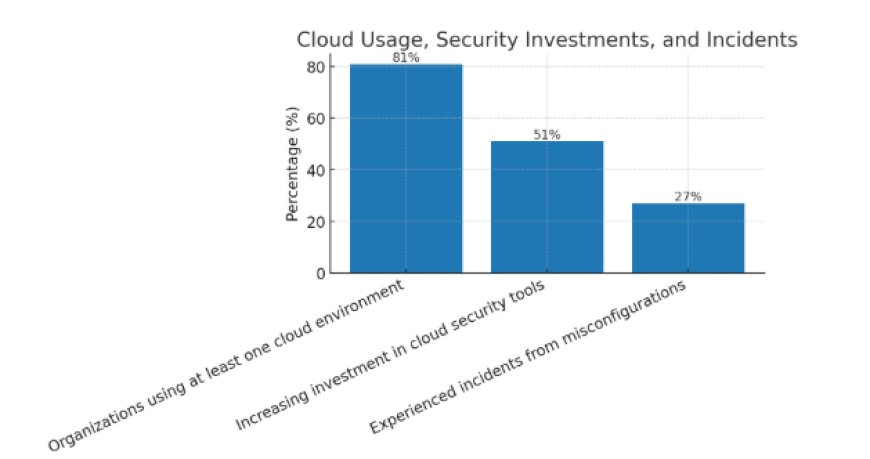
Today, about 81% of organizations utilize at least one cloud environment, and 51% are increasing investments in cloud security tools to counter rising threats. Despite this, 27% of companies experienced security incidents rooted in misconfigurations within their public cloud infrastructures.
Understanding Hybrid Cloud Security
Hybrid Cloud Security refers to the set of technologies, policies, and best practices designed to safeguard data, applications, and infrastructure across a hybrid cloud environment. This environment blends private on-premises data centers with public cloud platforms like Microsoft Azure, AWS, or Google Cloud.
The core challenge in hybrid cloud security lies in:
-
Maintaining consistent protection across diverse platforms
-
Controlling access
-
Encrypting data in transit and at rest
-
Complying with regulatory standards such as GDPR, HIPAA, or PCI-DSS
Why Hybrid Cloud Security is Critical for Your Business
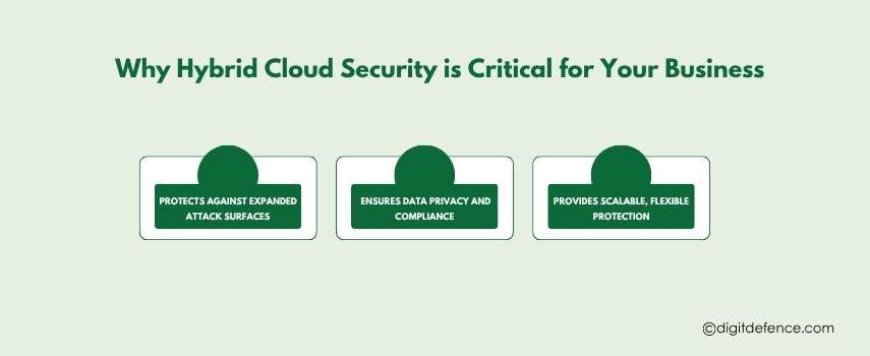
1. Protects Against Expanded Attack Surfaces
Hybrid cloud environments increase your exposure because data and applications are distributed across public and private clouds. Security solutions reduce vulnerabilities by enforcing unified access controls, continuous monitoring, and automated threat detection across the entire ecosystem.
2. Ensures Data Privacy and Compliance
Sensitive data can be segmented kept on private clouds or on-premises infrastructure where you maintain full control while less sensitive workloads run on cost-effective public clouds. This separation enables businesses to meet data residency and compliance requirements effectively.
3. Provides Scalable, Flexible Protection
Hybrid cloud security solutions scale security controls in sync with computing resources, supporting business growth and fluctuating traffic demands without compromising protection.
Key Components of Hybrid Cloud Security Solutions
|
Component |
Description |
|
Data Encryption |
Secures data in transit and at rest via strong encryption protocols. |
|
Identity and Access Management (IAM) |
Implements strict user and device authentication (including MFA) to prevent unauthorized access. |
|
Network Security |
Firewalls, intrusion detection/prevention systems block malicious traffic between clouds and on-prem resources. |
|
Continuous Monitoring & SIEM |
Real-time threat detection and response by aggregating security logs and alerts. |
|
Compliance Management |
Ensures adherence to industry-specific laws and frameworks through audits and governance. |
5 Ways Hybrid Cloud Security Solutions Protect Your Business
-
Unified Security Controls Across Environments
Consistent security policies for both private and public clouds ensure no gaps as data or workloads move.
-
Minimized Risk of Data Breaches
Advanced data encryption and strict access controls prevent unauthorized data access, reducing costly incidents.
-
Automated Threat Detection and Incident Response
Machine learning-powered tools detect unusual behavior in real-time for faster mitigation.
-
Enhanced Business Continuity and Disaster Recovery
Data replication and backups minimize downtime and enable quick recovery from failures or ransomware attacks.
-
Regulatory Compliance and Governance
Workload segmentation ensures adherence to laws, avoiding fines and disruptions.
Best Practices for Implementing Hybrid Cloud Security
-
Encrypt All Sensitive Data: Use SSL/TLS for data in transit and AES-256+ for data at rest.
-
Adopt Zero Trust: “Never trust, always verify” — apply least privilege and continuous authentication.
-
Use Centralized IAM: Manage identities across clouds with a single directory service.
-
Segment Networks: Use microsegmentation to isolate workloads and prevent lateral movement.
-
Employ Continuous Monitoring: Utilize SIEM and endpoint detection tools for real-time alerts.
-
Train Personnel: Build a security-aware culture to combat insider threats and phishing.
FAQs on Hybrid Cloud Security Solutions
1. What is Hybrid Cloud Security?
Hybrid Cloud Security is the combination of technologies, policies, and practices that safeguard data, applications, and infrastructure across public clouds, private clouds, and on-premises data centers. It ensures consistent protection, monitoring, and compliance across all platforms.
2. Why is Hybrid Cloud Security important for businesses?
As organizations increasingly adopt hybrid cloud models for greater flexibility and scalability, securing these mixed environments becomes essential. Hybrid Cloud Security reduces risks from wider attack surfaces, ensures adherence to data regulations, and supports uninterrupted business operations.
3. What are the key components of Hybrid Cloud Security?
Core components include identity and access management (IAM), data encryption at rest and in transit, network security measures such as firewalls and micro-segmentation, continuous monitoring and threat detection (e.g., SIEM, XDR), and robust compliance management tools.
4. How does Hybrid Cloud Security handle compliance requirements?
It enables sensitive data and workloads to be kept in private cloud environments where strict policies can be enforced, while less sensitive operations run on public cloud resources. Continuous audits and automated compliance tools help meet regulations such as GDPR, HIPAA, and PCI-DSS.
5. What role does automation play in Hybrid Cloud Security?
Automation ensures security policies are applied consistently across all environments. It enables rapid threat detection, faster incident response, and streamlined compliance reporting, reducing manual errors and increasing operational efficiency.
The Future of Hybrid Cloud Security
Hybrid cloud models will dominate IT infrastructure as businesses seek both flexibility and control. Emerging technologies like AI-powered threat intelligence, cloud-native security tools, and integrated management platforms will enhance protection while reducing manual effort.
Forward-looking companies should invest in unified hybrid cloud security solutions that provide end-to-end visibility, automated compliance checks, and scalable defenses to remain resilient amid evolving cyber risks.
Hybrid cloud security is no longer optional it’s essential for modern business resilience. By adopting advanced, unified security strategies today, organizations can safeguard their data, streamline operations, and confidently face the cyber challenges of tomorrow.
Secure your business today — contact us at [email protected]