The Role of Cybersecurity Companies in Remote Work
Remote work is growing, but is your business secure? Understand how cybersecurity companies protect your data and ensure a safe, seamless remote experience!
As a cybersecurity specialist, I have personally seen how the move to remote work has drastically changed the digital environment. Flexible work arrangements that initially appeared to be adopted gradually quickly became the norm, which led to an increase in cyber threats that target both individuals and organizations. In my role, I’ve seen how flaws from unsecured home networks to compromised personal devices can quickly escalate into significant breaches. Remote work has turned every home office into an extension of the corporate network, and ensuring its security has become one of the most pressing challenges of our time.
This new approach has placed cybersecurity companies like ours at the forefront of protecting remote workforces. Our role goes beyond simply deploying firewalls or antivirus software; it involves creating a culture of security awareness and resilience. From implementing effective endpoint protections to providing real-time monitoring and threat intelligence, we’re empowering organizations and their employees to navigate this new reality with confidence. It’s a responsibility we take seriously, knowing that the safety of sensitive data, the integrity of operations, and the trust of clients depend on our ability to stay one step ahead of advancing threats.
The Rise of Remote Work and Its Security Challenges
The remote work trend, accelerated by the global pandemic, has become the norm for many businesses. While this model offers convenience, it also exposes organizations to new risks:
-
Increased Attack Surface: Employees working from different networks, often unsecured, create opportunities for hackers to exploit vulnerabilities.
-
Phishing Attacks: Remote employees are frequently targeted with phishing emails that can compromise credentials and sensitive information.
-
Endpoint Vulnerabilities: Personal devices used for work may lack adequate security measures, making them easy targets for malware and ransomware.
-
Data Privacy Risks: Without secure channels, sensitive business data can be intercepted or exposed.
-
Compliance Challenges: Meeting data protection regulations like GDPR and HIPAA becomes more complex when employees work from multiple locations.
How Cybersecurity Companies Support Secure Remote Work
1. Implementing Secure Remote Access Solutions
Virtual Private Networks (VPNs):
Cybersecurity companies deploy VPNs to create encrypted connections between remote employees and company networks, ensuring that data remains secure during transmission.
Zero Trust Network Access (ZTNA):
Many companies are shifting to zero-trust models, where every user and device must be authenticated and authorized before accessing resources.
2. Endpoint Protection and Device Security
With employees using various devices, securing endpoints becomes critical. Cybersecurity companies offer:
-
Endpoint Detection and Response (EDR): Tools like those from CrowdStrike monitor and detect threats on devices in real time.
-
Device Management: Ensuring that personal and work devices comply with company security policies through Mobile Device Management (MDM) solutions.
3. Real-Time Threat Detection and Response
Cybersecurity companies utilize advanced technologies like AI and machine learning to identify and respond to threats across remote work environments.
-
Intrusion Detection Systems (IDS): Monitor traffic for malicious activity.
-
Incident Response Services: Quickly address breaches to minimize damage.
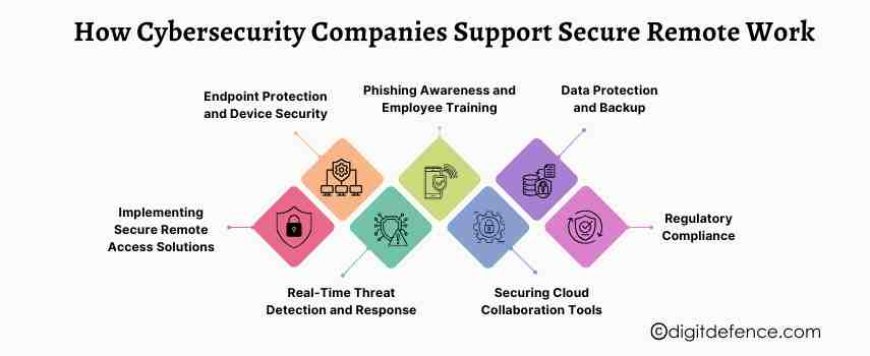
4. Phishing Awareness and Employee Training
Human error is a leading cause of cyber incidents, especially in remote work environments. Cybersecurity companies provide solutions like cybersecurity with proxies to enhance data protection, ensure secure connections, and minimize human-related risks.
-
Phishing Simulations: Testing employees’ ability to identify phishing attempts.
-
Training Programs: Educating remote workers on best practices for securing their devices and recognizing threats.
5. Securing Cloud Collaboration Tools
Remote work relies heavily on tools like Microsoft Teams, Zoom, and Google Workspace. Cybersecurity companies ensure these tools are used securely by:
-
Configuring access controls and permissions.
-
Implementing data encryption for files shared through these platforms.
-
Monitoring for unauthorized access.
6. Data Protection and Backup
Cybersecurity companies safeguard sensitive data accessed and shared remotely by implementing:
-
Data Loss Prevention (DLP): Ensures sensitive information doesn’t leave the organization.
-
Cloud Backups: Protects against data loss from ransomware or accidental deletion.
7. Regulatory Compliance
For businesses handling sensitive data, compliance with regulations like GDPR, HIPAA, or PCI DSS is crucial. Cybersecurity companies help by:
-
Conducting compliance audits.
-
Implementing measures to meet data protection requirements.
-
Providing reports and documentation for regulatory purposes.
Benefits of Cybersecurity Companies in Remote Work
-
Enhanced Security: Proactively addresses vulnerabilities unique to remote work setups.
-
Business Continuity: Ensures smooth operations even in the face of cyber threats.
-
Increased Productivity: Secure systems allow employees to focus on work without fear of breaches.
-
Regulatory Compliance: Helps businesses meet legal and industry standards.
-
Customer Trust: A secure organization builds confidence among clients and stakeholders.
Case Study 1: Employment Hero's Rapid Response to a System Crash
Overview:
In July 2024, Employment Hero, an HR and payroll services provider, experienced a major issue when a routine update from their cybersecurity partner, CrowdStrike, caused a widespread system crash (Blue Screen of Death). This disrupted hundreds of computers critical to their operations.
Implementation:
The IT team, led by Kelvin Yip, quickly deployed a remote script via Intune to stop the issue from spreading. Their immediate action isolated the problem and protected unaffected systems.
Outcome:
The team limited the impact to 267 devices, preventing further disruption. This incident highlighted the importance of preparedness and a strong cybersecurity response plan to minimize downtime.
Case Study 2: North Korean IT Contractor Infiltration
Overview:
In October 2024, a cybersecurity firm unknowingly hired a North Korean IT worker posing as a remote contractor. The worker accessed sensitive data and later tried to extort the company for a large cryptocurrency ransom after being fired.
Implementation:
The company worked with law enforcement to address the breach and tightened its identity verification and background check processes to avoid similar incidents in the future.
Outcome:
The breach was contained, but the case exposed the risks of hiring remote contractors without strict vetting. It emphasized the need for continuous monitoring and robust security protocols in remote work environments.
These examples show how cybersecurity companies help address unexpected challenges and protect organizations in the remote work era. Source LINK
The shift to remote work has brought unprecedented convenience but also significant cybersecurity challenges. Cybersecurity companies are at the forefront of enabling businesses to navigate this new landscape securely. By providing solutions like secure remote access, endpoint protection, threat detection, and compliance management, they help organizations safeguard their operations, data, and reputation. As remote work continues to evolve, partnering with a trusted cybersecurity provider is no longer optional; it’s essential for long-term success in the digital age.