How Threat Hunting Safeguards IP Assets
Learn how threat hunting helps detect risks, prevent data breaches, and protect intellectual property assets from cyber threats.
Do you know that cybercriminals could steal your company’s most important digital information? What if hackers or malicious insiders could access your secret designs, software, or sensitive data without you even knowing?
Every business works hard to create unique intellectual property, like new products, proprietary software, or confidential research. If this information is stolen, it can lead to financial losses, reputational damage, and a weakened competitive advantage. That’s why protecting your digital assets through cybersecurity measures and proactive threat hunting is more important than ever.
Tesla is one of the world’s leading electric car companies, known for its innovative designs and cutting-edge technology. The company invests heavily in research and development to create innovative vehicle models, advanced battery technology, and sophisticated software systems.
Tesla faced a serious threat when an insider employee attempted to steal sensitive engineering designs and proprietary software. This type of intellectual property theft could have resulted in significant financial losses, harmed Tesla’s reputation, and enabled competitors to replicate its technology.
Tesla used proactive threat hunting techniques to address the problem. The company continuously monitored network activity, tracked unusual access patterns, and analyzed employee behavior for any anomalies. By combining these tools with real-time investigations, Tesla identified the insider’s actions early and stopped the theft.
What is Threat Hunting and Why It Matters
Threat hunting is a proactive cybersecurity practice aimed at identifying potential threats that evade conventional security measures. Unlike reactive approaches, which respond only after a breach occurs, threat hunting focuses on searching for hidden threats before they can cause damage. It combines advanced analytics, behavioral monitoring, and intelligence-driven investigations to detect anomalies that indicate malicious activity.
The importance of threat hunting lies in its ability to safeguard critical assets, particularly intellectual property (IP). IP assets, such as patents, proprietary software, product designs, and trade secrets, are often targeted by cybercriminals because of their high value and strategic significance.
Key Threats to Your IP Assets
Understanding the main risks is essential for implementing effective threat hunting strategies to safeguard your IP.
1. Insider Threats
Insiders, including employees, contractors, and business partners, pose one of the most significant risks to IP. These individuals may:
-
Accidentally leak sensitive information through negligent handling of data.
-
Deliberately steal IP to sell to competitors or for personal gain.
-
Abuse access privileges to gain unauthorized entry to critical systems.
2. Advanced Persistent Threats (APTs)
APTs are advanced, long-term cyberattacks designed to infiltrate networks undetected and extract high-value information over time. IP assets like proprietary designs, trade secrets, and research data are prime targets. APTs often use:
-
Stealthy malware and backdoors.
-
Phishing campaigns tailored to specific employees.
-
Unauthorized remote access to critical databases.
3. Intellectual Property Theft by Competitors
Cybercriminals or corporate spies may target IP assets for industrial Information theft. This includes:
-
Copying proprietary software or designs.
-
Accessing confidential business strategies.
-
Stealing product development plans to gain a market advantage.
4. Data Breaches and External Attacks
Hackers continually evolve their techniques to bypass traditional security measures. Common threats include:
-
Ransomware attacks that lock critical IP files.
-
Exploitation of software vulnerabilities to access sensitive data.
-
Phishing attacks are aimed at employees with IP access.
5. Cloud and Third-Party Risks
Many organizations store IP in cloud environments or share it with vendors and partners. This introduces risks such as:
-
Misconfigured cloud storage is exposing sensitive files.
-
Third-party breaches are compromising shared IP.
-
Weak security practices by vendors or contractors.
How Threat Hunting Safeguards IP Assets
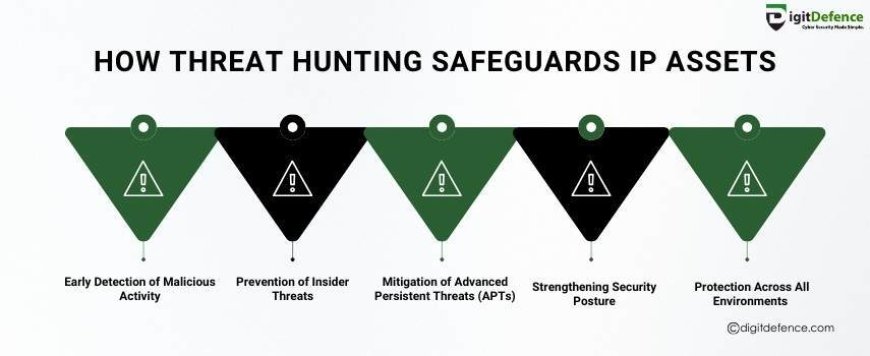
By continuously searching for hidden threats, organizations can safeguard sensitive data, maintain a competitive advantage, and ensure business continuity.
1. Early Detection of Malicious Activity
Threat hunting focuses on uncovering suspicious behavior and anomalies in networks, applications, and user activity. This early detection helps prevent unauthorized access to IP assets, such as proprietary software, research data, and trade secrets. Common indicators include:
-
Unusual login attempts or access patterns.
-
Unexpected file transfers or downloads.
-
Irregular usage of privileged accounts.
2. Prevention of Insider Threats
Insiders remain one of the most significant threats to IP. Security Threat Analysis of user behavior to identify potential risks from employees, contractors, or business partners.
3. Mitigation of Advanced Persistent Threats (APTs)
Advanced Persistent Threats are stealthy and often go unnoticed by traditional security tools. Security Threat Analysis techniques, such as behavioral analysis, threat intelligence integration, and endpoint monitoring, allow organizations to detect APTs targeting critical IP.
4. Strengthening Security Posture
Beyond detection, Security Threat Analysis provides actionable insights to improve overall cybersecurity defenses. By uncovering vulnerabilities, security teams can:
-
Implement stronger access controls and user authentication.
-
Patch software and system weaknesses promptly.
-
Educate employees on potential threats to IP security.
5. Protection Across All Environments
With organizations increasingly relying on cloud services and third-party vendors, Security Threat Analysis ensures IP protection extends beyond internal networks.
Tools and Techniques for Effective Threat Hunting
By leveraging these resources, organizations can proactively detect suspicious activity and safeguard their intellectual property (IP) assets.
Key Tools for Threat Hunting
Security Information and Event Management (SIEM): SIEM platforms collect and analyze security logs from multiple sources, helping detect anomalies, unusual patterns, and potential threats in real-time.
Endpoint Detection and Response (EDR): EDR tools monitor endpoints such as laptops, servers, and IoT devices, providing rapid alerts for malware infections, unauthorized access, or suspicious activity.
Threat Intelligence Platforms (TIPs): TIPs aggregate global threat data, including known attack signatures and profiles of threat actors, enabling security teams to respond proactively to emerging risks.
Techniques Used in Threat Hunting
Hypothesis-Driven Hunting: Security teams develop hypotheses based on potential attack scenarios or past incidents, guiding the search for suspicious activity and anomalies.
Behavioral Analysis: By analyzing system and user behavior over time, threat hunters can detect abnormal activity that might indicate insider threats or compromised accounts.
Integration of Threat Intelligence: Leveraging real-time threat intelligence allows organizations to identify emerging attack patterns and mitigate risks before damage occurs.
Best Practices for Safeguarding IP Through Threat Hunting
Implementing threat hunting effectively involves adopting best practices that minimize risk and enhance overall cybersecurity.
1. Adopt a Continuous Hunting Mindset
Threats evolve constantly, so organizations should treat Security Threat Analysis as an ongoing activity rather than a one-time task. Continuous monitoring ensures that new vulnerabilities and suspicious activity are detected promptly.
2. Prioritize Critical IP Assets
Identify which intellectual property is most valuable to your business, such as proprietary software, trade secrets, patents, or research data.
3. Integrate Threat Intelligence
Using real-time threat intelligence from internal and external sources helps anticipate attacks and uncover emerging risks. This enables teams to detect threats targeting IP before they cause damage.
4. Collaborate Across Teams
Cybersecurity, IT, and business units should work together to understand which IP assets are critical and how they are used. Collaboration ensures comprehensive protection and more effective threat detection.
5. Invest in Skilled Analysts
Automated tools are valuable, but human expertise is crucial for interpreting complex data, identifying subtle anomalies, and making informed decisions to protect IP assets.
The Future of Threat Hunting in IP Protection
Traditional security measures alone are no longer sufficient, and organizations must adopt proactive, intelligence-driven approaches to stay ahead of sophisticated attackers.
1. AI and Machine Learning Integration
The future of Security Threat Analysis will rely heavily on AI and machine learning to analyze massive amounts of data and detect anomalies faster than ever before.
2. Automation of Routine Processes
Automation will streamline routine Security Threat Analysis tasks such as log analysis, network monitoring, and incident triage. By automating repetitive work, cybersecurity teams can focus on complex investigations and strategic decision-making, enhancing overall IP protection.
3. Cloud and Hybrid Environment Monitoring
As businesses increasingly rely on cloud services and hybrid environments, Security Threat Analysis will evolve to monitor not just internal networks, but also cloud infrastructure and third-party vendor access.
4. Collaboration and Threat Intelligence Sharing
The future will see more collaborative Security Threat Analysis, where organizations share threat intelligence across industries. This collective approach helps identify emerging attack patterns and prevents IP theft on a broader scale.
5. Proactive Defense Culture
Threat hunting will become a core part of organizational culture, not just a technical function. Companies that prioritize proactive security, employee training, and continuous monitoring will be better positioned to protect their intellectual property and maintain a competitive advantage.
By adopting proactive threat detection strategies, businesses can reduce the risk of IP theft, strengthen their security posture, and maintain trust with customers and stakeholders.
Don’t wait for a breach to happen. Take action today to secure your company’s most valuable assets. For expert assistance in threat hunting and IP protection, contact us at [email protected].