Spam vs Phishing – What’s Harming Your Business?
Discover the difference between spam and phishing. Learn which one threatens your business most and how to stay safe.

Have you ever wondered if that flood of unwanted emails is just a distraction or a hidden doorway for cybercriminals? And more importantly, can your business afford to ignore the difference between spam and phishing?
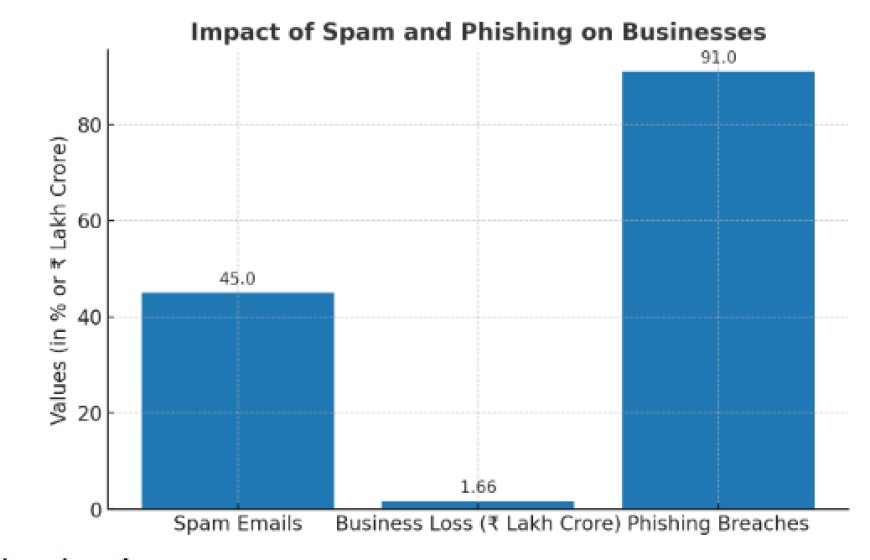
Recent studies reveal that 45% of all emails sent daily are spam, resulting in businesses losing over ₹1.66 lakh crore every year due to lost productivity. On the other hand, phishing attacks are far more dangerous, with 91% of cyber breaches starting from phishing emails.
MedSure Health, a leading private healthcare provider, became the target of an advanced phishing attack. The incident began when an employee received what appeared to be a routine HR communication
In 2023, MedSure Health faced a major security breach when a phishing email impersonating the HR department reached one of its employees. The email directed the employee to a fake login page that mimicked MedSure’s official system.
MedSure Health responded by launching an immediate investigation and working with a cybersecurity services provider to contain the breach. Multi-factor authentication (MFA) was introduced across all employee logins, reducing the risk of compromised credentials.
What is Spam?
Spam refers to unwanted, bulk emails that clutter inboxes. These messages are typically promotional, offering products, services, or questionable deals. While spam can be annoying and time-wasting, most spam is not immediately harmful. However, excessive spam can:
-
Reduce employee productivity by overwhelming inboxes.
-
Slow down email servers and increase storage costs.
-
Occasionally, hide malicious links or attachments that look like regular promotions.
What is Phishing?
Phishing is far more dangerous. It involves deceptive emails, messages, or websites designed to trick users into sharing sensitive data such as login credentials, credit card numbers, or financial details. Unlike spam, phishing is a deliberate attack strategy crafted to exploit trust.
Common signs of phishing include:
-
Emails pretending to be from banks, service providers, or trusted vendors.
-
Urgent requests such as “Verify your account now” or “Your password is expiring.”
-
Suspicious attachments or links leading to fake websites.
The Difference Between Spam and Phishing
Here’s a clear look at the difference between spam and phishing, along with why it matters for businesses:
|
Aspect |
Spam |
Phishing |
|
Purpose |
The main goal of spam is to promote products, services, or campaigns to as many people as possible. |
Phishing’s purpose is far more dangerous, it aims to trick recipients into revealing sensitive information such as passwords, bank details, or personal data. |
|
Harm Level |
Spam is mostly annoying. It clutters inboxes, wastes time, and occasionally carries malicious links. |
Phishing is highly dangerous. These emails are often carefully crafted to look real, making them effective at stealing information or installing malware. |
|
Sender |
Spam usually comes from marketers, advertisers, or automated bots. |
Phishing emails come from cybercriminals who pose as trusted organizations, like banks, IT providers, or even internal company executives, to gain trust. |
|
Content |
Spam messages are often generic, offering discounts, deals, or promotions. |
Phishing messages are deceptive and personalized. |
|
Impact on Business |
Spam wastes time, reduces employee productivity, and can overload email servers. |
Phishing can cause massive financial theft, data breaches, legal penalties, and reputational damage. |
How Spam Impacts Business Productivity
At first glance, spam emails may seem like a minor inconvenience, just a few unwanted messages that employees can delete. But in reality, spam has a direct impact on workplace productivity and efficiency. Here’s how:
1. Time Wasted Sorting Emails
Employees spend valuable time sifting through their inboxes to identify legitimate messages. Even if each spam message takes only a few seconds to identify and delete, the time adds up significantly across the workforce.
2. Email Overload and Stress
A cluttered inbox creates frustration and distraction. Constant exposure to spam can cause “alert fatigue,” where employees become less attentive to email security warnings. This increases the risk of overlooking critical business communications or even accidentally engaging with malicious content.
3. Hidden Security Risks
While many spam emails are just promotional, some contain links to suspicious websites or attachments that can install malware. A distracted employee may accidentally click, leading to costly disruptions such as system downtime or security alerts.
4. Server and Bandwidth Strain
Spam doesn’t just affect employees; it also burdens the IT infrastructure. High volumes of unsolicited emails can consume storage, slow down servers, and increase bandwidth costs, leaving IT teams spending time managing junk instead of focusing on innovation.
5. Indirect Costs to Business
Lost time equals lost money. Studies estimate that spam costs businesses billions annually in lost productivity worldwide. For small and medium businesses, even a few hours of wasted productivity per week per employee can significantly reduce output and profitability.
The Dangers of Phishing for Modern Businesses
Modern businesses, especially those relying on digital platforms for communication, finance, and customer data, face serious threats from phishing campaigns.
1. Financial Losses
Phishing attacks often impersonate trusted entities such as banks, suppliers, or even internal executives. A single successful attack can trick employees into transferring funds or sharing payment details.
Customer records, intellectual property, and confidential business information are prime targets. Once cybercriminals obtain this data, they can sell it on the dark web or use it for further attacks.
3. Reputation Damage
Trust is the foundation of business. If customers learn that their data was compromised through a phishing attack, they may lose confidence in the brand.
4. Operational Disruption
Phishing attacks often deploy ransomware or malware after tricking users into clicking a link. This can lock down systems, halt production, or disrupt business operations.
5. Legal and Compliance Risks
With strict data protection laws like GDPR in Europe and India’s Digital Personal Data Protection Act (DPDP Act, 2023), businesses are legally bound to protect customer information.
What’s Hurting Your Business Reputation: Spam vs Phishing
When spam and phishing slip through, they don’t just waste time; they erode trust.
-
Spam and credibility loss: If your business email domain is misused for spam, clients may see your messages as junk. This makes important communications, like invoices, proposals, or updates, easy to miss.
-
Phishing and trust breakdown: A phishing attack that impersonates your brand can cause customers to lose faith in your ability to protect them. Even one successful attack can spread fast, harming years of brand-building efforts.
-
Reputation costs: Studies show that 60% of customers lose trust in a brand after a data breach, and many never return. The difference between spam and phishing may seem technical, but both can have lasting impacts on how your business is perceived.
How to Protect Your Business from Spam and Phishing

To stay ahead, businesses must adopt a multi-layered protection strategy.
1. Invest in Advanced Email Security Tools
Modern email security solutions use AI-based filters to detect suspicious senders, malicious links, and unusual patterns. Unlike basic spam filters, these tools are designed to identify the difference between spam and phishing and stop high-risk emails before they reach employees.
2. Regular Employee Awareness Training
Employees are often the first line of defense. Training sessions should teach staff how to:
-
Recognize phishing attempts (e.g., fake invoices or CEO fraud).
-
Avoid clicking unknown links or downloading attachments.
-
Report suspicious emails immediately.
-
Regular drills can significantly reduce human errors that open the door to cybercriminals.
3. Use Multi-Factor Authentication (MFA)
Even if login credentials are compromised through phishing, MFA provides an additional security layer. Requiring OTPs, biometrics, or app-based verification makes it harder for attackers to access accounts.
4. Deploy Data Encryption and Backups
Encryption ensures that even if hackers gain access to data, it remains unreadable without the proper keys. Regular system backups also protect businesses from ransomware-related phishing attacks, allowing fast recovery without paying a ransom.
5. Monitor and Audit Regularly
Cyber threats evolve quickly. Businesses should run periodic audits to assess vulnerabilities and test systems through Pen Testing Services. Continuous monitoring helps identify unusual activity, allowing faster response to attacks.
Spam and phishing may both arrive in your inbox, but their impact on your business couldn’t be more different. Spam is a nuisance, but phishing is a direct threat capable of draining finances and damaging reputations.
By understanding the difference between spam and phishing, training employees, and working with a reliable cyber security services provider, businesses can protect their data, their customers, and their future.
Don’t wait for an attack to expose the gaps in your defenses. Partner with a trusted cyber security services provider today and safeguard your business against spam, phishing, and changing threats.
Contact us at [email protected] to get started.