
Why Risk Analysis in Cyber Security Matters?
Cybersecurity risk analysis helps identify, assess, and mitigate potential threats to protect systems and data from cyberattacks and breaches.

Cyber threats are major, ongoing risks to people, companies, and governments. They are more than possible problems. Cyberattacks have become far more frequent and sophisticated, constantly endangering critical systems and sensitive data. There is a high risk of cyber-related attacks, whether from ransomware attacks that shut down important networks or phishing operations that trick staff members into disclosing private information. Organizations must understand the kinds of risks they face and the potential severity of those risks to efficiently tackle these threats. This is the point at which risk analysis in cyber security becomes essential. Businesses may strategically prepare for, respond to, and reduce cyber threats before they become serious problems by assessing and prioritizing these risks.
I've worked as a network security analyst for years, protecting against ever-changing cyber threats. My experience has shown me that businesses that make a considerable investment in thorough risk analysis are better able to manage cyber threats, prevent large financial losses, and preserve the confidence of their stakeholders and customers. Even the best-meaning cybersecurity measures may not be successful in the absence of a strong risk analysis methodology. Finding solutions to reduce these vulnerabilities, whether they are caused by complex system setups, outdated software, or human mistakes, is a common part of my job.
What is Risk Analysis in Cyber Security?
Risk analysis in cybersecurity is the systematic process of identifying, evaluating, and prioritizing risks that could threaten an organization’s information systems, data, and overall cyber infrastructure. In simple terms, it’s a way to recognize potential cyber threats, assess the damage they might cause, and determine how to reduce or avoid them. Effective risk analysis includes a mix of technical assessments, data-driven insights, and strategic foresight. It helps organizations prepare for not only current threats but also those that could emerge as technology and attack methods evolve.
Types of Risks in Cyber Security
A critical step in effective risk analysis is understanding the variety of risks that can affect cybersecurity. These risks can generally be broken down into four main categories:
-
Technical Risks: Technical risks are perhaps the most recognizable cybersecurity threats. These include direct attacks like malware infections, ransomware, and phishing. Cybercriminals often exploit vulnerabilities in software and hardware to breach systems and gain unauthorized access to sensitive information. For instance, unpatched software or outdated network security configurations are prime targets for hackers who can launch attacks to capture data, disrupt services, or steal intellectual property.
-
Human Risks: Human error remains one of the most significant cybersecurity risks. Whether it's a misconfigured server, accidental sharing of confidential files, or employees falling victim to social engineering attacks, the human element is often a weak link in cybersecurity. Phishing schemes, for example, capitalize on human vulnerability by tricking employees into clicking on malicious links or revealing sensitive information.
-
Organizational Risks: Often overlooked, organizational risks arise from inadequate security policies, insufficient employee training, or weak enforcement of cybersecurity practices. When organizations lack strong cybersecurity protocols or fail to regularly train employees, they become more vulnerable to breaches. Additionally, if companies rely heavily on third-party vendors who lack robust cybersecurity measures, they can introduce risk into the entire ecosystem.
-
External Risks: External risks include factors that are often outside an organization’s direct control. These might include geopolitical issues, such as state-sponsored hacking, or natural disasters that disrupt essential systems and backup services. Additionally, supply chain risks such as vulnerabilities in vendor software or hardware pose significant risks, especially as businesses become more interconnected.
Why Risk Analysis is Essential for Cybersecurity
Conducting a thorough risk analysis in cybersecurity is not just beneficial; it's essential for a range of critical reasons.
-
Proactive Defense: A well-executed risk analysis allows organizations to shift from a reactive to a proactive cybersecurity posture. By identifying risks early, organizations can develop and implement strategies to prevent threats from materializing into attacks. Proactive risk management creates a layer of defense that mitigates the potential for damage, helping organizations avoid costly recovery efforts and downtime.
-
Cost Savings: Cyber threats can be costly in terms of both financial loss and reputational damage. By identifying vulnerabilities and mitigating risks before incidents occur, organizations can save significant sums that might otherwise go toward incident response, legal costs, or fines. For instance, a company that detects a weak password policy during a risk analysis can strengthen it before a costly breach occurs.
-
Regulatory Compliance: Many industries, such as healthcare and finance, are required to follow strict cybersecurity regulations to protect sensitive data. Risk analysis helps organizations meet these regulatory requirements by identifying compliance gaps and implementing controls to address them. For example, frameworks like GDPR and HIPAA require risk assessments to ensure that companies are protecting personal data adequately. Regular risk analysis is often a requirement, and failing to conduct it can lead to costly penalties and loss of business.
Key Steps in Conducting Risk Analysis
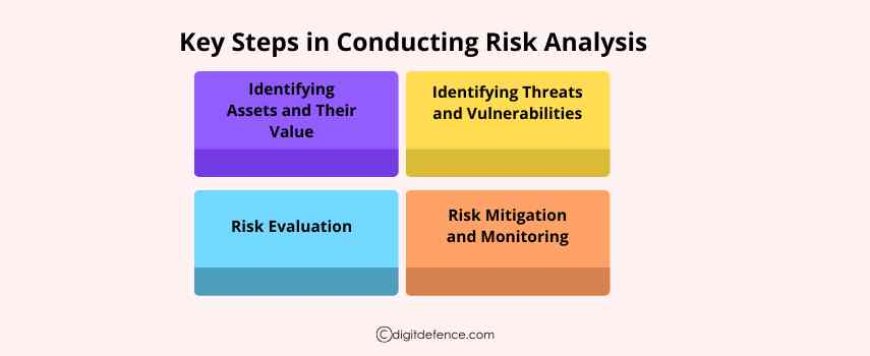
Conducting risk analysis in cybersecurity follows a structured approach to ensure all potential risks are accurately identified and addressed:
-
Identifying Assets and Their Value
The first step involves cataloging all digital assets and assigning a value based on their importance and sensitivity. For example, customer data may be highly valuable due to privacy concerns, while internal documents might hold less significance. Understanding asset value helps prioritize what needs the most protection. -
Identifying Threats and Vulnerabilities
Next, organizations identify threats that could exploit system vulnerabilities. This could involve conducting vulnerability scans, penetration testing, or threat modeling exercises. By analyzing recent threat intelligence reports, analysts can pinpoint areas where attackers are most likely to target, such as weak passwords or unpatched software. -
Risk Assessment
In this step, the likelihood and potential impact of each risk are assessed. Organizations may use a risk matrix to rank risks based on factors like severity and likelihood. For instance, a highly probable data breach with severe financial consequences would be prioritized over a less likely, lower-impact risk. -
Risk Mitigation and Monitoring
Once risks are identified and evaluated, organizations implement mitigation strategies to reduce or eliminate these risks. Common methods include updating security protocols, improving employee training, and implementing monitoring systems. Continuous monitoring ensures that the organization stays aware of emerging threats and can adjust its risk profile as needed.
Case Studies:
Case study 1:
One of the biggest credit reporting companies in the US, Equifax, experienced a significant data breach in 2017 that resulted in the exposure of over 147 million people's private data, including addresses, birth dates, Social Security numbers, and even driver's license numbers. An open-source web application framework called Apache Struts, which was utilized in their online dispute portal, had a vulnerability that led to the attack.
Challenge
The main challenge for Equifax was that it failed to patch a known vulnerability in the Apache Struts framework, even after the patch had been made publicly available by Apache. Additionally, Equifax lacked an adequate risk analysis strategy to assess the potential impact of an unpatched vulnerability on its system and customer data. This oversight was compounded by inadequate internal controls and miscommunication regarding security policies and procedures. Consequently, attackers exploited the unpatched vulnerability, gaining unauthorized access to Equifax's sensitive data for several months before the breach was detected.
Solution
To address these issues, Equifax revamped its cybersecurity protocols and implemented a comprehensive risk analysis strategy that involved automated vulnerability scanning, regular patch management, and enhanced internal communication. Equifax also invested in more robust threat intelligence tools to help the security team proactively identify and address emerging vulnerabilities. Furthermore, they committed to increasing cybersecurity training for employees and improving incident response procedures to detect and respond to potential threats more quickly. By establishing a structured approach to risk analysis and regular audits, Equifax aimed to reduce the likelihood of similar breaches in the future and enhance the protection of customer data.
Case study 2:
In 2013, Target suffered a major cybersecurity breach where attackers accessed the credit and debit card data of 40 million customers. The attack originated from a third-party HVAC vendor whose stolen credentials allowed unauthorized access to Target’s network, ultimately compromising its point-of-sale (POS) system across U.S. stores.
Challenge
Target’s main challenges were inadequate third-party risk management and network segmentation. Although basic security measures were in place, Target lacked a thorough risk analysis to identify vulnerabilities in third-party access points. This weakness allowed attackers to move through Target's network and reach sensitive payment data in the POS system.
Solution
In response, Target strengthened its third-party risk management by setting stricter access requirements and conducting regular vendor assessments. They enhanced network segmentation to isolate payment data, preventing unauthorized lateral movement. Additionally, Target implemented advanced monitoring tools to detect suspicious activity in real-time, improving their ability to identify and respond to threats swiftly. These measures significantly improved Target’s cybersecurity defenses and reduced the risk of similar incidents.
Risk analysis in cybersecurity is more than a checklist; it’s an essential process that enables organizations to understand and manage the wide array of digital threats they face. By proactively identifying and mitigating risks, companies can avoid financial losses, safeguard their reputation, and remain compliant with regulatory requirements. From technical defenses to addressing human vulnerabilities, risk analysis forms the foundation of a comprehensive cybersecurity strategy. As cyber threats continue to evolve, organizations that prioritize risk analysis will be better positioned to protect their digital assets and maintain the trust of their clients and partners. So, if you haven't yet begun your journey into risk analysis, now is the time to take action and secure your organization’s future.