
How Cyber Threats Target Business Networks?
Explore how cyber threats impact business networks, identifying common attack methods and strategies to improve digital defenses.

Can a simple mistake put your business network at risk?
Many businesses don’t realize how vulnerable they are until a security issue happens. It could be a weak password, an outdated software update, or clicking on a suspicious email; any of these can lead to a serious security breach.
Network security threats impact organizations of all sizes. But attackers often focus on SMEs because they tend to have fewer protections in place.
In fact, 46% of all cyber breaches affect businesses with fewer than 1,000 employees. Without proactive security measures, these businesses remain easy targets for attackers.

Facebook, now operating under the parent company Meta, is used by billions of people around the world. It helps people stay connected through apps like Facebook, Instagram, and WhatsApp. Since it handles so much personal information, it needs strong network security to keep that data safe.
At one point, the personal details of over 500 million users were found online. This happened because people were using a feature that let them find friends by uploading phone contacts. Hackers used this to collect user data, even though they didn’t break into Facebook’s main systems. The leaked information included names, phone numbers, and email addresses.
After this, Meta made changes to improve security. They limited how that contact feature could be used and added tools to spot unusual activity. They also checked how outside apps use Facebook data. This showed that even a small feature can cause big problems if it's not properly protected.
What is a Network Security Threat?
A network security threat refers to any potential danger that can compromise the confidentiality, integrity, or availability of a business’s computer systems and data. These threats may originate from external sources, such as cybercriminals attempting unauthorized access, or internal factors like accidental employee errors or misuse of access privileges.
Recognizing network security threats is essential for businesses to safeguard sensitive information, maintain operational continuity, and comply with industry regulations. Proactively addressing these threats reduces the risk of financial loss, reputational damage, and legal consequences, making it a critical component of effective business management.
How Cyber Threats Target Business Networks
Cyber attackers often find their way into business networks through everyday vulnerabilities. Phishing emails are one of the most common methods; these messages appear legitimate and trick employees into clicking harmful links or sharing login details. Malware and ransomware can also enter through unsafe downloads or email attachments, leading to stolen data or locked systems. Even something as simple as using a weak password or forgetting a software update can create a gap that attackers use to get inside.
Outdated systems and human error are frequent entry points. When businesses delay security patches or updates, attackers take advantage of known weaknesses. In some cases, employees may accidentally expose sensitive data or use unsecured devices on the network. These threats don’t always come from highly sophisticated attacks; many succeed because basic protections are missing. That’s why a strong focus on system updates, secure access, and employee awareness is essential for defending any business network.
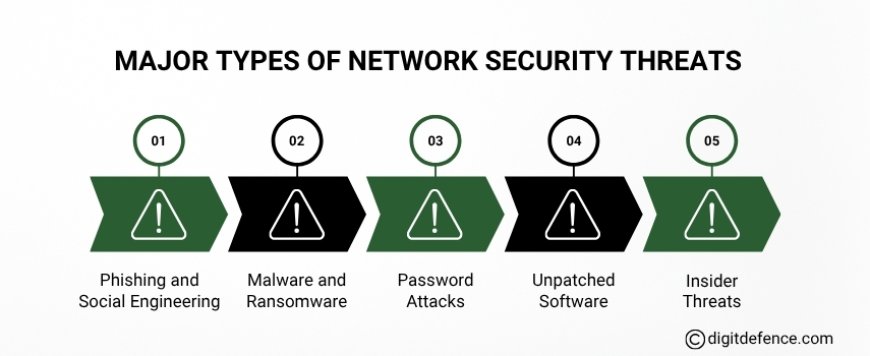
Major Types of Network Security Threats
-
Phishing and Social Engineering: These attacks rely on deception. Phishing emails often look genuine but aim to steal passwords or sensitive data.
-
Malware and Ransomware: Malicious programs that infect systems and either steal data or lock files until a payment is made.
-
Password Attacks: Using weak passwords makes it easy for attackers to gain access. Brute force methods try thousands of password combinations quickly.
-
Unpatched Software: Software updates often fix security weaknesses. Not applying updates leaves businesses exposed.
-
Insider Threats: Not all threats come from outside. Sometimes employees make mistakes or misuse access, causing data leaks or vulnerabilities.
How to Spot Network Security Threats
-
Unusual Logins: Monitor for login attempts from unknown locations or multiple failed tries, which may indicate unauthorized access.
-
Abnormal System Behavior: Look out for unexpected slowdowns, crashes, or errors that could signal malware or system compromise.
-
Security Alerts: Regularly review notifications from firewalls, antivirus, and intrusion detection systems to catch suspicious activity early.
-
Suspicious Emails: Encourage employees to report phishing attempts or unusual messages promptly to prevent breaches.
Combining effective monitoring tools with employee vigilance helps detect threats early, enabling swift response to protect your business.
Steps to Recover After a Security Incident
-
Contain and Isolate the Threat
Immediately disconnect affected devices or systems from the network. This prevents further spread of malware or unauthorized access while you investigate the source.
-
Assess the Impact
Determine which systems, data, or user accounts were compromised. Document the nature and scope of the breach to guide your recovery process and reporting obligations.
-
Eradicate the Cause
Work with IT or cybersecurity professionals to remove malicious code, close vulnerabilities, and reset compromised credentials. Ensure the root cause is fully addressed before restoration.
-
Restore and Reconnect Safely
Recover lost data using clean, verified backups. Carefully bring systems back online in stages, testing for stability and security throughout the process.
-
Review and improve Security
Conduct a full incident review. Update policies, patch systems, and improve employee training. Implement better monitoring and detection tools to prevent future incidents.
How to Prevent Network Security Threats
-
Access Control Methods: Implement strong authentication techniques, including multi-factor authentication (MFA) and role-based access control (RBAC), to restrict network access to authorized personnel.
-
Patch Management Techniques: Adopt systematic patch management processes to regularly update operating systems, applications, and firmware, eliminating known vulnerabilities.
-
Security Tools Deployment: Utilize advanced security tools such as next-generation firewalls (NGFW), intrusion detection and prevention systems (IDPS), and endpoint detection and response (EDR) platforms for continuous threat monitoring.
-
Employee Awareness Training: Provide comprehensive cybersecurity training programs that educate staff on phishing, social engineering tactics, and data protection best practices.
-
Data Backup and Recovery Solutions: Employ encrypted, automated backup solutions stored in secure off-site or cloud locations, ensuring rapid recovery from ransomware or data loss incidents.
-
Compliance and Risk Assessments: Conduct regular security audits, vulnerability assessments, and penetration testing to maintain compliance with industry standards like GDPR, HIPAA, or PCI DSS, and to identify areas of risk.
Network security threats are a real risk for every business. By knowing the common dangers and taking basic steps like using strong passwords, updating software, training staff, and backing up data, you can keep your business safer. Staying alert and prepared helps protect your information and keeps your business running smoothly.
Looking to protect your business network and keep your data safe from cyber threats? Email [email protected] to learn more about our expert solutions.
Stay protected, choose Digitdefence.