3-2-1 Rule for Ransomware: The Backup Strategy Every Company Needs
Discover how the 3-2-1 rule for ransomware helps businesses protect data, support recovery, and maintain continuity with a strong backup strategy.
Imagine this: You come into the office one morning, sip your coffee, and sit down at your computer only to see a terrifying message flashing on your screen: “Your files have been encrypted. Pay the ransom or lose everything.”
Panic sets in. Heart racing. Deadlines looming. Clients waiting. And all your company’s critical data is gone.
This nightmare scenario isn’t rare. In fact, ransomware attacks are happening to businesses every 11 seconds worldwide. The reality is stark: if your company isn’t prepared, one wrong click can cost you months or even years of work.
But here’s the good news: it doesn’t have to be this way. There’s a simple, reliable strategy that can save your business from total disaster. It’s called the 3-2-1 rule, and if you haven’t adopted it yet, you could be putting your entire company at risk.
What Is the 3-2-1 Rule?
The 3-2-1 backup rule is a tried-and-true method for protecting your company’s data against cyber threats like ransomware. The formula is simple:
-
3 copies of your data – Your original plus two backups
-
2 different types of storage – Mix of hard drives, cloud, or tapes
-
1 copy offsite – Keep one backup completely separate from your office
Why does this work so well? Because ransomware doesn’t discriminate. It will encrypt every file it can reach. If all your backups are in the same place as your main system, they’re just as vulnerable. By diversifying storage and keeping one copy offsite, you create a safety net that hackers cannot easily touch.
Why Every Company Needs This Rule
Here’s the thing: businesses of all sizes are targets. Small companies often think they’re “too small” to be attacked- but they’re actually prime targets because they usually have weaker defenses.
Some recent stats:
-
Over 60% of small businesses that suffer a ransomware attack go out of business within six months.
-
Ransomware payments averaged ₹7.11 crore per incident in 2024.
-
Only 26% of companies have a tested, reliable backup strategy in place.
Ignoring backups isn’t just risky- it’s dangerous. Without the right strategy, even a single ransomware attack can destroy your company’s reputation, client trust, and financial stability.
Breaking Down the 3-2-1 Rule: Step by Step
Let’s look at how you can implement the 3-2-1 rule in a real, actionable way.
1. Keep 3 Copies of Your Data
Your first copy is the original- the files you work with every day. Then you need two more backups. One might live on an external hard drive in the office. The second could be a cloud backup, constantly synced to capture changes in real time.
Pro Tip: Don’t just rely on automatic backups-regularly test them. There’s nothing worse than discovering your backup doesn’t work after a ransomware attack.
2. Use 2 Different Types of Storage
Why two types? Because no single storage solution is perfect. Hard drives can fail, cloud services can have outages, and even tapes can degrade over time. Using two types ensures you’re not putting all your eggs in one basket.
Example: You could have one local backup on a network-attached storage (NAS) device and a second on a cloud service with strong encryption. This combination drastically reduces risk.
3. Keep 1 Copy Offsite
The off-site copy is your ultimate safety net. Even if ransomware spreads through your office network, this backup remains untouched. Offsite doesn’t always mean physical, it could be cloud storage that isn’t connected to your daily systems.
Example: A business in Bangalore suffered a ransomware attack in 2023. Their office network and onsite backups were encrypted, but their offsite cloud copy allowed them to recover 100% of critical files within 24 hours. Without that off-site copy, they would have faced catastrophic downtime.
How the 3-2-1 Rule Supports Ransomware Recovery
Here’s where the magic happens: following the 3-2-1 rule doesn’t just prevent data loss - it makes ransomware recovery possible.
Without a proper backup plan, businesses face a grim choice: pay the ransom (which doesn’t guarantee your data will be returned) or accept permanent data loss. With the 3-2-1 rule, you can:
-
Restore systems quickly without paying hackers
-
Minimize downtime and keep operations running
-
Protect customer data and maintain trust
Think of it as an insurance policy you actually hope to use. The fewer backups you have, the longer and more expensive recovery becomes.
Common Mistakes Companies Make
Even when companies know about the 3-2-1 rule, mistakes happen. Avoid these pitfalls:
-
Only backing up locally – If your backups are on the same network, ransomware can encrypt them too.
-
Neglecting offsite storage – Offsite is non-negotiable. One copy must exist away from your primary systems.
-
Not testing backups – A backup that can’t be restored is useless. Test regularly.
-
Ignoring cloud security – Cloud isn’t a silver bullet; ensure strong passwords, MFA, and encryption.
CityTech Solutions: Proof That the 3-2-1 Rule Works
Consider the case of CityTech Solutions, a mid-sized IT company. In 2022, a ransomware attack hit their network while employees were working remotely.
-
Without 3-2-1: The onsite backups were encrypted. They had no off-site copy.
-
Impact: Weeks of downtime, loss of client projects, and a ₹1.68 crore cost in recovery and fines.
-
Lesson: One off-site, properly managed backup could have saved them.
This is the reality businesses face. Ransomware attacks aren’t “if” anymore-they’re “when.”
Simple Steps to Implement the 3-2-1 Rule Today
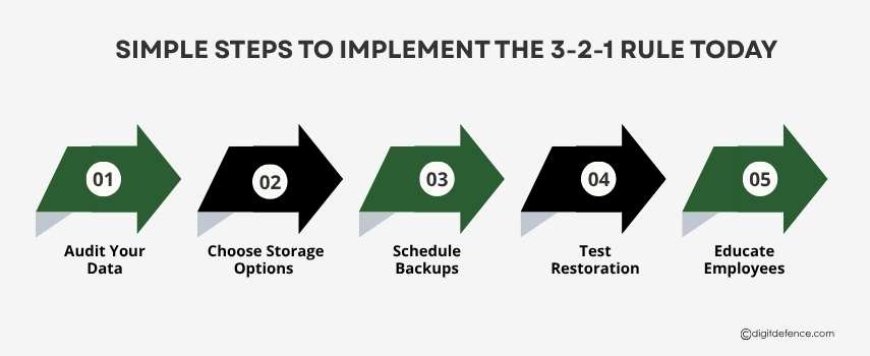
You don’t need a massive IT department to start protecting your business. Here’s how to begin:
-
Audit Your Data – Identify critical files and databases that must be backed up.
-
Choose Storage Options – Mix local devices (external drives, NAS) with cloud services.
-
Schedule Backups – Automate daily or weekly backups, depending on how often your data changes.
-
Test Restoration – Run a drill every month to ensure you can recover quickly.
-
Educate Employees – Even the best backup strategy fails if employees accidentally compromise systems.
By taking these steps, you’re not just preventing data loss- you’re future-proofing your business.
Why Companies Can’t Afford to Wait
Every minute your data is unprotected, you’re at risk. Hackers are constantly changing, and ransomware attacks are becoming more advanced. Waiting to implement the 3-2-1 rule is a gamble no company can afford.
Think of it this way: the longer you wait, the higher the chance that your business will be the next headline: “Company shuts down after ransomware attack.”
Key Takeaways
-
The 3-2-1 rule is simple: 3 copies, 2 storage types, 1 offsite.
-
Ransomware attacks are frequent, costly, and indiscriminate.
-
Backups without testing or off-site storage are almost useless.
-
Properly implemented, this rule makes ransomware recovery fast, effective, and stress-free.
-
Start small, but start today. One off-site copy can save your entire business.
Protect, Recover, Grow
The truth is uncomfortable: most businesses are not prepared for a ransomware attack. But you don’t have to be part of that statistic. By embracing the 3-2-1 rule, you’re taking a stand, not just against hackers, but for your employees, clients, and future growth.
Ransomware doesn’t have to destroy your business.
With the 3-2-1 backup rule, you can keep your company safe and running, even after an attack.
Don’t wait for a disaster to take action. The choices you make today will protect your data, your reputation, and your peace of mind tomorrow.
Start now. Back up your files. Keep one copy offsite.
The 3-2-1 rule isn’t just a plan - it’s what keeps your business alive.