What Happens When Your Data Privacy Fails?
Discover what really happens when your data privacy fails - from financial loss to trust erosion, and how businesses can prevent it.
Have you ever thought about what really happens the moment your data privacy fails?
Not the technical side - but the human side. The moment your name, address, or financial data slips into the wrong hands. The messages you’ve sent, the files you’ve trusted, the payments you’ve made - all suddenly feel exposed.
It’s not just a security issue. It’s personal. It’s emotional. And for businesses, it changes everything.
Today, data privacy isn’t just a checkbox on a compliance form. It’s the invisible thread that holds together customer trust, business credibility, and brand survival.
The Facebook- Cambridge Analytica Case
In 2018, the Facebook–Cambridge Analytica scandal revealed what happens when data privacy fails at scale
Personal information from 87 million users was misused to manipulate political campaigns. The result?
Global outrage, billions in fines, and a severe drop in public trust.
For years, Facebook struggled to rebuild its image. Users began questioning: Who really owns my data?
This case wasn’t just about social media - it became a turning point in how the world viewed data privacy. Businesses realized: your data handling practices can define your brand reputation more than your marketing ever will.
The Hidden Cost of a Privacy Breach
When we hear “data breach,” our minds often jump to numbers - the amount of data leaked, the cost of recovery, or the fines imposed.
But the real cost? It’s deeper than money.
It’s trust.
A survey by Cisco revealed that over 80% of consumers will stop doing business with a brand after a data privacy incident. That’s not just lost data - that’s lost loyalty, reputation, and future growth.
Imagine working for years to build a solid client base, only to lose it in a single night because someone clicked a malicious link or left a database unencrypted.
The digital world remembers everything. The headlines don’t fade quickly. Once you’re known for a data breach, rebuilding credibility becomes an uphill climb.
When Trust Turns Into Fear: The Human Side of Data Exposure
Let’s step away from the corporate view for a second and look at the human impact.
Think of Emma - a marketing manager at a mid-sized firm. One day, she gets an email from her bank about a “suspicious transaction.”
Minutes later, she realizes her personal and professional accounts have been accessed without her knowledge. Her social media, her company logins - everything feels exposed.
That’s the emotional reality of data privacy failure.
The fear of exposure. The helplessness of not knowing how far the leak has spread.
It’s not just about numbers on a screen - it’s about identity, safety, and dignity.
And when this happens to an organization’s customers, the emotional blow multiplies. Businesses don’t just lose users; they lose human beings who trusted them.
The Domino Effect: How One Breach Triggers Many Crises
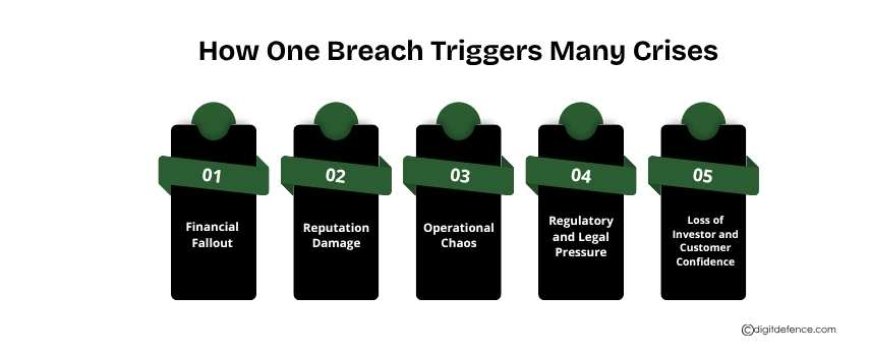
A single privacy slip can spark a series of devastating chain reactions.
Here’s what typically follows when data privacy fails:
1. Financial Fallout
Companies spend millions on legal settlements, recovery operations, and PR management after a breach. IBM’s 2024 report found that the average cost of a data breach is now ₹36.9 crore, the highest in history.
2. Reputation Damage
Customers remember brands that protect them - and those that don’t. After a breach, social media amplifies the damage within hours.
You can’t buy back reputation with an apology tweet.
3. Operational Chaos
Systems go offline. Teams panic. IT departments scramble to isolate the breach while legal teams prepare for regulatory backlash. The entire organization shifts from strategy to survival mode.
4. Regulatory and Legal Pressure
Privacy laws like GDPR and India’s Digital Personal Data Protection Act (DPDP) are strict for a reason. Failing to comply can bring not just fines, but criminal implications for executives.
5. Loss of Investor and Customer Confidence
Investors flee uncertainty. Customers hesitate to share data again. Growth slows down.
It’s not just about what was leaked - it’s about what’s lost afterward: confidence.
Data Privacy Is No Longer Optional - It’s Your Strength
Here’s a thought most companies overlook:
Strong data privacy isn’t just protection - it’s trust.
When customers know their information is safe, they feel confident engaging with your brand.
That trust converts into sales, referrals, and long-term loyalty.
Companies like Apple and ProtonMail have built entire identities around privacy. They don’t just meet regulations - they lead with it. That’s why their customers stay fiercely loyal even in competitive markets.
In today’s world, privacy is the new luxury - and the brands that respect it win.
The Emotional Equation: Fear + Transparency = Trust
When data privacy fails, fear spreads fast - but transparency can rebuild what’s broken.
Here’s how leading organizations manage to recover from breaches:
-
They Own It Fast: Instead of hiding the breach, they acknowledge it immediately and communicate openly with stakeholders.
-
They Compensate Fairly: Offering real, timely help to affected users restores empathy and responsibility.
-
They Learn and Evolve: Post-incident, strong leaders invest in smarter cybersecurity and ethical data management.
Transparency doesn’t erase mistakes, but it does show integrity - and that’s what customers remember.
What Happens If You Don’t Act Now?
Let’s be honest - most businesses know they need stronger privacy protection. But “knowing” and “doing” are different.
While you’re reading this, cybercriminals are evolving faster than ever.
-
Every 39 seconds, a new attack targets a vulnerable system.
-
43% of all cyber attacks hit small and mid-sized businesses - the ones least prepared.
-
And 60% of SMBs close within six months after a major breach.
Waiting is the biggest risk.
Because data privacy doesn’t fail overnight - it fails quietly, bit by bit, when companies choose convenience over caution.
Your competitors might already be upgrading their systems, earning customer trust while you’re still “planning to.”
That’s where the real fear of missing out lies - in being left behind by brands that prioritize privacy as part of their growth strategy.
How to Strengthen Your Data Privacy
If you’re serious about avoiding the chaos of a data privacy failure, here’s where to start:
1. Encrypt Everything
From customer data to internal files, encryption ensures that even if hackers gain access, the data remains unreadable.
2. Adopt Zero Trust Architecture
Assume every device and user is a potential threat until verified. It’s not paranoia - it’s protection.
3. Conduct Regular Privacy Audits
Evaluate what data you collect, why you collect it, and who has access. Eliminate what’s unnecessary.
4. Train Your People
Human error causes most breaches. Regular staff training on phishing and password hygiene can close major gaps.
5. Update Your Compliance Policies
Stay aligned with new laws and frameworks like GDPR, CCPA, and DPDP. Compliance isn’t paperwork, it’s prevention.
6. Use Multi-Factor Authentication
It adds an extra layer of security that stops most unauthorized logins.
7. Work with Trusted Cybersecurity Partners
You don’t have to do it alone. Partnering with cybersecurity experts ensures continuous monitoring and response readiness.
The Turning Point: From Privacy Panic to Privacy Power
There’s a hidden opportunity in all of this.
When you treat data privacy not as a burden but as a brand value, everything changes.
-
Customers start trusting your systems more.
-
Investors see stability.
-
Employees feel proud to work for an ethical brand.
And in a world where every competitor promises innovation, being the brand that promises protection is what sets you apart.
Protecting Privacy Is Protecting Your Future
So, what happens when your data privacy fails?
You lose more than data - you lose trust, credibility, and control.
But when you get it right, you gain something priceless - confidence.
Confidence from your customers that their data is safe.
Confidence from your team that your systems are resilient.
And confidence in your future that your growth won’t collapse overnight.
The question isn’t whether you can protect your data.
It’s whether you’re ready to protect your reputation, your relationships, and your reliability before it’s too late.
Because in the end, data privacy isn’t just a policy - it’s a promise.
And the businesses that keep that promise will be the ones still standing when others fall.