Logging Into Gmail? Know the 3Cs of Cyber Security "First"
Learn how the 3 Cs of Cyber Security Confidentiality, Integrity, and Availability help keep your Gmail and personal data safe from online threats.
You grab your phone, open Gmail, and type your password - just like you’ve done a thousand times before.
It feels routine, almost automatic. But what if, in that single moment, someone else was watching?
Not over your shoulder - but from across the world, behind a screen, waiting for that one click that gives them access to everything you value.
Sounds dramatic? Unfortunately, it isn’t.
Every day, millions of people unknowingly expose themselves to cyber risks just by logging into their email. And the truth is most of these attacks can be prevented by following the 3 Cs of Cyber Security.
So before you hit “Sign In” again, here’s what you must know to stay safe in our daily life.
Why Cyber Safety Matters More Than Ever
We live, work, and connect through screens. From online banking and video calls to storing important documents on the cloud - our lives now run on passwords, apps, and data.
And so do cybercriminals.
According to a recent Verizon Data Breach Report, over 90% of cyber attacks begin with phishing or email compromise. That means your inbox is often the first place hackers look to strike.
When you log in without proper awareness, you aren’t just opening your email - you might be opening the door to identity theft, financial loss, and data breaches that could take months to recover from.
This is exactly why learning about the 3 Cs of Cyber Security - Confidentiality, Integrity, and Availability is not just for IT experts anymore. It’s for everyone who goes online.
The 3 Cs of Cyber Security - Explained Simply
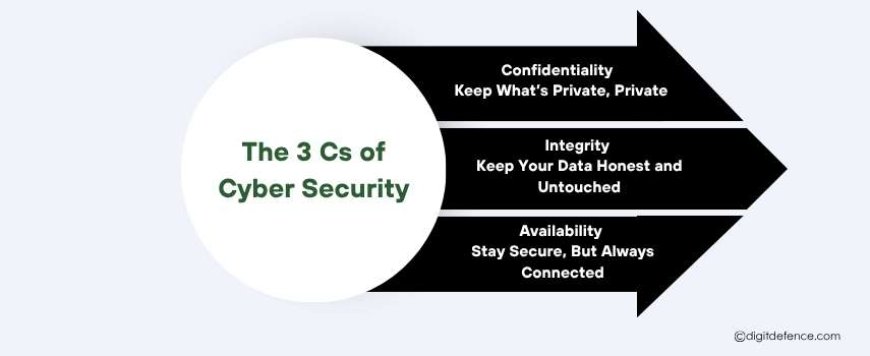
The 3 Cs of Cyber Security form the foundation of online safety. Think of them as your digital seatbelt. They keep you protected whether you’re checking Gmail, shopping online, or managing business accounts.
1. Confidentiality – Keep What’s Private, Private
Confidentiality means protecting your personal information from falling into the wrong hands.
Every time you log into Gmail, you’re dealing with data - messages, attachments, contact lists all of which hold sensitive information.
If someone gains access to your account, they could steal not just your data but your identity.
How to protect your confidentiality:
-
Use strong, unique passwords for every account. Avoid names, birthdays, or simple words.
-
Enable two-factor authentication (2FA) - it adds an extra layer of protection.
-
Never click on suspicious links, even if they look like they came from Google or a trusted source.
-
Avoid logging in through public Wi-Fi or shared devices.
Example: A marketing executive once lost access to her Gmail after logging in through cafe Wi-Fi. Within hours, hackers sent fake invoices from her account to clients. One small mistake led to financial chaos and it all began with a single login.
Confidentiality is your first line of defense in the 3 Cs of Cyber Security.
2. Integrity - Keep Your Data Honest and Untouched
Integrity is about making sure your information stays accurate and unaltered.
Imagine this: a hacker breaks into your Gmail, doesn’t steal anything, but changes one small detail - a payment account number in a business email. You wouldn’t even notice until money starts going missing.
That’s how subtle cyberattacks can be.
Ways to maintain data integrity:
-
Always verify the sender’s address before responding or sharing data.
-
Back up important emails and files regularly.
-
Keep your device software updated - those updates patch known security weaknesses.
-
Be alert for “lookalike” domains (like gmaill.com or gooogle.com). They’re traps designed to trick you.
When your data’s integrity is compromised, your decisions, trust, and reputation all take a hit. That’s why Integrity stands strong as the second pillar of the 3 Cs of Cyber Security.
3. Availability – Stay Secure, But Always Connected
The third “C” - Availability means your information should always be accessible to you, and only you, when you need it.
It’s not just about protection - it’s about reliability.
If your Gmail is locked, hacked, or unavailable during a business emergency, you lose more than emails you lose time, clients, and trust.
To maintain availability:
-
Regularly back up your Gmail data to a secure cloud or device.
-
Use trusted antivirus tools that prevent downtime caused by malware.
-
Keep your recovery options (like backup emails and phone numbers) updated.
-
Avoid using the same password for multiple logins - one data breaches could block access everywhere.
Availability ensures you stay connected, productive, and protected no matter what.
Together, these three principles - Confidentiality, Integrity, and Availability - make up the core of the 3 Cs of Cyber Security.
When Gmail Became a Gateway
In 2023, a small business owner in Mumbai faced a nightmare scenario.
An employee received what looked like an urgent Gmail security alert asking her to “verify her account.” Without thinking twice, she entered her password.
Within hours, hackers had full access to the company’s Gmail workspace.
They sent fake payment requests to suppliers, deleted key documents, and nearly caused a loss of ₹12 lakh before the team could regain control.
What went wrong? A simple lapse in Confidentiality and Integrity.
The team trusted the wrong link and failed to verify authenticity, a mistake that could’ve been avoided by understanding the 3 Cs of Cyber Security.
This story isn’t rare. It happens every day, to individuals, startups, and even major enterprises.
How the 3 Cs of Cyber Security Protect Your Everyday Life
Understanding the 3 Cs of Cyber Security isn’t just about knowing definitions - it’s about applying them daily.
Here’s how they protect you in real-world situations:
|
Everyday Action |
Risk Without 3Cs |
Protected With 3Cs |
|
Logging into Gmail |
Phishing, credential theft |
Verified links, 2FA, password hygiene |
|
Online shopping |
Credit card fraud |
Secure payment gateways, HTTPS check |
|
Using public Wi-Fi |
Data interception |
VPN, encrypted connections |
|
Cloud storage |
Unauthorized access |
Encrypted backups, limited sharing |
|
Business emails |
Fake invoices, scams |
Domain checks, message verification |
Each “C” plays a role — together, they form your strongest defense.
Why Awareness Is Your Best Cyber Shield
Technology changes fast, but awareness changes faster - if you let it.
Hackers depend on one thing: your inattention.
They don’t just hack systems - they hack habits.
The 3 Cs of Cyber Security help you break those habits by turning awareness into action. Once you start questioning every link, checking sender authenticity, and using secure logins - you move from being vulnerable to being vigilant.
Remember, you don’t need to be a cyber expert to stay safe - you just need to be mindful.
The Future Belongs to the Cyber-Aware
As more of our lives move online from work to finance to education the demand for cyber-aware individuals is increasing.
Businesses today value employees who not only do their job but also protect digital integrity.
Understanding the 3 Cs of Cyber Security gives you an edge it shows responsibility, awareness, and adaptability.
It’s not just personal protection; it’s professional growth.
If you’re someone who wants to go deeper into cybersecurity, auditing, or compliance, gaining certification and practical training can open powerful new career doors.
Take Control Before Hackers Do
So, the next time you log into Gmail, pause for a second.
Ask yourself:
-
Am I protecting my confidentiality?
-
Is my data’s integrity intact?
-
Do I have control over my account availability?
These simple questions could save you from a world of trouble.
Cyber security isn’t just a field anymore -it’s a skill every professional needs.
Because your data, your trust, and your future deserve protection.
Start your journey with DigitDefence today - and learn how the 3 Cs of Cyber Security can turn awareness into real-world protection.