How Companies Protect Data from Internet Security Threats
Learn how companies protect data from hackers, malware, and breaches while keeping customer trust and business running smoothly.
Worried about your business data being at risk?
With the right cybersecurity services, your company can protect sensitive information from hackers, malware, and other internet security threats. This helps prevent data loss, fraud, and downtime, keeping employees and customers safe.
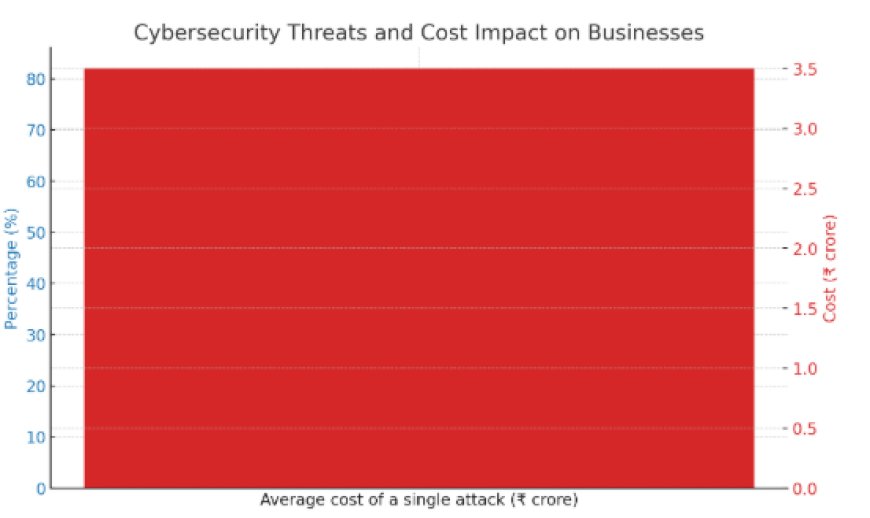
Did you know? Around 82% of businesses face internet security threats due to weak security, and the average cost of a single attack can reach ₹3.5 crore. Strong cybersecurity not only protects data but also keeps your business running smoothly and builds customer trust.
BigBasket is one of India’s top online grocery stores. They handle many customer accounts and payments every day, making data security very important.
The company faced problems with protecting customer payment data and stopping account fraud. They needed stronger security to keep customer information safe.
BigBasket worked with top cybersecurity companies and used advanced tools. Fraud dropped by 35%, customer trust improved, and real-time monitoring helped stop attacks before any damage happened.
Understanding Internet Security Threats
Every business today uses the internet to do important work. Companies send emails, store customer information, make online payments, and manage their websites. While the internet makes work faster and easier, it also brings dangers. Hackers and cybercriminals are always trying to steal data, cause problems, or trick employees.
Understanding these threats is the first step in keeping your business safe. If companies know what can go wrong, they can take steps to stop attacks before damage happens.
Why Internet Security Threats Are Serious
-
Hackers can steal sensitive information, such as customer details, passwords, or financial records.
-
A cyber attack can stop your work, cause downtime, and lead to financial loss.
-
Weak security can hurt your company’s reputation, making customers lose trust.
-
Some attacks can cause legal problems if private customer or employee data is exposed.
Top Internet Security Threats Targeting Modern Businesses
Every business today stores important information online, including customer details, financial records, emails, and company secrets. Hackers are always looking for ways to steal data or cause trouble, so using strong internet security with a reliable antivirus helps businesses stay safe and avoid loss.
1. Phishing Attacks
Hackers send fake emails, messages, or links that look real. They try to trick workers into giving their passwords, bank details, or other private information. Even one careless click can let hackers inside the system.
2. Ransomware
Ransomware is harmful software that locks your files or computer. Hackers demand money to unlock them. If a company cannot access its files, work stops, and this can cause huge financial loss.
3. Malware
Malware is software that damages computers, spies on activity, or steals data. It can enter through emails, downloads, or infected websites.
4. Insider Threats
Sometimes the danger comes from inside the company. Workers or contractors may accidentally or intentionally misuse company information.
5. Denial-of-Service (DoS) Attacks
Hackers can send a huge amount of traffic to a company’s website or server, making it stop working. This prevents customers from using the website and can hurt sales.
6. Man-in-the-Middle (MitM) Attacks
Hackers intercept communication between a worker and a website or system. They can steal information, change messages, or spy on sensitive data.
How Companies Protect Data from Internet Security Threats
Protecting business data is very important. Hackers are always trying to steal information or cause problems. Companies need strong systems, tools, and practices, including internet antivirus software, to keep data safe. Here is how most businesses protect their information online.
1. Strong Passwords and Access Controls
-
Companies make sure employees use strong, unique passwords.
-
Only employees who need information can access it (role-based access).
-
Multi-factor authentication (MFA) adds an extra step to confirm identity, like a code sent to a phone.
2. Data Encryption
-
Data at rest (stored on computers or servers) is encrypted so hackers cannot read it.
-
Data in transit (sent over the internet) is also encrypted to prevent interception.
3. Firewalls and Security Software
-
Firewalls block unauthorized access from outside the network.
-
Antivirus and anti-malware programs detect and remove harmful software before it can damage systems.
4. Regular Software Updates
-
Companies keep all programs and systems updated.
-
Updates fix weaknesses in software that hackers can exploit.
5. Employee Training
-
Employees learn to spot phishing emails, fake websites, and suspicious links.
-
Training reduces mistakes that can let hackers in.
6. Data Backup and Recovery
-
Companies back up data regularly to safe locations.
-
If an attack happens, data can be restored quickly, reducing downtime.
Benefits of Strong Internet Security
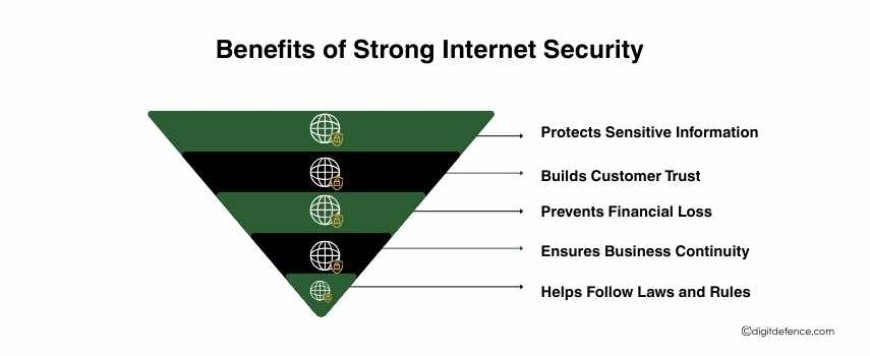
Keeping your business safe from online threats is not just about avoiding problems, it also brings many advantages. Strong internet security protects your data, customers, and company reputation. Here are the main benefits:
1. Protects Sensitive Information
-
Strong security stops hackers from stealing customer details, financial records, and company secrets.
-
Protecting sensitive information keeps your business safe from fraud and identity theft.
2. Builds Customer Trust
-
Customers feel safe sharing their information with companies that have strong security.
-
A business that protects data earns a reputation for reliability and professionalism.
3. Prevents Financial Loss
-
Cyber attacks can cause huge losses due to stolen money, downtime, or legal penalties.
-
Strong security reduces the risk of paying ransom, fines, or recovery costs.
4. Ensures Business Continuity
-
Security measures like backups and monitoring keep systems running even during attacks.
-
Companies can continue operations without long interruptions, keeping customers happy.
5. Helps Follow Laws and Rules
-
Compliance with rules like GDPR, ISO 27001, or India’s IT Act avoids legal problems.
-
Following these laws shows customers and partners that the company is responsible.
Cyber attacks are happening more often and are becoming smarter. Companies that do not protect their data can lose money and damage their reputation. Strong security is important to keep your data safe, earn customer trust, and keep your business running smoothly.
DigitDefence, a leading cyber security company, helps businesses protect their data with expert guidance, advanced security tools, and continuous monitoring.