
Data Leaks Causing Panic? Here’s How to Stay Protected
Worried about data leaks? Learn simple, effective ways to protect your business and keep confidential information safe from online threats.
When Panic Turns into Reality
You open your laptop on a calm Monday morning - coffee in hand, ready to start your week. But something feels off. Your inbox is flooded with customer complaints. Your website is behaving strangely. The files you uploaded yesterday are suddenly gone.
Then it hits you - your company data has leaked.
Emails, passwords, client details - all exposed. The information you spent years protecting is now floating somewhere online, out of your control.
It’s the kind of fear that doesn’t just shake your business - it shakes you.
Because data leaks don’t announce themselves.
They don’t knock before entering.
They just appear - silently, suddenly, and ruthlessly.
And when they do, panic isn’t just an emotion. It’s a storm.
Your team scrambles for answers.
Your customers demand explanations.
Your reputation - something you built over the years - starts slipping through your fingers.
That’s the harsh truth of a data leak. It doesn’t just take away your information; it takes away your confidence in security itself.
But here’s the thing - it doesn’t have to end in chaos.
Every business that’s fallen victim to a data leak once believed it wouldn’t happen to them.
The real question isn’t if your data is at risk - it’s whether you’re ready when it is.
So before panic becomes your reality, make preparation your priority.
What Is a Data Leak, Really?
Let’s keep it simple.
A data leak happens when sensitive information - like passwords, emails, or financial details gets exposed, intentionally or accidentally, to people who shouldn’t have it.
Unlike a hack, where attackers break in, leaks often happen quietly - from inside the system. Sometimes it’s human error, sometimes poor security, or just negligence.
Common causes of data leaks:
-
Weak or reused passwords
-
Outdated software
-
Sharing files over unsecured networks
-
Misconfigured cloud storage
-
Employees clicking phishing links
-
Lack of cybersecurity training
The scary part? You might not even know your data is leaking until it’s too late.
Why Data Leaks Hurt More Than You Think
You might think a small leak won’t matter. But in reality, even a single leaked password can open the door to massive damage.
When confidential data gets exposed:
-
Customers lose trust. Once their data is out, they rarely forgive.
-
Businesses lose credibility. Rebuilding a reputation can take years.
-
Operations slow down. Security teams spend weeks patching systems.
-
Legal issues arise. Heavy fines and lawsuits can follow.
It’s not just a technical problem - it’s an emotional and financial hit that can shake any business.
Remember what happened with Facebook’s 2021 data breach? Over 500 million users’ personal data was leaked online. It wasn’t even from a hack - just an exposed database. The result? Users lost trust, and the brand’s reputation took a huge hit.
That’s the reality of a data leak - one small gap, and everything can come crashing down.
How to Stay Protected: Practical Steps That Work
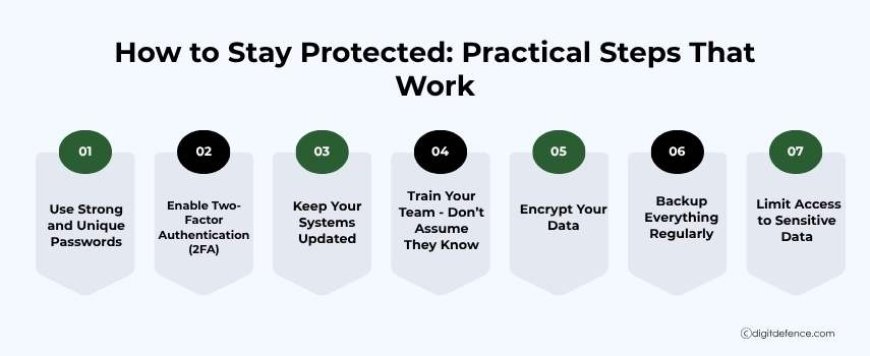
Now, let’s talk about what you can actually do to stay safe.
You don’t need to be a cybersecurity expert - you just need smart habits, awareness, and the right tools.
1. Use Strong and Unique Passwords
Your password is your first line of defence.
Avoid using easy ones like “123456” or “password@123.” Use a mix of upper/lowercase letters, numbers, and symbols.
And never reuse the same password across multiple accounts.
Tip: Use a password manager - it remembers everything securely so you don’t have to.
2. Enable Two-Factor Authentication (2FA)
Even if your password gets leaked, 2FA can stop attackers.
It adds an extra step - like an OTP or fingerprint making unauthorized access much harder.
Think of it as locking your house and setting the alarm.
3. Keep Your Systems Updated
Outdated apps or software are easy targets for hackers.
Regular updates fix security holes that attackers love to exploit.
Turn on automatic updates for your system, browser, and antivirus.
4. Train Your Team - Don’t Assume They Know
One careless click can cause a disaster.
Phishing emails look real these days - even tech professionals fall for them.
That’s why employee awareness training is a must.
Teach your team how to spot suspicious links, fake attachments, and unsafe websites.
5. Encrypt Your Data
Encryption turns your files into unreadable code.
Even if someone steals your data, they can’t read it without the right key.
Make sure your devices, emails, and cloud storage are all encrypted - it’s one of the most powerful shields against data leaks.
6. Backup Everything Regularly
Always have a plan B.
Back up your important data in secure locations - both online (cloud) and offline (external drives).
If a leak or attack happens, you can recover without losing everything.
7. Limit Access to Sensitive Data
Not everyone in your team needs access to all files.
Follow the “least privilege” rule — give people only what they need to do their job.
Fewer access points mean fewer chances for leaks.
The Human Factor Behind Every Leak
Let’s be honest - most data leaks don’t happen because of “advanced hacking.”
They happen because someone, somewhere, made a simple mistake.
-
An employee sent a report to the wrong person.
-
A manager uploaded data to a public folder.
-
Someone ignored an update notification.
That’s why cybersecurity isn’t just about firewalls and tools - it’s about people.
Building awareness and accountability inside your organization is the real secret to staying safe.
The Future of Data Security - Adapt or Risk Everything
Cyber threats are changing fast.
AI-driven attacks, ransomware, and phishing scams are getting smarter each year.
But so are the defences.
From cloud-based encryption to automated threat detection, businesses now have more tools than ever to stay ahead - if they choose to use them.
The truth is, data safety is no longer optional.
If your security isn’t improving, your risks are.
Don’t Wait for a Leak to Learn Your Lesson
It’s easy to think, “It won’t happen to me.”
But ask any company that’s been through a breach - they all thought the same.
The question isn’t if a data leak will happen, but when.
And when it does, your preparation (or lack of it) decides whether it’s a minor issue or a full-blown crisis.
So, start today:
-
Strengthen your passwords.
-
Educate your team.
-
Audit your data flow.
-
Update your security tools.
Waiting to act after a leak is like buying an umbrella after the storm has already hit.
Stay Calm, Stay Protected
Data leaks don’t just expose information - they expose weaknesses.
But every weakness can be turned into a strength if you act now.
You don’t need to panic. You need a plan.
And you don’t need perfection - you need progress.
Every small step - every password update, every software patch, every trained employee - brings you closer to safety.
So, take that first step today.
Because in a world full of leaks, the smartest move is staying prepared.