Why Passwordless Authentication Is the Future of Login
Learn why passwordless authentication is becoming the future of login, offering better security, faster access, and improved user experience for businesses.
Why Passwordless Authentication Is the Future of Login
Have you ever forgotten a password just when you needed it the most?
Have you felt worried after hearing about data breaches and hacked accounts?
Passwords were once the main way to protect online accounts.
Today, they are one of the weakest points in digital security. Businesses and users now want safer and simpler login methods. This is why Passwordless Authentication is becoming the future of login systems.
The Growing Problem With Passwords
Passwords are everywhere. Email accounts, banking apps, social media, office tools, everything needs one. But this has created serious problems.
Most people reuse passwords. Many choose simple words or numbers that are easy to remember. Hackers know this. They use advanced tools to guess, steal, or buy passwords from dark web markets.
Common password risks include:
-
Phishing emails that trick users into sharing passwords
-
Brute force attacks that try thousands of combinations
-
Data breaches where millions of passwords are leaked
-
Weak password habits like reuse and short length
Because of these risks, passwords no longer offer strong protection. Even multi-factor authentication still depends on passwords as the first step.
Microsoft’s Move to Passwordless Login
Microsoft faced millions of password attacks daily. Password theft was a major security challenge.
The company introduced passwordless login options using:
-
Windows Hello
-
Microsoft Authenticator
-
Security keys
After adopting Passwordless Authentication, Microsoft reported a major drop in account compromise attempts. Users also logged in faster and with fewer errors.
This case shows how large enterprises trust passwordless systems for both security and ease of use.
What Is Passwordless Login?
Passwordless login removes the need to create, remember, or enter passwords. Instead, it verifies users using something they already have or are.
This includes:
-
Biometrics like fingerprints or a face scan
-
One-time links sent to email
-
Push notifications on trusted devices
-
Hardware security keys
With Passwordless Authentication, users log in faster and more securely without typing a password.
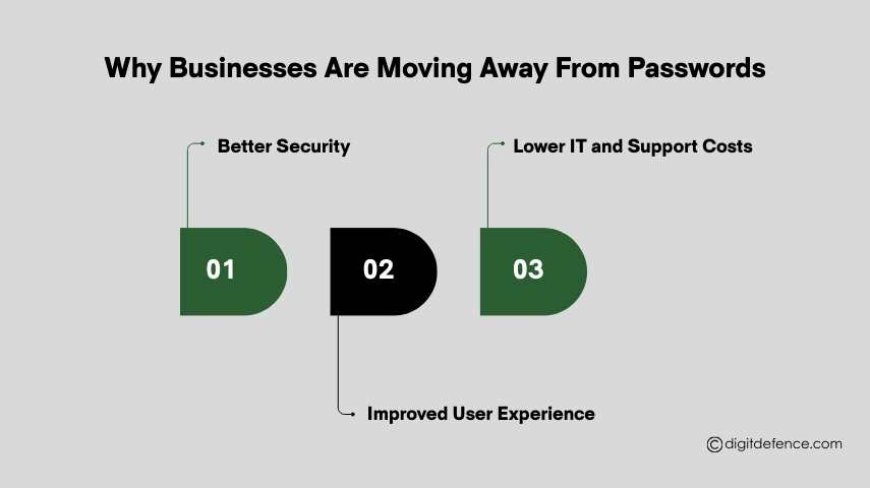
Why Businesses Are Moving Away From Passwords
 1. Better Security
Passwords are easy to steal. Biometrics and device-based logins are much harder to fake. This reduces phishing attacks and credential theft.
When companies use Passwordless Authentication, there are fewer login-related security incidents.
2. Improved User Experience
Users do not like complex passwords. Reset requests increase IT workload and frustrate customers.
Passwordless login:
-
Saves time
-
Reduces login failure
-
Improves customer satisfaction
This leads to higher engagement and trust.
3. Lower IT and Support Costs
Password resets cost businesses time and money. Support teams spend hours helping users recover accounts.
By removing passwords, companies reduce helpdesk tickets and operational costs.
Common Types of Passwordless Login Methods
Biometrics
Biometrics use unique physical traits such as:
-
Fingerprints
-
Face recognition
-
Eye scan
These methods are fast and user-friendly. Most smartphones and laptops already support them.
Magic Links
A secure login link is sent to the user’s email. Clicking the link logs them in instantly.
This method is simple and popular for SaaS platforms.
Authentication Apps
Apps generate secure login approval requests or codes. Users approve access from a trusted device.
Hardware Security Keys
Physical devices that connect via USB or NFC. These are used widely in high-security environments.
All these methods support Passwordless Authentication without needing passwords.
How Passwordless Login Builds Trust
Trust is a key part of digital platforms. Users want to know their data is safe.
Passwordless systems:
-
Reduce the chances of hacking
-
Protect user identity
-
Prevent unauthorized access
When users feel safe, they stay longer and engage more. This improves brand trust and loyalty.
Compliance and Data Protection Benefits
Many industries must follow strict security rules, such as:
-
Finance
-
Healthcare
-
E-commerce
Passwordless login supports compliance by
-
Reducing data exposure
-
Using strong identity verification
-
Lowering breach risk
This makes Passwordless Authentication a smart choice for regulated industries.
Myths About Passwordless Login
Myth 1: It is less secure than passwords
Passwordless login is more secure because it removes phishing and stolen password risks.
Myth 2: Biometric data can be stolen easily
Biometric data is encrypted and not stored as images, making it very hard to misuse.
Myth 3: It is expensive to implement
Most devices already support it, and businesses save money on password resets.
Myth 4: Users will get confused
Passwordless login is faster and easier than remembering passwords.
Myth 5: Losing a device means losing access
Access can be blocked, and backup login options are available
Is Passwordless Login Safe?
Yes, when implemented correctly.
Security measures include:
-
Encrypted data storage
-
Device trust checks
-
Multi-layer identity verification
Unlike passwords, biometric authentication cannot be guessed or reused. Even if one system is attacked, the login method remains secure.
Challenges to Consider
While passwordless systems offer many benefits, businesses must plan carefully.
Some challenges include:
-
Initial setup cost
-
User education
-
Device compatibility
However, these are short-term issues. Long-term security and efficiency gains are much higher.
The Future of Login Systems
Digital threats are increasing every year. Users demand faster and safer access. Passwords cannot meet these expectations anymore.
Future login systems will focus on:
-
Identity-based access
-
Zero-trust security
-
Seamless user experience
This shift makes Passwordless Authentication a long-term solution, not a trend.
How Businesses Can Get Started
To adopt passwordless login:
-
Assess current security risks
-
Choose the right authentication method
-
Train employees and users
-
Test and improve the system
Start small and scale gradually.
Passwords are outdated and risky. They slow users down and expose businesses to cyber threats.
Passwordless login offers a secure, simple, and modern solution. With better protection, improved experience, and lower costs, it is clear why this approach is gaining global adoption.
Businesses that invest in Passwordless Authentication today will be better prepared for tomorrow’s digital security challenges.