
How Kubernetes Security Protects Cloud Applications
Kubernetes security services protect cloud applications with access control, network policies, monitoring, and risk management for stable and secure operations.
What if someone could break into your cloud app today and steal your data or stop it from working?
Many businesses don’t realize how fast hackers can attack.
One small mistake can cause big problems, such as lost information, unhappy customers, and wasted money.
This is why strong protection for cloud applications is no longer optional. Keeping systems secure from the beginning helps prevent unexpected risks and keeps applications running smoothly without interruption.
What Is Kubernetes Security?
Kubernetes is a system that helps businesses run their applications in the cloud without interruption. It takes care of starting the app, keeping it running, and fixing small problems automatically.
When many people use an app at the same time, Kubernetes helps the app handle the extra load so it does not slow down or crash. If part of the app stops working, Kubernetes automatically starts the application again if something stops working, so no person has to fix it manually.
Key points:
-
Cluster security: Protect the main system and servers (nodes)
-
Container security: Ensure containers are free from bugs or malware
-
Access control: Decide who can use the system and what actions they can take
-
Monitoring & compliance: Check the system for errors and follow rules
In simple words, Kubernetes security keeps cloud applications safe from hackers and unauthorized use.
Why Kubernetes Security Matters
Cloud apps often store sensitive data such as:
-
Customer information
-
Financial records
-
Company secrets
If Kubernetes is not secure, attackers can:
-
Steal data
-
Modify or delete apps
-
Access private networks
-
Stop business operations
Common threats include:
-
Wrong cluster settings – Default or weak settings allow unauthorized access
-
Unsafe container images – Old or vulnerable images can be exploited
-
Excessive permissions – Users with unnecessary rights increase risk
-
Network issues – Poor network control allows attackers to move inside the cluster
With Kubernetes security, businesses reduce these risks and protect applications.
Key Components of Kubernetes Security
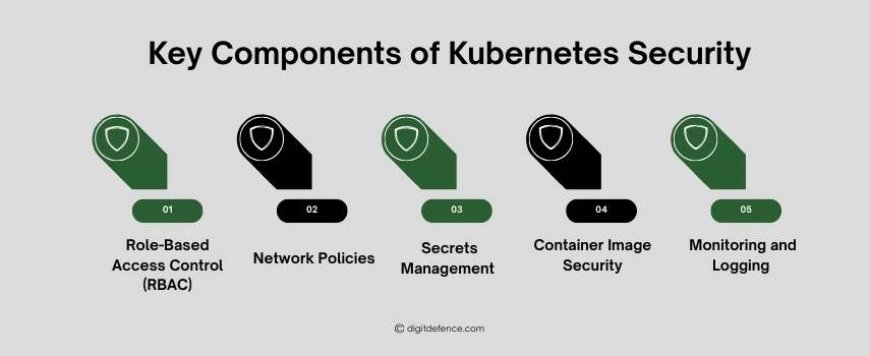 1. Role-Based Access Control (RBAC)
RBAC decides who can access the system and what they can do.
-
Admins: Can deploy apps and manage the cluster
-
Developers: Can deploy apps, but cannot change critical settings
-
Viewers: Can only see resources
RBAC ensures only authorized users perform important actions.
2. Network Policies
Network policies control communication between containers (pods).
-
Prevent unnecessary communication
-
Reduce attack surfaces
-
Protect sensitive services
3. Secrets Management
Kubernetes Secrets securely store passwords, API keys, and certificates. Proper management prevents sensitive data from being exposed in code or logs.
4. Container Image Security
Containers use images to run applications. Using trusted and updated images prevents malware and vulnerabilities.
5. Monitoring and Logging
Monitoring and logging help detect unusual activity and maintain system health. Tools like Prometheus and Grafana track access, errors, and performance.
Best Practices for Kubernetes Security
Follow these steps to secure Kubernetes clusters:
-
Keep Kubernetes updated – Apply security patches regularly
-
Limit user access – Use RBAC to give only needed permissions
-
Use trusted images – Scan containers before deployment
-
Encrypt data – Protect data at rest and in transit
-
Segment networks – Only allow required communication
-
Monitor continuously – Watch for unusual activity
-
Conduct audits regularly – Review security policies and settings
-
Automate security checks – Use tools to detect misconfigurations
These practices make Kubernetes security strong and reliable.
How Kubernetes Security Protects Cloud Applications
Benefits of Kubernetes security include:
-
Prevents unauthorized access – Only trusted users can perform tasks
-
Reduces vulnerabilities – Updated and safe images prevent cyber attacks
-
Controls traffic – Network policies limit the lateral movement of attackers
-
Secures sensitive data – Secrets and encryption keep information safe
-
Helps with compliance – Monitoring and audits ensure rules are followed
-
Maintains uptime – Reduces downtime caused by security issues
In short, Kubernetes security ensures cloud applications run safely and reliably.
Challenges in Kubernetes Security
Securing Kubernetes can be challenging because:
-
The system has many components
-
Updates are frequent
-
Multiple containers increase complexity
-
Teams need skills in containers and cloud security
Despite these challenges, following best practices and using security tools makes Kubernetes secure.
Tools to Improve Kubernetes Security
Some helpful tools are:
-
Kube-bench: Checks security rules compliance
-
Kube-hunter: Finds risks and weak points
-
Falco: Monitors container activity
-
Aqua Security / Twistlock: Full container security solutions
-
Open Policy Agent (OPA): Policy-based access control
Using these tools improves Kubernetes security efficiently.
Future of Kubernetes Security
The future of cloud security will focus on:
-
AI-driven monitoring: Detect threats faster and automatically
-
Policy-based automation: Reduce human errors
-
Zero-trust architecture: Assume no user or container is fully trusted by default
-
Secure software supply chains: Ensure images and dependencies are safe
Businesses that adopt these strategies will have stronger protection and smoother cloud operations.
Kubernetes is a powerful platform for running cloud applications, but without proper security, it can be vulnerable to attacks, data breaches, and downtime.
Kubernetes security protects applications by controlling access, securing containers, managing network traffic, encrypting sensitive data, and monitoring activity continuously.
This not only reduces the risk of cyberattacks but also ensures compliance with industry standards, maintains customer trust, and allows teams to focus on growth and productivity. Overall, investing in Kubernetes security is essential for running cloud applications smoothly, safely, and efficiently.