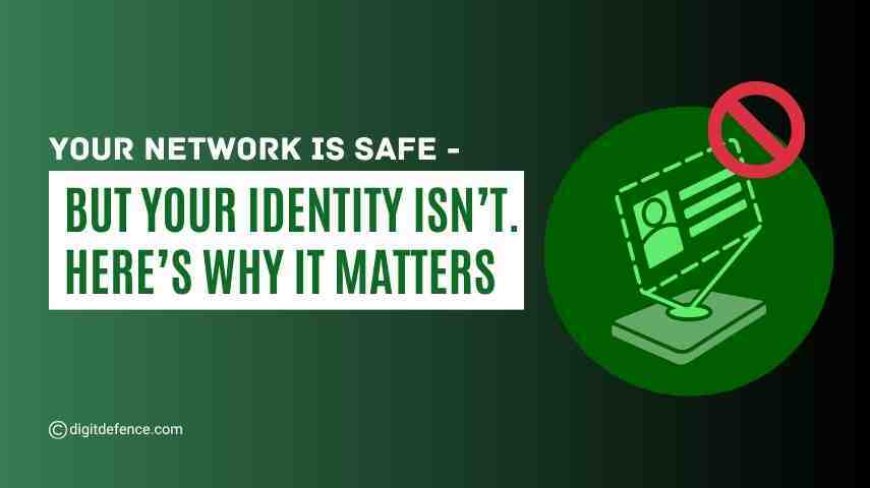
Your Network Is Safe – But Your Identity Isn’t. Here’s Why It Matters
Your network may be secure, but stolen identities can break your defenses. Learn why identity-first security is vital for every modern business.
You lock your doors.
You install firewalls.
You update your antivirus.
Everything seems safe.
But what if the real danger isn’t in your system - it’s in your identity?
What if hackers don’t need to break your network at all - because they can become you instead?
That’s the silent problem most businesses ignore -until it’s too late.
The Hidden Threat Behind a “Secure” Network
Every company today invests in network security - firewalls, antivirus tools, and encrypted systems.
Yet, identity theft and credential-based attacks have grown by 280% in the last few years.
Hackers aren’t breaking in - they’re logging in.
They steal usernames, passwords, or digital IDs to act like trusted employees or partners.
Once inside, they move quietly, access sensitive data, and disappear - often before anyone notices.
So yes, your network may be safe.
But if your identity isn’t, nothing else is.
Why Identity Is the New Target
Think about it - your business runs on digital identities.
Every employee, client, or system has login credentials.
If one is stolen, your entire operation can be compromised.
According to IBM’s Cyber Security Report, over 80% of breaches involve weak or stolen passwords.
And most companies take more than 200 days to detect such attacks.
By the time you realize something’s wrong, the damage is already done.
Identity is the new currency of cybercrime - and protecting it is no longer optional.
When Strong Networks Fail
Even the most advanced tools can’t help if hackers already have the keys.
Here’s what happens:
-
You invest in antivirus and firewalls.
-
You monitor network traffic.
-
You patch vulnerabilities regularly.
Yet, an employee clicks on a fake login page.
Their credentials get stolen.
Hackers walk right through your digital front door.
This is why identity-first security matters more than ever.
It doesn’t just protect systems - it protects who is accessing them and why.
Real-World Example: The SolarWinds Breach
In 2020, a massive cyberattack hit SolarWinds, a global IT software provider.
Hackers didn’t break into networks directly - they compromised trusted user accounts and updates.
This allowed them to enter systems of major U.S. government departments and Fortune 500 companies.
It was a lesson for every business:
Even the most secure network can fail if identities aren’t properly protected.
The Shift to Identity-First Security
Identity-first security means your protection starts with people - not just systems.
It focuses on verifying who is trying to access data, what they can do, and when they can do it.
Here’s how it changes the game:
-
Zero Trust Approach: No one gets automatic access, even if they’re inside the network.
-
Multi-Factor Authentication (MFA): Passwords alone are not enough.
-
Access Management: Employees get only the permissions they truly need.
-
Continuous Verification: Every login and action is checked for risk.
Instead of assuming everyone is safe, identity-first security assumes no one is - until proven otherwise.
Why Businesses Must Act Now
Many companies delay identity protection because they think it’s “too advanced.”
But in reality, it’s becoming a basic requirement for digital operations.
Consider these facts:
-
61% of companies faced at least one identity-related breach last year.
-
45% of employees reuse passwords across multiple accounts.
-
60% of small businesses shut down within six months after a major cyber attack.
These numbers aren’t just statistics - they’re warnings.
If you wait for an incident to act, it’s already too late.
What Businesses Can Do
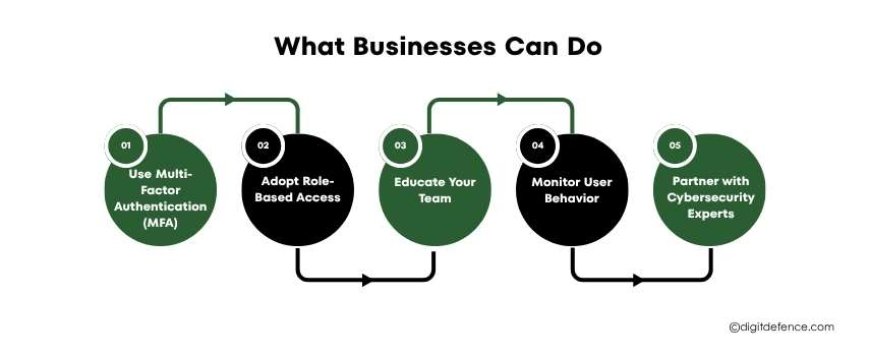
Identity-first protection doesn’t have to be complicated.
Start with these essential steps:
-
Use Multi-Factor Authentication (MFA): Add an extra layer of security to every login, especially admin accounts.
-
Adopt Role-Based Access: Give employees access only to the data they need for their job.
-
Educate Your Team: Train employees to identify phishing attempts and report suspicious activity.
-
Monitor User Behavior: Track unusual logins, data transfers, or off-hours access.
-
Partner with Cybersecurity Experts: Get help setting up advanced identity protection tools and policies.
These steps not only protect data but also build digital trust with your clients and partners.
The Rising Trend of Identity-Based Cybercrime
Over the past few years, cyberattacks have evolved from simple malware intrusions to highly advanced identity-based exploits.
According to Verizon’s 2024 Data Breach Investigations Report, identity misuse now accounts for 74% of all breaches globally.
Why? Because identity data holds the keys to everything - emails, cloud storage, internal apps, client databases, and payment systems.
When cybercriminals get hold of even one verified account, they don’t need to hack - they inherit legitimate privileges.
That’s what makes identity-first security a business survival factor, not just an IT upgrade.
Identity Theft: The Silent Business Disruptor
Unlike visible attacks such as ransomware or DDoS, identity-based attacks are stealthy and long-term.
They infiltrate slowly, blend into normal user activity, and can remain undetected for months.
A compromised account could:
-
Authorize false payments.
-
Access HR or financial records.
-
Install malicious code through trusted vendor channels.
The result? Financial loss, operational downtime, and loss of client trust.
That’s why large enterprises are investing in Identity Threat Detection and Response (ITDR)- a new approach that continuously monitors for identity misuse.
The Human Factor: The Strongest Yet Weakest Link
No matter how advanced your tools are, human error remains the biggest risk.
Employees still fall for phishing emails, reuse passwords, or click on unsafe links.
The fix isn’t more tools - it’s more awareness.
Regular training can reduce human-driven breaches by 70%.
When employees understand how attackers target identities, they become your first line of defense -not your weakest.
The Future Is Identity-Driven Security
The future of cybersecurity is identity-led.
Technologies like biometric authentication, behavioral analytics, and passwordless logins are shaping a safer digital environment.
Soon, AI-driven identity systems will assess every login for risk - analyzing device, location, and behavior in real time.
This makes access adaptive and personalized, giving each user the right level of security without friction.
Businesses that adopt identity-first security early won’t just protect data - they’ll gain a built on genuine digital trust that sets you apart.
The Real Risk: Losing Trust
When your network is hacked, you lose data.
When your identity is stolen, you lose credibility.
Clients stop trusting your brand.
Partners question your reliability.
And your reputation - something that takes years to build- can vanish in minutes.
This is why identity protection isn’t just a security goal -it’s a business growth strategy.
Turning Identity Protection into Strength
Imagine your business where:
-
Every login is verified.
-
Every access is monitored.
-
Every identity is protected.
That’s what identity-first security builds - not just safety, but confidence.
Because when you know your people, systems, and data are secure, you move faster, smarter, and stronger.
Cybersecurity isn’t only about blocking attacks - it’s about enabling growth without fear.
And in the digital world, that’s your greatest advantage.
Before You Log Out
Your firewalls might block outsiders.
But without identity-first protection, your insider doors stay open.
So before investing in more network tools, ask yourself:
“Do I truly know who’s inside my system?”
Because your network can survive a lot
But your business won’t survive a stolen identity.
Secure your identity. Protect your trust. Strengthen your future.