How SIEM Security Solutions Improve Threat Detection?
Learn how SIEM security solutions enhance threat detection by collecting, analyzing, and correlating security data across systems.

Security breaches are often identified only after systems have been compromised, data has been exposed, and business continuity is at risk. As threats become more sophisticated and persistent, real-time visibility into network activity is critical.
SIEM Security Solutions provide a structured, centralized framework to detect, analyze, and respond to security events across your entire digital infrastructure before they turn into serious incidents.
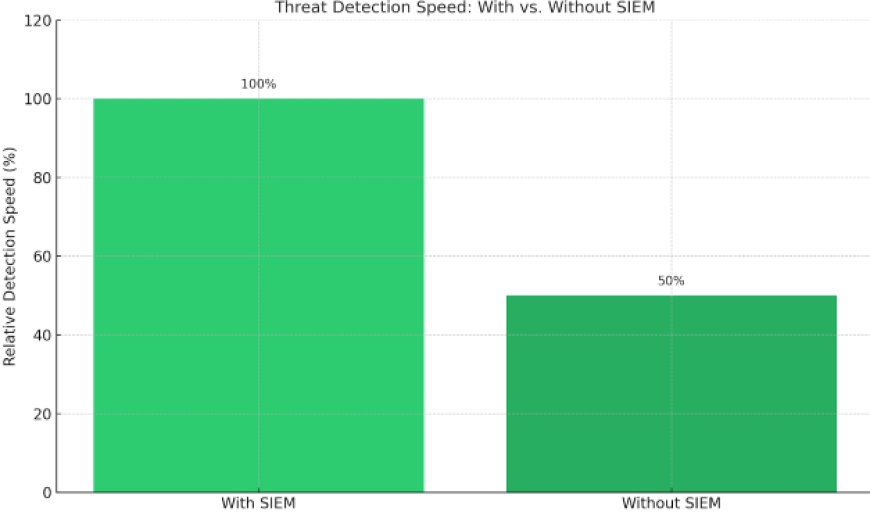
Studies suggest that organizations using SIEM solutions detect threats up to 50% faster than those without such systems.
Tata Communications supported a major financial firm handling over a million daily security logs across 300+ devices. Without a centralized system, their security team struggled with delayed threat detection, false positives, and compliance risks.
To solve this, Tata deployed a managed SIEM platform that unified log data, applied behavioral baselines, and enabled real-time alerts. This improved threat visibility, accelerated response time, and strengthened overall security posture.
What Are SIEM Security Solutions?
SIEM stands for Security Information and Event Management. These systems collect, normalize, and analyze security data from across your network, servers, endpoint management, cloud platforms, and applications.
With a SIEM solution in place, IT teams can:
-
Monitor unusual activities in real-time
-
Investigate incidents with detailed logs
-
Detect coordinated attacks (like phishing + privilege escalation)
-
Reduce the time between breach and response
SIEM tools serve as your organization’s security command center, especially when combined with a Security Operations Center (SOC).
Role of SIEM in Modern Cybersecurity Architecture
In cybersecurity, Security Information and Event Management (SIEM) is a foundational system designed to provide centralized visibility, detection, and response across an organization's digital environment.
Unlike traditional perimeter defenses (e.g., firewalls, intrusion prevention systems), SIEM tools offer a holistic approach to threat detection by aggregating and analyzing security data from multiple sources.
Core Capabilities of SIEM Systems:
-
Log Aggregation
SIEM platforms collect and normalize log data from diverse systems such as endpoints, firewalls, applications, cloud security services, and authentication servers.
-
Event Correlation
The system applies correlation rules and behavioral analysis to identify complex attack patterns that may go unnoticed in isolated systems.
-
Real-Time Alerting
Based on defined thresholds or anomaly detection algorithms, SIEM generates alerts for potential security incidents, allowing for faster incident response.
-
Incident Timeline and Forensics
SIEM tools create historical records of system activity, supporting digital forensics, root cause analysis, and reconstruction of the attack lifecycle.
-
Compliance Reporting
Many regulatory frameworks (such as HIPAA, PCI DSS, ISO/IEC 27001, and GDPR) require logging and audit trails. SIEM automates reporting and supports compliance audits.
Key Security Events Monitored by SIEM Tools
Modern SIEM platforms collect and analyze structured log data from across your IT environment. Below are five core event types SIEM systems monitor in real time, using normalized schemas and correlation rules:

1. Authentication and Access Control Events
-
Tracks login attempts (successful/failed)
-
Detects credential misuse and unauthorized account access
-
Monitors session anomalies and privilege escalations
2. File Integrity Monitoring (FIM)
-
Flags unauthorized file modifications or deletions
-
Captures changes in system configs, registry values, and binaries
-
Identifies indicators of compromise tied to malware behavior
3. Cloud Platform Audit Logs
-
Integrates logs from AWS Cloud security, Azure Monitor, and GCP Audit
-
Detects unusual resource provisioning or IAM policy changes
-
Monitors unauthorized access across multi-cloud setups
4. Endpoint and Network Telemetry
-
Collects EDR/XDR agent data and traffic flow records
-
Identifies lateral movement, process injection, and USB access
-
Flags command-and-control activity and privilege misuse
5. Data Exfiltration and DLP Events
-
Detects abnormal outbound data volume or encrypted transfers
-
Monitors file share access and off-network movement
-
Triggers alerts on DLP violations or suspicious download patterns
SIEM vs. SOAR
|
SIEM (Security Information and Event Management) |
SOAR (Security Orchestration, Automation, and Response) |
|
Collects, normalizes, and analyzes log data |
Automates and coordinates threat response actions |
|
Focuses on threat detection and alerting |
Focuses on incident response and remediation |
|
Supports analyst-driven investigations |
Uses automated playbooks and workflows |
|
Integrates with logs from network and security systems |
Integrates with SIEM, ticketing, and other response platforms |
|
Provides visibility and centralized monitoring |
Enables faster, consistent, and scalable incident handling |
How SIEM Security Solutions Improve Threat Detection
-
Centralized Security Monitoring
SIEM collects and consolidates data from diverse security systems and IT infrastructure into a single platform, providing comprehensive visibility across the entire network environment.
-
Event Correlation Across Systems
By linking seemingly unrelated events, such as multiple failed login attempts followed by file access, SIEM detects complex attack patterns more quickly and accurately.
-
Behavioral Baselines for Anomaly Detection
SIEM establishes normal activity profiles for users and systems, enabling it to identify and alert on deviations like unusual login times or large data transfers that may indicate a data breach.
-
Predefined Detection Rules
Equipped with extensive, regularly updated rule sets, SIEM can recognize a wide range of known attack techniques, including brute-force attacks, phishing attempts, and insider threats.
-
Efficient Incident Investigation
SIEM maintains detailed logs, event timelines, and forensic data, allowing security teams to reconstruct incidents rapidly and understand the scope and impact of an attack.
-
Automated Alerting and Prioritization
Uses artificial intelligence and machine learning, SIEM reduces false positives by filtering alerts and prioritizes threats based on severity, improving response efficiency.
SIEM security solutions are essential for modern cybersecurity. They collect and analyze data from across your systems to detect threats early and help respond quickly. Using SIEM security solutions improves your ability to protect data, meet compliance requirements, and maintain business continuity.
For Expert SIEM guidance and support, contact us at [email protected].