Why Do Organizations Need a Cybersecurity Risk Assessment?
Learn why every organization must do a cybersecurity risk assessment to stay safe from threats and protect its data. Simple steps explained.
Have you thought about how one small security mistake could harm your business? Or why do some companies recover fast after a cyberattack while others don’t?
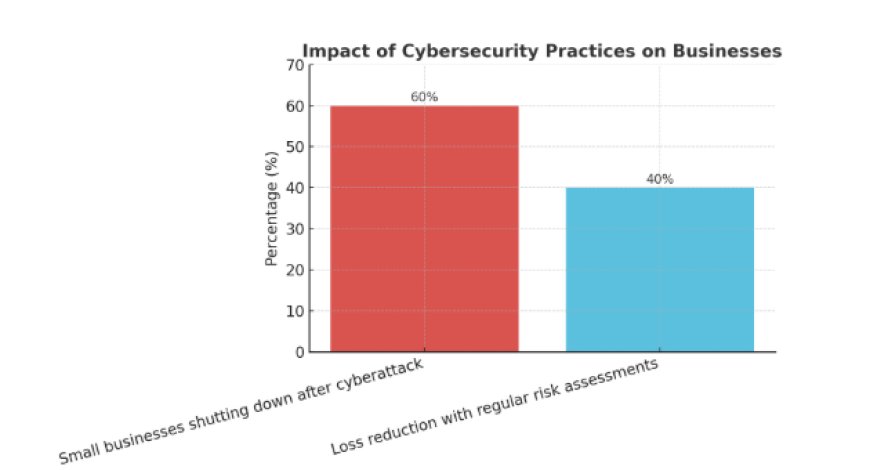
According to industry research, 60% of small businesses shut down within six months of experiencing a cyberattack, as reported by the National Cyber Security Alliance. This alarming statistic highlights the severe consequences of inadequate security measures.
However, studies by the Ponemon Institute show that companies conducting regular Cybersecurity Risk Assessments can reduce breach-related losses by up to 40%, proving that proactive evaluation is not just a defensive measure but a critical business strategy.
Marriott suffered a massive breach exposing data of over 500 million guests. Investigations revealed that gaps in their risk assessment and security audits allowed hackers prolonged access to sensitive information.
The incident led to regulatory fines exceeding ₹9,978 crore, severe brand damage, and years of recovery efforts. A strong and proactive Cybersecurity Risk Assessment could have identified and addressed those vulnerabilities before attackers exploited them.
Understanding Cybersecurity Risk Assessment
A Cybersecurity Risk Assessment is the process of identifying, analyzing, and prioritizing risks to an organization’s digital infrastructure, data, and assets. It evaluates:
-
Threats — potential causes of harm (e.g., hackers, malware, insider misuse)
-
Vulnerabilities — weaknesses that threats could exploit (e.g., outdated software, poor access controls)
-
Impact — the potential damage in terms of cost, compliance violations, downtime, and reputation loss
This process helps leaders make informed decisions about where to invest in security controls and how to respond to evolving cyber risks.
Why Organizations Need Cybersecurity Risk Assessment
1. Proactive Threat Identification
Cyber threats change daily, from ransomware and phishing attacks to advanced persistent threats (APTs). A cybersecurity Risk Assessment identifies vulnerabilities before attackers can exploit them. For example, regular assessments may reveal unpatched systems, weak passwords, or unsecured APIs that could be entry points for hackers.
2. Regulatory Compliance and Avoiding Fines
Industries like finance, healthcare, and e-commerce face strict regulations such as GDPR, HIPAA, and PCI DSS. A Cybersecurity Risk Assessment ensures your organization meets these standards, avoiding heavy fines and legal penalties. For instance, GDPR violations can cost up to ₹179.4 crore or 4% of global annual turnover, whichever is higher.
3. Cost Savings and Breach Prevention
Preventing a cyber incident is far more cost-effective than responding to one. Assessments highlight high-risk areas, enabling targeted investments in security measures rather than costly blanket approaches. The Ponemon Institute reports that breach prevention strategies informed by risk assessments can cut incident costs by 40–50%.
4. Safeguarding Brand Reputation
Trust is a critical business currency. One cyber incident can wipe out customer confidence in no time. By demonstrating that your company conducts regular cybersecurity Risk Assessments, you reassure clients, investors, and partners that data security is a top priority.
5. Supporting Business Growth and Innovation
When leaders understand their risk environment, they can adopt new technologies such as cloud services or IoT with confidence. A Cyber Security Risk Assessment enables innovation without compromising security.
Key Steps in Conducting a Cybersecurity Risk Assessment
-
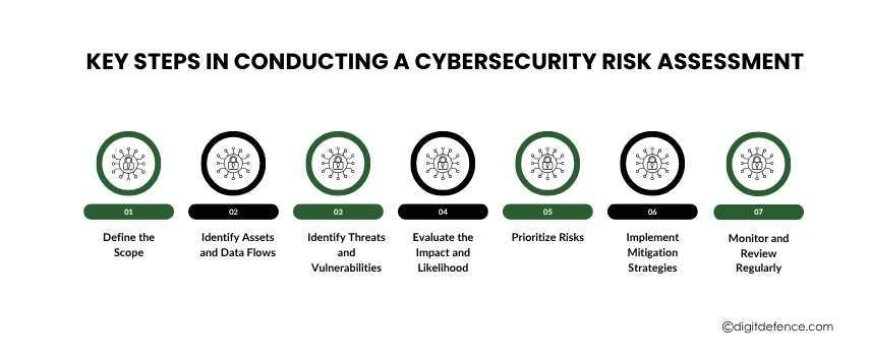
Define the Scope
Identify which systems, networks, and data will be assessed. This could include cloud platforms, on-premises infrastructure, or third-party integrations. Identify Assets and Data Flows -
Document critical assets like customer databases, financial records, intellectual property, and how data moves across the organization.
-
Identify Threats and Vulnerabilities
Use vulnerability scans, penetration testing, and threat intelligence to detect weaknesses.
-
Evaluate the Impact and Likelihood
Assess how likely each threat is to occur and what damage it would cause.
-
Prioritize Risks
Use a risk matrix to rank threats from high to low priority.
-
Implement Mitigation Strategies
Apply controls such as encryption, multi-factor authentication, employee training, and incident response plans.
-
Monitor and Review Regularly
Cyber risks are dynamic, and continuous monitoring ensures you stay protected as new threats emerge.
Best Practices for an Effective Cybersecurity Risk Assessment
-
Engage All Departments — Cybersecurity is not just an IT responsibility; finance, HR, and operations should be involved.
-
Leverage Frameworks — Use standards like NIST Cybersecurity Framework or ISO/IEC 27005 for structured assessments.
-
Simulate Real Attacks — Penetration testing offers insight into how attackers might exploit vulnerabilities.
-
Update After Major Changes — Perform a new assessment when implementing new software, migrating to the cloud, or after a security incident.
Common Mistakes Organizations Make
-
Treating Risk Assessment as a One-Time Task
Cybersecurity Risk Assessment should be ongoing, not an annual checkbox exercise.
-
Overlooking Insider Threats
Not all risks come from outside; employees and contractors can unintentionally or maliciously cause breaches.
-
Failing to Act on Findings
Identifying risks without implementing mitigation measures defeats the purpose of the assessment.
The ROI of Cybersecurity Risk Assessment
Investing in Cyber Security Risk Assessment yields tangible returns:
-
Reduced Incident Costs — Savings on breach response, legal fees, and downtime.
-
Improved Decision-Making — Clear data on where to focus security budgets.
-
Enhanced Stakeholder Trust — Better relationships with clients, regulators, and investors.
Cybersecurity is no longer optional - it’s a core component of sustainable business strategy. A Cybersecurity Risk Assessment is the foundation for understanding your threat environment, complying with regulations, protecting your reputation, and enabling growth.
Invest in identifying and mitigating risks today, or pay the price tomorrow. By making Cybersecurity Risk Assessment a regular part of your business operations, you’re not just securing data, you’re safeguarding your company’s future.
Secure Your Business Now - Email us at [email protected] to schedule your Cybersecurity Risk Assessment today!