How Blockchain and IoT Drive Business Efficiency
Discover how blockchain and IoT combine to enhance business efficiency through secure data sharing, automation, and real-time insights.

Are you looking for ways to streamline your business operations?
Wondering how cutting-edge technologies like blockchain and the Internet of Things (IoT) can boost your efficiency? In a digital environment, businesses are constantly seeking ways to enhance their processes, improve transparency, and reduce costs. The combination of blockchain and IoT is proving to be a game-changer in driving business efficiency. By integrating blockchain Internet of Things (IoT), businesses can optimize their supply chains, automate processes, and ensure secure and real-time data exchange. These technologies work together to solve some of the most complex challenges businesses face, offering immense potential to drive operational efficiencies across various sectors.
According to a recent Gartner report, 75% of organizations that have adopted IoT technologies have seen significant improvements in operational efficiency. Moreover, blockchain can increase transparency and security, which are critical in today's business environment.
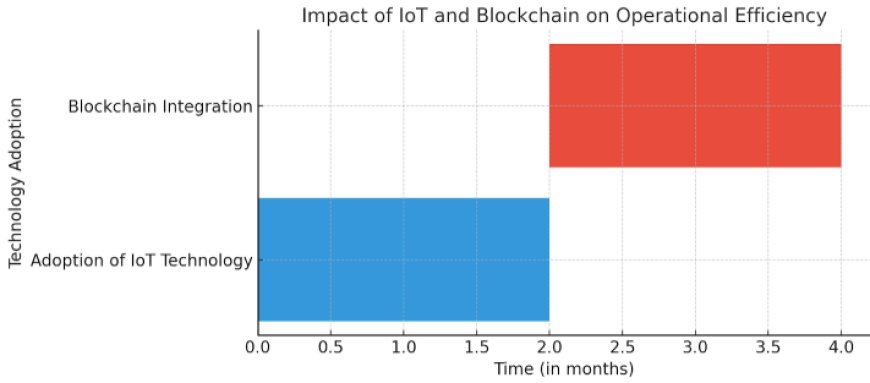
One of the most prominent examples of blockchain and IoT driving business efficiency comes from IBM’s Food Trust Network. By combining blockchain and IoT, IBM has helped companies like Walmart and Nestle track food products from farm to store. Using IoT sensors to monitor the temperature and condition of food during transit, combined with blockchain to record every transaction, IBM has created a transparent, secure, and efficient supply chain.
This has resulted in faster recalls (in the case of contaminated products), reduced food waste, and improved consumer trust in the safety and quality of food products.
What Are Blockchain and IoT?
Blockchain is a decentralized digital ledger technology that records transactions across multiple computers, ensuring that the data is immutable and transparent. Each block in the chain contains data, and once a block is added, it cannot be altered. This makes blockchain highly secure, reducing the risk of data tampering and fraud. It's widely known for its role in cryptocurrencies like Bitcoin, but its applications go far beyond digital currencies.
IoT, on the other hand, refers to the network of physical devices connected to the internet, enabling them to collect, share, and exchange data. From smart appliances to wearable devices, IoT connects devices in real-time to improve operational efficiencies. By connecting physical objects to the digital environment, IoT allows businesses to automate processes and collect valuable data to make informed decisions.
When blockchain is integrated with IoT, it enhances the benefits of both technologies by adding an extra layer of security, transparency, and accountability. The decentralized nature of blockchain ensures that the data exchanged between IoT devices is secure, tamper-proof, and verifiable, which is crucial for businesses that rely on data-driven decisions.
How Blockchain and IoT Drive Business Efficiency
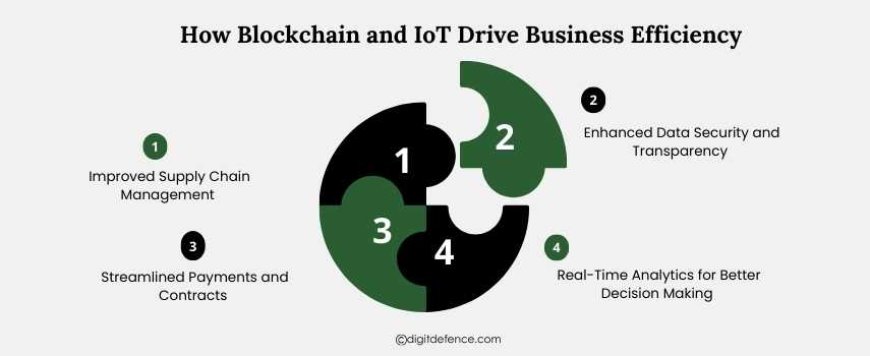
1. Improved Supply Chain Management
One of the most significant ways blockchain Internet of Things (IoT) integration drives business efficiency is through supply chain management. With IoT devices, businesses can track goods and materials in real time, from production to delivery. However, without secure and transparent systems, this data could be vulnerable to tampering or errors. By implementing blockchain, each transaction or movement in the supply chain is recorded on an immutable ledger, ensuring transparency and preventing fraud.
2. Enhanced Data Security and Transparency
The combination of blockchain and IoT offers a more secure way to exchange sensitive business data. IoT devices collect vast amounts of data, but they are often susceptible to cyberattacks and data breaches. Blockchain ensures that any data collected through IoT devices is recorded in a decentralized ledger that cannot be altered without detection. This increases transparency and accountability, making it easier to trace the origins and changes of data.
3. Streamlined Payments and Contracts
Another way blockchain and IoT can enhance business efficiency is by automating payments and contract execution. Smart contracts, powered by blockchain, are self-executing contracts with the terms of the agreement directly written into code. When combined with IoT devices, these smart contracts can automatically trigger actions like payments, inventory updates, or even system alerts when certain conditions are met.
4. Real-Time Analytics for Better Decision Making
Blockchain and IoT enable businesses to collect real-time data, which can be used for predictive analytics and decision-making. IoT sensors monitor everything from machine performance to customer behavior, providing businesses with valuable insights. When combined with blockchain, businesses can trust the accuracy of the data, making it easier to make informed decisions without the risk of data manipulation or errors.
Blockchain Internet of Things (IoT) integration is a powerful tool for driving business efficiency. From supply chain management to data security, blockchain and IoT offer significant improvements in transparency, security, and automation. By embracing these technologies, businesses can streamline operations, reduce costs, and enhance customer trust, leading to greater success in today’s competitive market.
If you’re ready to unlock the full potential of blockchain and IoT for your business, contact us at [email protected] for customized solutions that drive results.