
The Growing Cybersecurity Risks in Cryptocurrency Market
Explore the evolving cybersecurity risks impacting the cryptocurrency market, including threats to wallets, exchanges, and blockchain networks.

With all the hype around digital coins, many think they’re stepping into the future. But what most people don’t realize is that cryptocurrencies in India are also creating new pathways for hackers, scams, and cyber threats.
If you’re investing, accepting, or simply exploring cryptocurrency, your security is exposed to serious risks.
The solution is to start by learning the basics and securing your crypto wallet with trusted tools.
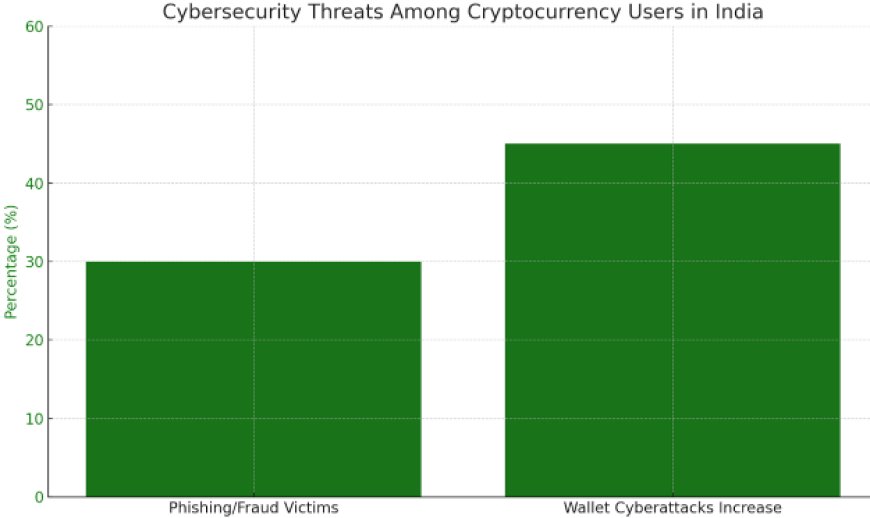
According to recent studies, over 30% of cryptocurrency users in India have reported experiencing phishing attempts or fraud, while cyberattacks on digital wallets increased by 45% in the past year alone.
WazirX, one of India’s largest cryptocurrency exchanges, faced a major security breach involving a digital wallet that holds user funds. The wallet had strong protections that required multiple approvals before any money could be moved.
However, hackers found a weakness in the wallet’s smart contract and changed its settings. This let them withdraw a large amount of cryptocurrency, worth over ₹1,600 crore, without needing the usual permissions. The stolen coins included popular ones like Ether and Shiba Inu.
After the attack, WazirX stopped withdrawals and trading to stop further losses. They are now working with security experts to find the stolen money and improve their safety measures. This incident showed that even big crypto companies in India can face serious cyber threats and need to remain cautious.
Understanding the Risks Associated with Cryptocurrencies
Unlike traditional banking systems backed by centralized oversight and regulatory frameworks, cryptocurrencies function on decentralized networks. While this decentralization offers greater autonomy, it also eliminates the safety nets typically provided by banks and government institutions. If a crypto wallet is compromised or a user falls prey to scams like phishing scams, recovering the lost funds is often impossible.
In India, the surge in cryptocurrency adoption has drawn increasing attention from cybercriminals. According to a 2024 report by Chainalysis, India ranked among the top five countries in global crypto adoption. However, with this growth comes increased exposure.
Both individual users and businesses often underestimate the technical complexity of managing digital assets securely. Inadequate knowledge of wallet protection, private keys, and platform reliability continues to leave many vulnerable to attacks, making cryptocurrencies in India a prime target for cyber threats.
Why Professionals and Businesses Are Concerned
As cryptocurrencies in India become more integrated into business operations, the associated cybersecurity risks are drawing serious attention from corporate leaders and IT security teams alike. What appears to be a modern payment solution is also introducing complex vulnerabilities across organizations.
Key Risk Areas:
-
Unauthorized Access to Wallets: Poor key management or compromised credentials can lead to irreversible fund loss.
-
Ransomware Demands in Crypto: Hackers often demand ransom payments in cryptocurrencies due to their trace-resistant nature.
-
Data Breaches on Unregulated Exchanges: Many platforms lack standardized security protocols, making them easy targets for cyberattacks.
-
Employee Targeting via Fraudulent Platforms: Scammers exploit employees through fake crypto schemes, phishing links, or investment traps.
These incidents go beyond financial implications:
-
Operational Disruption: Workflow interruptions due to locked systems or diverted resources
-
Reputational Damage: Loss of stakeholder trust following publicized breaches
-
Regulatory Scrutiny: Heightened attention from authorities over data handling and financial practices
Additionally, the use of cryptography in businesses is critical for securing transactions and protecting sensitive information. However, improper implementation or outdated cryptographic practices can also expose organizations to risks, making it essential to regularly update and audit cryptographic methods.
As digital assets become part of business portfolios, companies must treat crypto risk as a board-level issue, not just an IT concern.
Common Cybersecurity Risks in the Cryptocurrency Ecosystem
As cryptocurrencies gain momentum in India, so do the cybersecurity threats associated with them. Below are the most prominent risks affecting users, investors, and platforms:
1. Phishing Attacks
-
What it is: Fake emails, messages, or websites that imitate trusted sources
-
Risk: Steals private keys, login credentials, or prompts unauthorized transactions
-
Example: A fake exchange login page capturing user credentials
2. Malware & Cryptojacking
-
What it is: Malicious software or hidden scripts installed on devices
-
Risk: Steals wallet data or secretly uses your system to mine cryptocurrency
-
Example: Infected browser plugins or email attachments
3. Investment Scams
-
What it is: Schemes promising high returns with little or no risk
-
Risk: Victims invest in fake platforms or coins and lose their money
-
Example: Fake influencers promoting unverified tokens
4. Fraudulent ICOs (Initial Coin Offerings)
-
What it is: Fake or misleading token sales
-
Risk: Capital raised from investors is misused or stolen
-
Example: A project with no real team, product, or roadmap
5. Ponzi & Pyramid Schemes
-
What it is: Systems where early investors are paid with funds from new ones
-
Risk: Eventually collapse, causing major losses for the majority
-
Example: Platforms that rely solely on recruitment rather than real investment returns
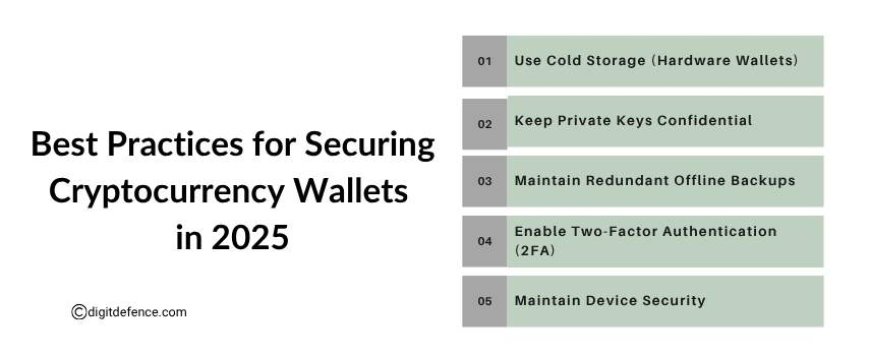
Best Practices for Securing Cryptocurrency Wallets in 2025
As cryptocurrency use grows in 2025, secure wallet management is essential. Without proper safeguards, compromised credentials can lead to permanent loss of digital assets.
Below are key practices to enhance wallet security:
1. Use Cold Storage (Hardware Wallets)
-
Store high-value assets offline
-
Ideal for long-term, secure storage
-
Less vulnerable to cyber threats
2. Keep Private Keys Confidential
-
Never share or upload to cloud storage
-
Store physically in secure, offline locations
-
Use tamper-proof containers or vaults for backups
3. Maintain Redundant Offline Backups
-
Keep multiple secure copies of seed phrases
-
Store in geographically separate, protected locations
-
Regularly verify backups for accessibility
4. Enable Two-Factor Authentication (2FA)
-
Use app-based 2FA (like Google Authenticator)
-
Avoid SMS-based 2FA due to SIM-swap risks
-
Apply to all exchange and wallet accounts
5. Maintain Device Security
-
Keep operating systems and antivirus for security up-to-date.
-
Avoid accessing wallets on shared or public devices
-
Use strong passwords and biometric authentication where available
Are Crypto Exchanges in India Safe for Investors?
The security of cryptocurrency exchanges in India remains a significant concern for investors and businesses alike. While the market is growing rapidly, regulatory frameworks are still evolving, leaving users exposed to considerable risks.
Issues with Indian Exchanges:
-
Lack of Uniform Regulation
Many exchanges operate in a legal grey area, with inconsistent compliance with security standards.
-
Varying Security Protocols
Some platforms implement robust safeguards, but others lack even basic protections like two-factor authentication or encrypted wallets.
-
Limited Customer Support
In the event of hacks or unauthorized transactions, users often find no reliable assistance or formal dispute resolution process.
-
History of High-Profile Breaches
Indian exchanges have experienced cyberattacks leading to multi-crore losses, with little chance of fund recovery.
Cryptocurrencies in India bring great opportunities but also serious security risks. To stay safe, users and businesses must follow strong security practices and choose trusted platforms. With regulations still evolving, staying cautious and informed is key to protecting your digital assets.
Want to keep your cryptocurrency safe?
Protect your digital assets with our secure solutions.
Email us at [email protected] for more information.