How to Prevent a Major Security Risk Loss?
Learn easy steps to protect your data and avoid costly losses from major security risks. Stay safe with these simple prevention tips.

Have you thought about what a single cyberattack could do to your business? What if one small, unnoticed weakness ended up costing you millions?
Security risk is no longer a distant concern; it’s something companies deal with regularly.
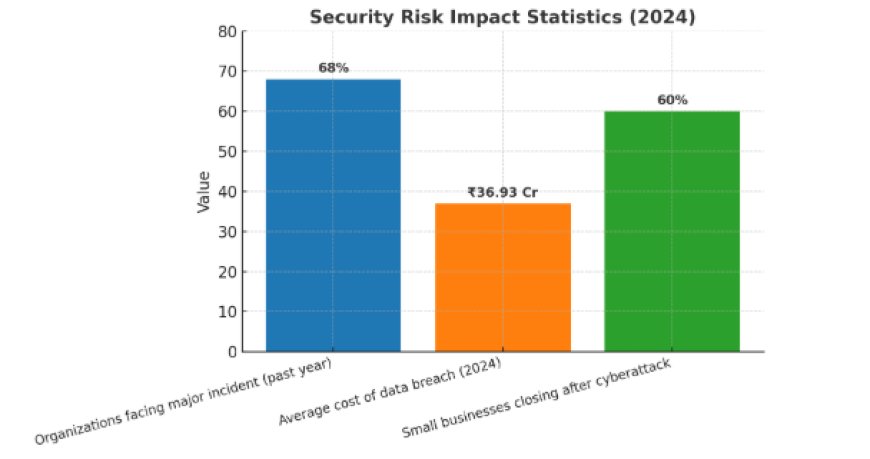
Studies show that nearly 68% of organizations have faced at least one major security incident in the past year. In 2024, the average cost of a data breach worldwide reached approximately ₹36.93 crore. For small businesses, the impact can be devastating; six out of ten close within six months after a serious cyberattack.
One of the most notable examples of a preventable security risk loss is the Target data breach.
Hackers gained access to the retailer’s network through a third-party HVAC vendor, exposing the details of 40 million credit and debit card accounts.
This incident cost Target over ₹1,344.6 crore in settlements, legal fees, and compensation, not to mention lasting reputational damage. The breach highlighted how indirect vulnerabilities, if left unmonitored, can lead to catastrophic consequences.
Understanding the Scope of a Security Risk
A security risk refers to any potential threat that could exploit vulnerabilities in your business operations, systems, or processes, leading to financial, reputational, or operational losses. These risks can be both internal (employee negligence, misconfigurations) and external (malware, phishing, ransomware attacks).
The first step to prevention is recognizing that no business, big or small, is immune. Hackers today don’t just target multinational corporations; they actively scan for weak links in smaller companies that often lack advanced defenses.
Key Steps to Prevent a Major Security Risk Loss
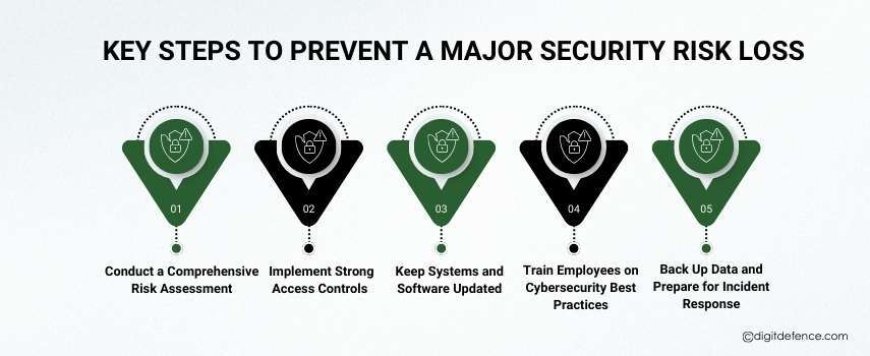
1. Conduct a Comprehensive Risk Assessment
Before you can prevent a security risk, you must identify where your vulnerabilities lie. A cybersecurity risk assessment involves:
-
Mapping critical assets and data flows.
-
Identifying possible threat actors.
-
Evaluating the likelihood and potential impact of each risk.
By documenting and prioritizing risks, you can allocate security budgets more effectively and avoid blind spots.
2. Implement Strong Access Controls
Unauthorized access is one of the leading causes of security risk incidents. Businesses should adopt multi-factor authentication (MFA), role-based access permissions, and strict password policies.
For example, limiting administrative privileges to only those who truly need them reduces the potential for insider threats. When combined with real-time monitoring, access control becomes a powerful shield against both intentional and accidental breaches.
3. Keep Systems and Software Updated
Outdated software is a goldmine for cybercriminals. Many high-profile attacks exploit unpatched vulnerabilities in operating systems or third-party applications.
Automating updates and regularly auditing your IT infrastructure significantly reduces your security risk exposure. The faster you close these loopholes, the less chance attackers have to exploit them.
4. Train Employees on Cybersecurity Best Practices
Studies show that 88% of breaches involve human error. This makes employee awareness training a critical investment.
Training programs should cover:
-
Recognizing phishing attempts.
-
Secure password management.
-
Safe handling of sensitive data.
The more security-conscious your workforce, the lower your security risk profile.
5. Back Up Data and Prepare for Incident Response
Even with preventive measures, incidents can still occur. Regular, encrypted backups ensure your business can recover quickly without paying costly ransoms.
A well-documented incident response plan (IRP) should define roles, escalation procedures, and communication protocols. Testing your IRP through simulated attacks will help identify weaknesses before an actual crisis.
Common Causes Behind Major Security Risk Losses
Most major security risk losses don’t happen out of nowhere; they’re often the result of overlooked weaknesses or poor practices. Understanding these causes can help you address them before they lead to serious damage.
1. Weak or Stolen Credentials
Passwords that are easy to guess or reused across accounts remain one of the top causes of breaches. Once attackers get hold of login credentials, they can move deeper into your systems unnoticed.
2. Outdated Software and Systems
Unpatched software leaves the door wide open for hackers. Many high-profile breaches happen because critical security updates were ignored or delayed.
3. Lack of Employee Awareness
Even the best security tools can’t protect against human error. Clicking on a phishing link, using unsecured Wi-Fi, or mishandling sensitive data can all create serious vulnerabilities.
4. Inadequate Access Controls
Granting excessive privileges to employees or vendors increases the risk of data misuse or accidental exposure. Access should always follow the “least privilege” principle.
5. Third-Party Vendor Risks
Your security is only as strong as your weakest partner. If a vendor’s systems are compromised, it can provide attackers a direct path into your network, as seen in the Target breach.
6. Poor Incident Response Preparedness
A slow or uncoordinated response can turn a small incident into a major disaster. Without a clear plan, businesses lose precious time containing the cyber threat.
Technology Solutions to Minimize Security Risk
Modern businesses have access to advanced tools that drastically reduce security risk:
|
Technology |
Function |
Benefit |
|
XDR (Extended Detection & Response) |
Monitors and responds to threats across networks, endpoints, and cloud environments. |
Unified visibility & faster response times. |
|
Zero Trust Security |
Verifies every access request regardless of location. |
Prevents lateral movement of attackers. |
|
SIEM (Security Information & Event Management) |
Aggregates and analyzes log data from multiple sources. |
Early threat detection. |
|
DLP (Data Loss Prevention) |
Monitors and blocks unauthorized data transfers. |
Protects sensitive business information. |
A major security risk loss has the potential to bring even the most successful business to its knees. However, by taking proactive steps such as conducting thorough risk assessments, putting multiple layers of defense in place, training your employees, and preparing for incidents, you can greatly cut down your chances of becoming the next victim.
The cost of prevention is always lower than the cost of recovery. By making security risk assessments and preventive measures a regular part of your operations, you’re not just avoiding potential losses; you’re building a stronger, more resilient future for your company.
Secure Your Business Now – Email us at [email protected] to get your Security Risk assessment and protection plan in place today!