How Can AI Help Prevent Deepfakes
Learn how technology detects and prevents deepfakes, protects videos, images, and audio, and helps businesses and individuals stay safe online.
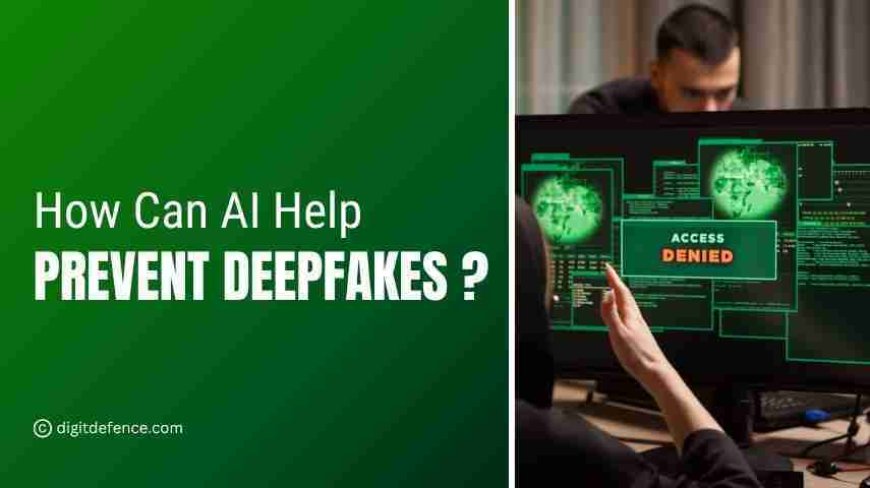
Think about the videos, images, and audio you see online every day, news clips, social media posts, or messages. They can influence opinions, shape decisions, or even affect businesses. But here’s the problem: what if someone creates a fake video or audio that looks real?
These fakes are called deepfakes, and they can trick people, spread lies, or damage reputations. Imagine a fake video of a public figure making false statements, or a fraudster using someone’s voice to steal money, these risks are real and growing.
This is where Artificial Intelligence (AI) comes in. AI can detect and stop deepfakes before they cause serious harm, keeping people, businesses, and information safe.
Facebook/Meta Deepfake Detection
In 2019, Facebook launched the Deepfake Detection Challenge to prevent fake videos from spreading on its platform. The goal was to develop AI tools to detect manipulated content quickly and accurately.
Detecting deepfakes was difficult because the technology keeps improving, millions of videos are uploaded daily, and AI could make mistakes. Privacy was also a concern while analyzing user content.
Facebook used advanced AI models to spot subtle signs of manipulation, combined with human review and strict privacy safeguards, to detect deepfakes accurately and protect users.
What Are Deepfakes?
Deepfakes are digital media files, such as videos, images, or audio, that have been manipulated using Artificial Intelligence (AI) and deep learning. These technologies study real content and then change it in a way that looks real but is actually fake. The term “deepfake” comes from “deep learning” and “fake.”
Common examples of deepfakes include:
-
Face swapping: Putting a celebrity’s face or someone else’s face onto a different body in a video.
-
Fake speeches: Making it appear as if a political leader or public figure said something they never said.
-
Voice imitation: Using AI to copy someone’s voice to create fake phone calls, messages, or audio clips.
-
Fake actions or gestures: Making it look like someone did something they never did, such as signing documents or performing tasks.
Why Deepfakes Are Dangerous
Deepfakes are more than just fake videos or audio, they can create serious problems for individuals, businesses, and even governments. Here are the main dangers:
1. Spreading Fake News
Deepfakes can make it seem like public figures, such as politicians, celebrities, or CEOs, said or did something they never did. These fake videos can be shared quickly on social media, leading to confusion and false beliefs.
2. Financial Fraud
Cybercriminals can use deepfake audio or video to trick employees or clients into transferring money or sharing sensitive information.
3. Harming Reputation
Individuals and brands can face severe damage from deepfakes. Fake content can portray someone in a negative or embarrassing situation.
4. Cybersecurity Risks
Deepfakes can be used in phishing attacks or social engineering schemes. For example, hackers might create fake videos or voice messages to gain access to confidential data, login credentials, or internal business systems
5. Threats to Society
Deepfakes can also be used to spread propaganda or false information on a large scale. They can incite panic, create political unrest, or damage social harmony. In extreme cases, deepfakes can even be used in crimes like blackmail or identity theft.
How AI Can Stop Deepfakes
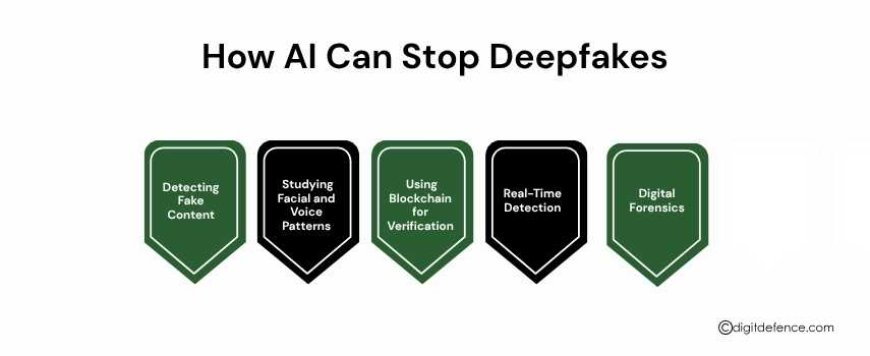
AI is a strong tool to fight deepfakes. Here is how it helps:
1. Detecting Fake Content
AI can analyze videos, images, and audio to find signs of manipulation. For example, it looks for:
-
Unnatural blinking or facial movements
-
Lips not matching speech
-
Tiny distortions in pixels or sound
AI learns from many real and fake examples, so it can spot fake content that humans might miss.
2. Studying Facial and Voice Patterns
AI can check small details in faces and voices. These include:
-
Eye movements and facial expressions
-
Voice tone, speed, and pauses
-
Subtle gestures
Even if a deepfake looks perfect, AI can detect differences in behavior and voice.
3. Using Blockchain for Verification
Some AI systems combine with blockchain technology. Blockchain stores proof of when and where a video or image was made. AI can check this proof to see if the content is real.
4. Real-Time Detection
AI tools can check videos and audio in real time. This is useful for:
-
Online meetings
-
News broadcasts
-
Social media posts
Real-time detection helps stop fake content before it spreads.
5. Digital Forensics
Cyber forensics experts use AI to study files deeply. AI can check:
-
Metadata and file details
-
Tiny pixel changes
-
Compression patterns
AI speeds up investigations and helps prove whether content is real or fake.
Benefits of Using AI
|
Benefit |
How It Helps |
|
Fast Detection |
AI can analyze videos and audio much faster than humans. |
|
Large Scale |
AI can check millions of files at the same time. |
|
Accurate |
AI spots manipulations invisible to the human eye. |
|
Learns Over Time |
AI improves by studying new deepfakes. |
|
Cost-Effective |
AI reduces the need for large teams to review content. |
Challenges of AI Against Deepfakes
AI is very useful in stopping deepfakes, but it also has some problems. Here are the main challenges:
1. Deepfakes Keep Getting Better
People creating deepfakes are always finding new ways to make them look real. AI must keep learning and updating to catch these new tricks. If AI is not updated, it may miss some fake videos or audio.
2. Mistakes Happen
Sometimes AI can be wrong. A real video or audio might be flagged as fake by mistake. These false alerts can confuse people or cause unnecessary worry. That’s why humans often need to check AI results too.
3. Privacy Problems
AI needs to look at videos, images, and audio to find deepfakes. This can include personal content. It is very important that AI tools protect people’s privacy and do not misuse personal data.
4. Needs Lots of Resources
Good AI systems need strong computers and large amounts of data to work well. Small companies or individuals may not have access to these tools, which can make them more at risk.
5. Tricking AI
Some hackers try to make deepfakes that can fool AI. These “tricks” make it harder for AI to detect fake content correctly.
How Organizations Can Protect Themselves
-
Use AI Detection Tools – Install AI software to check content for manipulation.
-
Educate Employees – Train staff to recognize and report deepfake content.
-
Verify Media – Combine AI with digital signatures, watermarks, or blockchain.
-
Monitor Online Platforms – AI can scan social media for fake content targeting your company.
-
Work with Experts – Cybersecurity companies can provide AI-based deepfake detection services.
By using detection tools for deepfakes, companies and individuals can protect their reputation and important information. These tools watch media, notice unusual content, check for risks, and help stop fake videos, images, or audio quickly.
When detection tools are combined with human review, careful checks, and verification methods like blockchain, they create a strong defense against fake content.
Today, using these solutions to identify and prevent deepfakes is not just helpful, it is necessary to maintain trust, protect people and businesses, and prevent misinformation from spreading.