
Why EDR Solutions Are Crucial for Business?
Explore why EDR solutions play a key role in protecting businesses from cyber threats, data breaches, and unauthorized access.

Does Your Business Have Enough Protection Against Cyber Threats?
Many organizations rely on traditional security measures such as antivirus software and firewalls. However, these tools alone may not offer complete protection against cyber threats. Malicious software can enter systems without detection, often causing significant damage before being discovered. Without advanced security solutions, businesses remain at risk of serious data loss and operational disruption.
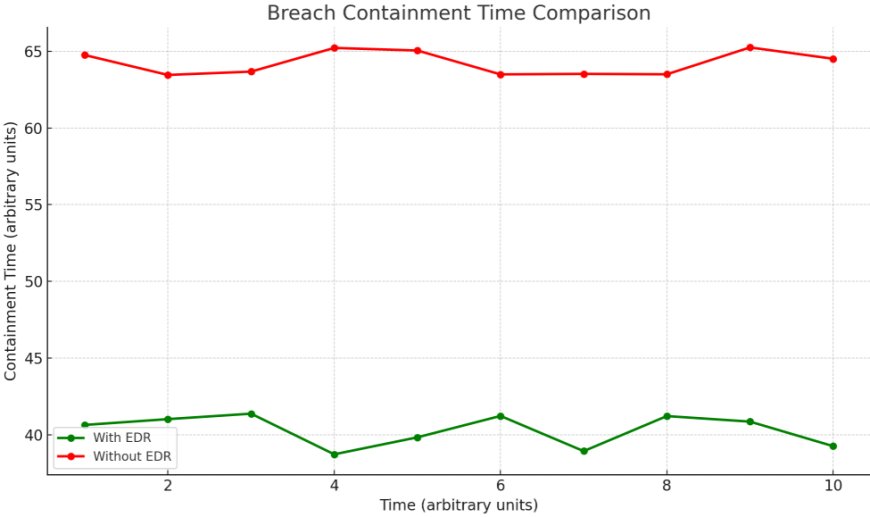
According to recent studies, 68% of breaches originate at endpoints, and companies without robust detection and response tools experience breach containment times up to 60% longer than those with such solutions in place.
Microsoft, a leading global technology corporation, handles a huge amount of important data and supports millions of users. Because of its size and role, protecting its digital systems from cyber threats is very important. Microsoft has always focused on cybersecurity and works continuously to keep its systems safe.
At one point, Microsoft faced a cyberattack from a skilled group that used new types of malware to try to access its internal systems. Traditional security tools were not enough to detect this hidden threat quickly, putting important data and business operations at risk.
Microsoft used its own Endpoint Detection and Response (EDR) system, called Microsoft Defender for Endpoint to handle the attack. This system monitors all devices constantly, looks for unusual behavior, and takes automatic action to stop threats. Thanks to EDR, Microsoft was able to find the attack early, isolate the affected devices, and investigate the problem. This shows why EDR solutions are important for detecting and stopping modern cyber threats.
What Are EDR Solutions?
Endpoint Detection and Response (EDR) is a cybersecurity technology designed to continuously monitor and record activity on all devices connected to a network, including laptops, desktops, servers, and mobile devices. When suspicious actions occur, such as unusual login attempts, unexpected data transfers, or abnormal application behavior, EDR systems quickly identify these activities, contain the threat to prevent further damage, and alert security personnel for immediate investigation.
EDR solutions work alongside traditional antivirus programs by focusing on detecting and responding to threats that may bypass initial defenses. This technology plays a crucial role in the cybersecurity framework by addressing the critical phase after a breach occurs, enabling organizations to respond swiftly, investigate incidents thoroughly, and minimize potential damage.
9 Key Elements of EDR Solutions
-
Console Alerting and Reporting
A centralized dashboard provides real-time alerts and comprehensive reports for better decision-making. -
Advanced Response Capabilities
Enables automatic isolation of compromised devices, termination of malicious processes, and reversal of harmful changes. -
Core EDR Functionality
Continuous behavior monitoring, data collection, threat analysis, and proactive threat hunting. -
Endpoint Protection Platform (EPP) Integration
Works alongside antivirus and other protection tools to deliver broad endpoint security. -
Geographic Support
Complies with regional data protection laws and offers support across multiple locations. -
Managed Services
Some providers offer expert monitoring and support services, beneficial for organizations with limited internal resources. -
Operating System Support
Covers major operating systems such as Windows, macOS, Linux, and mobile platforms to ensure no endpoint is left unmonitored. -
Prevention Features
Includes mechanisms to block threats, patch vulnerabilities, and control application access. -
Third-Party Integration
Seamlessly connects with other security systems like SIEM, SOAR, and firewalls to create a unified defense.
Why EDR Solutions Are Crucial for Business?
-
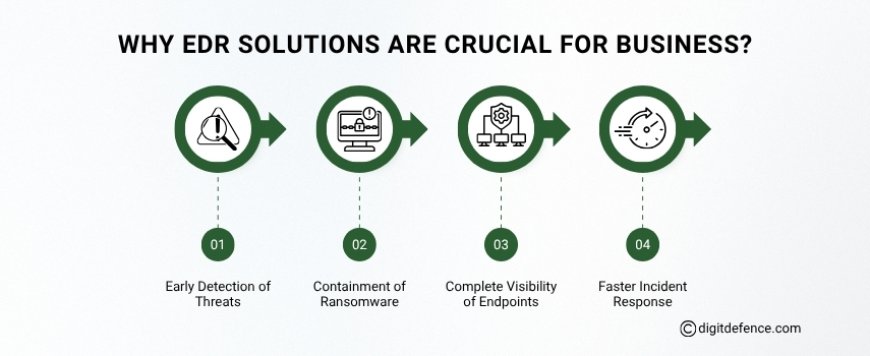
Early Detection of Threats
EDR systems use behavioral analysis and advanced algorithms to detect new and unknown threats that traditional security tools might miss. -
Containment of Ransomware
When ransomware begins encrypting data, EDR solutions isolate affected devices quickly to limit damage and prevent spread. -
Complete Visibility of Endpoints
EDR provides security teams with real-time monitoring of all devices, including those used by remote or hybrid workers. -
Faster Incident Response
Detailed alerts with relevant context enable security teams to act promptly and effectively without unnecessary delay.
Advanced Features of EDR Solutions
-
Behavioral Analytics
Monitors and analyzes endpoint activity to identify unusual patterns that may indicate a security threat. For instance, accessing sensitive files outside regular business hours could signal suspicious behavior. -
Threat Intelligence Integration
Incorporates up-to-date information about emerging threats, enabling faster recognition and mitigation of new attack methods before they cause damage. -
Automated Response
Automatically initiates actions such as isolating compromised devices or stopping malicious processes to contain threats without delay. -
Customizable Playbooks
Allows organizations to define specific automated workflows improved for their security policies, improving the efficiency and consistency of threat response. -
Forensic Data Collection
Maintains detailed logs and records of endpoint activity to support thorough investigation and root cause analysis after a security incident. -
Security Integration
Seamlessly connects with existing security systems like firewalls and SIEM tools, enabling coordinated defense and streamlined incident management.
These features collectively strengthen an organization’s ability to detect, respond to, and recover from cyber threats more effectively.
How to Choose the Right EDR Solution
Consider the following when selecting an EDR provider:
-
Support for all device types and operating systems in your network
-
User-friendly dashboard for your security team
-
Ability to automate threat detection and response
-
Integration capabilities with your existing security tools
-
Availability of 24/7 support or managed services
With the constant evolution of cyber threats, relying only on traditional security tools is not enough. Endpoint Detection and Response (EDR) solutions are essential for protecting businesses by offering continuous monitoring, early detection of threats, and quick response. A strong EDR system helps reduce risks, limit damage from attacks, and ensure smooth business operations.
Selecting the right EDR solution requires understanding your organization’s needs, ensuring it supports all devices and integrates well with existing tools, and considering the availability of support services. Investing in effective EDR technology strengthens cybersecurity defenses and prepares businesses to handle current and future cyber threats more effectively.
Protect your business systems and safeguard your customer data.
Get started today by emailing us at [email protected].
Stay protected with Digit Defence.