
Cyber Security Companies Simplifying Threat Detection?
Struggling with complex cyber threats? Figure out how top cyber security companies simplify detection, saving time and keeping your data safe!


As a cybersecurity professional, I’ve seen personally how complicated threat detection can be in today’s complex digital environment. Every day, businesses face an increase in cyber threats from phishing scams to advanced malware that can disrupt operations. What stands out is how innovative cyber security companies are stepping up to simplify this chaos. By leveraging innovative tools like AI-driven analytics and real-time monitoring, they’re transforming how organizations identify and respond to threats.
What excites me most is how these solutions streamline detection, reducing false alarms and enabling faster responses. Companies like CrowdStrike and Darktrace are redefining the process with intuitive interfaces and predictive technologies, allowing businesses to focus on what matters most: staying secure and growing. As someone deeply invested in protecting data and systems, it’s empowering to see how these advancements are making a tangible difference.
Understanding the Growing Cyber Threat Current Situation
The digital world is under constant siege, with cybercriminals exploiting vulnerabilities to breach systems, steal data, and disrupt operations. Here are some alarming statistics:
-
Ransomware attacks increased by over 93% year-over-year in 2023.
-
Phishing schemes remain the most common initial access tactic, affecting 83% of organizations globally.
-
Zero-day exploits are becoming increasingly sophisticated, requiring more robust detection mechanisms.
How Cyber Security Companies Are Simplifying Threat Detection
1. Automation and Artificial Intelligence (AI)
AI and machine learning are revolutionizing threat detection by automating processes, identifying patterns, and predicting potential threats. Companies like CrowdStrike, Darktrace, and Palo Alto Networks are leveraging AI to:
-
Detect anomalies in real time.
-
Reduce false positives through smarter algorithms.
-
Predict potential vulnerabilities before they are exploited.
2. Integration of Threat Intelligence Platforms (TIPs)
Threat intelligence platforms aggregate data from multiple sources, providing a holistic view of the threat environment. This integration enables organizations to:
-
Access real-time threat feeds.
-
Cross-correlate data for actionable insights.
-
Stay ahead of emerging threats.
Leading players like FireEye and Recorded Future are setting benchmarks in this domain.
3. User-Friendly Dashboards and Interfaces
Simplifying threat detection isn't just about the backend; it's also about user experience. Cyber security companies are designing intuitive dashboards that provide clear, actionable insights. Companies like Cisco Talos focus on:
-
Real-time alerts.
-
Customizable reporting.
-
Role-based access for different team members.
4. Cloud-Native Solutions
With the rise of cloud computing, cyber security companies are offering cloud-native threat detection solutions. These platforms are scalable, flexible, and ideal for businesses leveraging cloud infrastructure. For example:
-
AWS Security Hub integrates seamlessly with other AWS services.
-
Microsoft Defender for Cloud provides advanced threat analytics.
5. Behavioral Analysis
Instead of relying solely on known signatures or predefined rules, companies are turning to behavioral analysis. By monitoring user and entity behaviors, solutions can detect deviations indicative of malicious activity. Notable examples include:
-
Splunk with its behavioral analytics modules.
-
Exabeam's user behavior analytics (UBA).
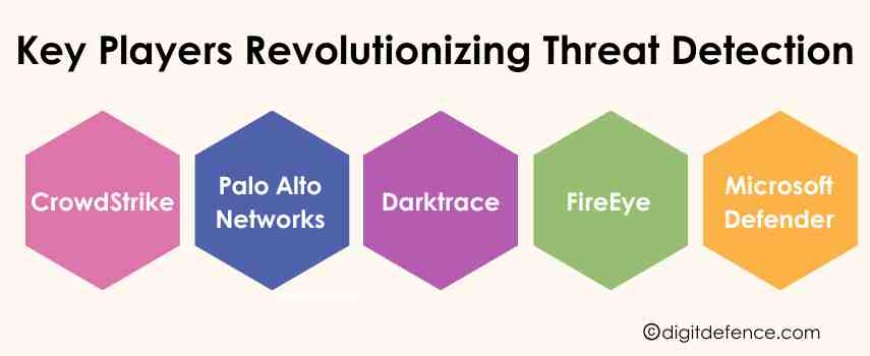
Key Players Revolutionizing Threat Detection
-
CrowdStrike: Known for its Falcon platform, CrowdStrike provides endpoint detection and response (EDR) solutions powered by AI.
-
Palo Alto Networks: Their Cortex XDR platform combines endpoint, network, and cloud data to detect and respond to threats comprehensively.
-
Darktrace: Specializes in AI-driven solutions that use self-learning technology to detect threats autonomously.
-
FireEye: Offers robust threat intelligence services and advanced detection tools.
-
Microsoft Defender: As part of the Microsoft Security suite, it provides integrated and automated threat protection.
Benefits of Simplified Threat Detection
-
Reduced Complexity: Streamlined tools allow IT teams to focus on strategic tasks rather than being bogged down by overwhelming data.
-
Enhanced Efficiency: Automated processes accelerate threat detection and response times, minimizing potential damages.
-
Cost-Effectiveness: By reducing manual interventions and preventing breaches, organizations save on operational costs and potential fines.
-
Improved Accuracy: Advanced algorithms and behavioral analysis significantly reduce false positives, ensuring that resources are spent on genuine threats.
Challenges and the Road Ahead
While the advancements in threat detection are remarkable, challenges persist:
-
Integration Issues: Ensuring that new tools work seamlessly with existing systems can be a hurdle.
-
Skill Gaps: The shortage of skilled cybersecurity professionals continues to hinder effective implementation.
-
Evolving Threats: Cybercriminals are becoming more sophisticated, requiring constant updates to detection mechanisms.
Case Study 1: CrowdStrike's Defense Against Insider Threats
Overview:
CrowdStrike helped a client detect and prevent an insider threat attempting unauthorized access to sensitive data.
Implementation:
CrowdStrike deployed its Falcon OverWatch EDR solution, which combined telemetry with expert human analysis to monitor and detect anomalies in user behavior.
Outcome:
The client intervened quickly, blocking the insider’s access and preventing a potential data breach, ensuring business continuity and security.
Case Study 2: Dark Trace's Detection of Unclassified Ransomware
Overview:
Darktrace detected a new ransomware strain, later identified as BlackByte, within a client’s network before it could cause significant damage.
Implementation:
Darktrace’s AI-driven anomaly detection platform flagged unusual network behaviors that traditional signature-based tools missed.
Outcome:
The client swiftly isolated affected systems, reducing the ransomware's impact and avoiding major disruptions, thanks to real-time threat detection.
Simplified threat detection is no longer a luxury but a necessity in the cybersecurity landscape. By leveraging cutting-edge technologies, user-friendly interfaces, and integrated solutions, companies are making it easier for organizations to stay secure. However, vigilance, continuous education, and adopting the right tools are crucial for staying ahead in this dynamic field. Whether you are a small business or a large enterprise, partnering with the right cybersecurity company can make all the difference in ensuring your data and operations remain safe from ever-evolving threats.