Why Businesses Must Prioritize Cloud Security Risks?
Understand the importance of addressing cloud security risks to protect data, ensure compliance, and maintain business continuity.

Are your cloud systems safe from cyber threats? What if your critical business data is at risk right now without your knowledge?
Many businesses move their operations to the cloud, expecting safety and efficiency. But what if security issues in cloud computing can silently put your data, reputation, and money at risk? It’s not about losing files, it’s about losing customer trust and facing costly downtime. Understanding these risks early can save you big trouble later.
Nearly 95% of organizations experienced a cloud-related breach within 18 months, with 99% blaming insecure identities as the primary cause

Salesforce is a top cloud CRM used by many businesses to store important customer data. Because of this, keeping their cloud secure is very important.
Salesforce had a security issue caused by a mistake in its cloud setup. This allowed some customer data to be seen by people who shouldn’t have access. Although the problem was fixed quickly, it showed how even big companies can face cloud security risks.
Afterward, Salesforce improved its security by checking access more carefully, fixing cloud settings regularly, and using tools to find problems fast. Their experience shows why all businesses must take cloud security seriously to protect data and keep customer trust.
Understanding the Common Risks in Cloud Security
Cloud security problems often happen not because of missing tools, but due to wrong settings, limited visibility, and unclear responsibilities. Hackers keep finding new ways to exploit these gaps.
Here are five common cloud security risks:
-
Misconfiguration
Small mistakes like open storage buckets, weak access controls, or unchanged default settings can cause data leaks. Managing settings is harder with multiple cloud providers, and security tools help only if used correctly.
-
Unauthorized Access
Cloud systems are easier to reach than traditional networks. Weak passwords, missing multi-factor authentication, or stolen credentials let attackers in. Insider threats and phishing make strong access control critical.
-
Limited Visibility
With workloads spread across clouds, containers, and APIs, it’s tough to keep track of assets and who can access them. Traditional tools often miss cloud-specific risks, making early threat detection difficult.
-
Insecure APIs
APIs allow different software to connect, but can be exploited by hackers to steal data or control cloud systems.
-
Data Loss and Compliance Risks
Cloud makes sharing easy, but data can be exposed if shared publicly or stored without encryption. Plus, cloud data often crosses borders, creating challenges to follow laws like GDPR or PCI DSS. Losing track of data and access can lead to legal penalties.
How Do Security Issues in Cloud Computing Affect Business?
-
Loss of customer trust: When data is leaked, customers lose confidence in your business and may stop using your services.
-
Legal problems: Exposing sensitive data can lead to fines and lawsuits from regulators or affected customers.
-
Operational downtime: Security breaches can cause your systems to stop working, delaying work and hurting productivity.
-
Loss of revenue: When your business is down or customers leave, you lose money directly.
-
High recovery costs: Fixing a security breach often means paying experts, upgrading systems, and handling damage control.
-
Long-term damage: Security incidents can harm your company’s reputation, making it harder to attract customers and partners in the future.
-
Competitive disadvantage: If your systems are not secure, competitors with better protection may win your customers.
-
Ignoring risks costs more: Not investing in cloud security now can lead to much bigger financial losses later on.
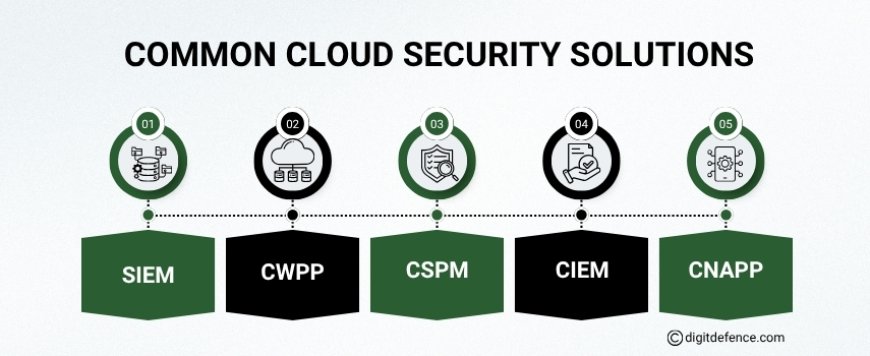
Common Cloud Security Solutions
-
Security Information and Event Management (SIEM)
SIEM tools collect and analyze security data from different sources in real time. They help detect data breaches, investigate problems, and meet compliance rules. Using AI, they find unusual activity and reduce false alarms, helping teams respond faster. -
Cloud Workload Protection Platform (CWPP)
CWPP protects cloud workloads like virtual machines and containers. It finds vulnerabilities, monitors activity, and stops unauthorized access. CWPP helps keep cloud systems safe without affecting performance. -
Cloud Security Posture Management (CSPM)
CSPM tools check your cloud setup for mistakes and security gaps. They provide alerts and fix suggestions to keep your cloud environment secure and compliant. -
Cloud Infrastructure Entitlement Management (CIEM)
CIEM manages who can access your cloud resources. It controls permissions, finds excess access, and helps enforce the least privilege rule to reduce risks. -
Cloud-Native Application Protection Platform (CNAPP)
CNAPP secures cloud-native apps from development to runtime. It scans for weaknesses, enforces security policies, and protects apps without slowing down deployment.
Steps to Handle Security Issues in Cloud Computing Effectively
Understanding the risks is only the first step. Businesses need clear actions to protect themselves from these security issues in cloud computing:
-
Regularly audit cloud configurations:
Check your cloud settings often to make sure everything is secure and updated. Small misconfigurations can lead to major data leaks if left unchecked. -
Use strong authentication:
Multi-factor authentication (MFA) adds an extra layer of protection. It helps prevent unauthorized access, even if passwords are stolen or leaked. -
Encrypt sensitive data:
Data should be encrypted both when it's stored and when it's being sent. This keeps the data safe and unreadable in case of a breach. -
Train your team:
Employees can be your first line of defense, or your biggest risk. Regular training helps your team recognize phishing attempts, follow best practices, and reduce human errors. -
Monitor and respond:
Use security tools to watch for unusual activity. Set up alerts and response plans so your team can act quickly when something goes wrong.
A clear cloud security strategy prevents many common threats and keeps your business safe.
Cloud security risks can cause serious damage to your business. Taking steps like using strong security tools, checking settings regularly, and training your team helps protect your data. Prioritize cloud security now to keep your business safe and trusted.
Want to secure your cloud and protect your business data? Email [email protected] to learn more about cloud security solutions.