
The Risk Assessment Procedures for Any Business
Learn about essential risk assessment procedures for businesses, including steps to identify, analyze, and manage risks effectively.

As a cybersecurity expert, I’ve seen how important it is for businesses to take a proactive approach to risk management. Whether you’re running a small startup or a multinational corporation, the risks your business faces are constantly changing. Cyber threats, operational challenges, regulatory requirements, and even natural disasters can disrupt your operations if you're not prepared. That’s why a well-thought-out risk assessment isn’t just a checkbox on a compliance list it’s a cornerstone of resilience and success.
I’ll share with you through essential risk assessment procedures that every business, regardless of size or industry, should prioritize. These steps will not only help you identify potential vulnerabilities but also enable you to take informed actions to mitigate them. My goal is to simplify the process, so you can focus on safeguarding your business without getting bogged down by unnecessary complexities. Risk assessment isn’t just about identifying what could go wrong it’s about empowering yourself with the knowledge to stay one step ahead.
Understanding Risk Assessment
Risk Assessment Procedures involve systematically identifying, evaluating, and mitigating risks that could negatively impact an organization. The process is not limited to cybersecurity but extends to operational, financial, and reputational risks as well. However, given the increasing prevalence of cyber threats, integrating cybersecurity into your risk assessment is imperative.
A solid risk assessment helps businesses:
-
Identify vulnerabilities.
-
Understand the potential impact of threats.
-
Prioritize mitigation efforts based on risk severity.
-
Comply with industry regulations.
-
Protect customer trust and organizational reputation.
Why Is Risk Assessment Important?
-
Prevention of Losses: Identifying potential risks early allows businesses to prevent financial, operational, or reputational damage.
-
Compliance: Many industries require regulatory compliance, and risk assessments often form a part of legal obligations.
-
Business Continuity: Risk management supports operational resilience by preparing businesses for unforeseen disruptions.
-
Improved Decision-Making: Understanding risks helps leaders make informed, strategic decisions.
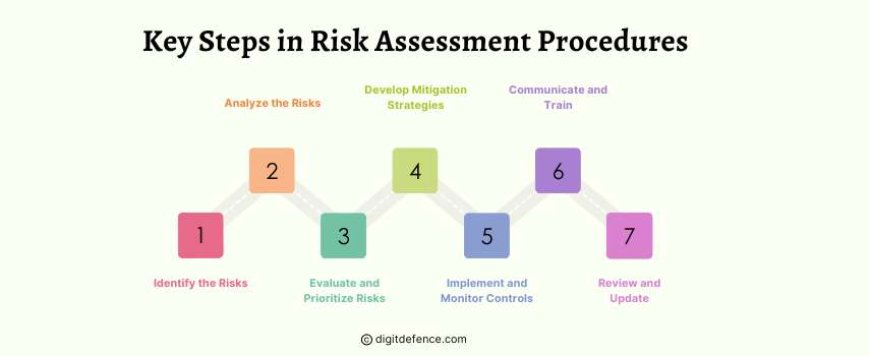
Key Steps in Risk Assessment Procedures
Here are the critical steps for conducting effective Risk Assessment Procedures:
1. Identify the Risks
The first step in any risk assessment process is identifying potential hazards. These could be internal, such as faulty equipment, or external, like market fluctuations or cybersecurity threats.
-
Physical Risks: Workplace accidents, natural disasters, or equipment failures.
-
Technological Risks: Cyberattacks, software failures, or data breaches.
-
Operational Risks: Inefficiencies in processes, supplier issues, or employee turnover.
-
Financial Risks: Credit risks, market volatility, or changes in tax laws.
-
Reputational Risks: Negative publicity, legal disputes, or unethical practices.
Tools to Use:
-
Brainstorming sessions with employees.
-
Industry benchmarks for common risk categories.
-
Historical data from past incidents.
2. Analyze the Risks
Once risks are identified, the next step is to analyze their likelihood and potential impact. This helps prioritize which risks require immediate attention.
Key Considerations:
-
Likelihood: What is the probability of the risk occurring?
-
Impact: What could be the extent of the damage? Will it affect finances, operations, or reputation?
Methods of Analysis:
-
Qualitative Analysis: Categorizing risks as low, medium, or high based on subjective judgment.
-
Quantitative Analysis: Assigning numerical values to risks, such as potential financial loss or downtime.
-
Risk Matrix: Plotting risks on a matrix to visualize their severity and likelihood.
3. Evaluate and Prioritize Risks
Not all risks require immediate action. Prioritization ensures that resources are allocated effectively to address the most critical risks first.
Strategies for Prioritization:
-
Risk Appetite: Understand how much risk the organization is willing to tolerate.
-
Cost-Benefit Analysis: Compare the cost of mitigation measures to the potential impact of the risk.
-
Urgency: Focus on risks that could cause immediate or severe harm.
4. Develop Mitigation Strategies
For each identified risk, create a plan to either eliminate, reduce, or manage it. Mitigation strategies can vary depending on the nature of the risk.
Mitigation Techniques:
-
Avoidance: Eliminate activities or processes that introduce risks.
-
Reduction: Implement measures to reduce the likelihood or impact of risks.
-
Transfer: Use insurance or outsourcing to transfer the risk to a third party.
-
Acceptance: Acknowledge the risk and prepare to manage its consequences if it occurs.
Examples:
-
Cybersecurity Risks: Install firewalls, conduct employee training, and regularly update software.
-
Financial Risks: Diversify investments, monitor cash flow, and secure insurance policies.
-
Operational Risks: Establish contingency plans and diversify suppliers.
5. Implement and Monitor Controls
After developing strategies, implement them and establish controls to manage risks effectively. Monitoring ensures that the measures are working as intended and remain relevant as the business environment evolves.
Steps to Implementation:
-
Allocate Resources: Assign responsibilities to relevant departments or individuals.
-
Set Key Performance Indicators (KPIs): Use KPIs to measure the effectiveness of risk management efforts.
-
Regular Monitoring: Schedule periodic reviews to assess risk controls.
6. Communicate and Train
Risk management is not a one-person task; it requires collaboration across the organization. Clear communication and training ensure that everyone understands their role in managing risks.
Steps:
-
Risk Awareness Programs: Educate employees about common risks and their mitigation.
-
Policy Dissemination: Share risk management policies and procedures with all stakeholders.
-
Feedback Mechanisms: Encourage employees to report potential risks or suggest improvements.
7. Review and Update
Risk assessment is not a one-time activity. Regular reviews ensure that the risk management framework evolves with changing circumstances.
When to Review:
-
Post-Incident: After a risk event occurs, review the response to identify areas for improvement.
-
Periodically: Conduct annual or biannual reviews to stay ahead of emerging risks.
-
During Changes: Reassess risks during organizational changes, such as expansion or new product launches.
Challenges in Risk Assessment
While risk assessment is essential, it is not without challenges:
-
Identifying Hidden Risks: Not all risks are obvious, and some may go unnoticed until it’s too late.
-
Resource Constraints: Small businesses, in particular, may lack the time or money to conduct thorough assessments.
-
Over-Reliance on Technology: While tools can assist, they cannot replace human judgment.
-
Resistance to Change: Employees may be hesitant to adopt new policies or procedures.
Common Pitfalls to Avoid
Even with the best intentions, businesses can falter in their risk assessment efforts. Here are some common pitfalls:
-
Neglecting Employee Training: Employees are often the first line of defense against threats like phishing.
-
Overlooking Insider Threats: Disgruntled employees or contractors can pose significant risks.
-
Underestimating Small Threats: Minor vulnerabilities can cascade into major incidents if left unaddressed.
Best Practices for Effective Risk Assessment
-
Involve Stakeholders: Engage employees, suppliers, and customers in the risk assessment process for diverse perspectives.
-
Leverage Technology: Use software tools for data analysis, risk tracking, and reporting.
-
Document Everything: Maintain detailed records of identified risks, and mitigation strategies, and review findings.
-
Foster a Risk-Aware Culture: Encourage open communication about risks and reward proactive risk management.
-
Integrate with Strategic Planning: Align risk assessment with business objectives for better decision-making.
Risk assessment is a vital process for any business aiming to thrive in a dynamic and unpredictable environment. By identifying, analyzing, prioritizing, and mitigating risks, businesses can safeguard their operations, reputation, and financial health. Regular reviews, stakeholder involvement, and a culture of risk awareness are critical to maintaining an effective risk management framework.
Incorporating these essential risk assessment procedures into your business operations ensures preparedness for the unexpected and builds resilience for long-term success. Remember, proactive risk management is an investment in the future stability and growth of your organization.