Endpoint Management for Data Protection and Compliance
Struggling with data security? Endpoint management protects sensitive info, ensures compliance, and stops breaches before they happen. Find out how right now!

As a cybersecurity specialist, I’ve seen personally how businesses struggle to keep their sensitive data secure while meeting constantly changing compliance requirements. With employees using multiple devices, remote work on the rise, and cyber threats growing more sophisticated, ensuring data protection has become more complex than ever. A single weak endpoint, whether it’s a laptop, smartphone, or IoT device, can open the door to severe breaches, regulatory fines, and reputational damage. That’s why endpoint management is no longer optional; it’s a critical defense strategy for safeguarding data and maintaining compliance.
By implementing a strong endpoint management system, businesses can gain complete visibility over their devices, enforce security policies, and automate updates to patch vulnerabilities before hackers exploit them. It’s not just about protection; it’s about efficiency and control. When done right, endpoint management transforms security from a reactive struggle into a proactive advantage, ensuring compliance while keeping business operations smooth and secure.
What is Endpoint Management?
Endpoint management refers to the process of managing and securing all endpoint devices like desktops, laptops, smartphones, tablets, and even IoT devices that are connected to a network. These devices are often the first point of entry for cyberattacks, making endpoint management a critical element in any organization's cybersecurity strategy. With endpoint management, organizations can monitor, secure, and maintain these devices, reducing vulnerabilities and minimizing the risk of data breaches.
Effective endpoint management involves several core activities, including:
-
Deploying security software to protect devices from malware and other threats
-
Enforcing security policies and configurations across all endpoints
-
Ensuring regular patching and updates to prevent exploitation of vulnerabilities
-
Providing remote monitoring and management capabilities
-
Ensuring compliance with industry regulations such as GDPR, HIPAA, and PCI-DSS
The Role of Endpoint Management in Data Protection
Data protection is a fundamental aspect of cybersecurity, and endpoint management plays a crucial role in ensuring that sensitive company data is safe from theft, loss, or unauthorized access. Employees often use endpoints to access, store, and transfer sensitive business data, making these devices prime targets for cybercriminals.
Endpoint management helps protect data in several ways:
1. Security Software Deployment
Endpoint management systems enable businesses to deploy antivirus software, firewalls, encryption tools, and other security solutions across all endpoints. This ensures that all devices are protected against known threats such as malware, ransomware, and phishing attacks. Regular updates to these security solutions are also essential to keep up with emerging threats.
2. Data Encryption
In today’s remote work environment, sensitive company data is often accessed from various devices, including laptops and smartphones. Encryption ensures that even if an endpoint is compromised, the data remains unreadable to unauthorized users. With endpoint management, IT teams can enforce encryption policies on all devices, ensuring that data is securely stored and transmitted.
3. Data Loss Prevention (DLP)
Data loss prevention (DLP) is a strategy that aims to prevent unauthorized access to or loss of sensitive data. Endpoint management solutions often include DLP tools that monitor endpoints for potential data leakage risks, such as copying files to unsecured locations or sending confidential information through unsecured channels. By monitoring and controlling how data is transferred across endpoints, businesses can significantly reduce the risk of data breaches.
4. Remote Wipe Capabilities
In the event of a lost or stolen device, endpoint management solutions can remotely wipe all sensitive data from the endpoint. This minimizes the risk of data exposure and helps businesses avoid potential compliance violations, especially in industries where data protection regulations are strict. Remote wipe capabilities are particularly important for businesses that have employees working remotely or using bring-your-own-device (BYOD) policies.
Endpoint Management and Compliance
Compliance with data protection regulations is a critical aspect of modern business operations. Regulations such as the General Data Protection Regulation (GDPR), the Health Insurance Portability and Accountability Act (HIPAA), and the Payment Card Industry Data Security Standard (PCI DSS) impose strict requirements on how businesses store, protect, and manage sensitive data. Endpoint management plays an integral role in helping organizations comply with these regulations.
1. Enforcing Security Policies
Compliance regulations require businesses to implement certain security measures to protect sensitive data. With endpoint management, organizations can enforce security policies on all devices, ensuring that they meet the necessary standards for encryption, access control, and data protection. These policies can include requirements for strong passwords, multi-factor authentication (MFA), and restricted access to sensitive files based on user roles.
2. Audit Trails and Reporting
To ensure compliance with regulations, organizations must maintain detailed records of how data is accessed, modified, and shared. Endpoint management solutions often include audit trail capabilities, which log every action performed on an endpoint. These logs can be reviewed to ensure that data protection policies are being followed and can be used in the event of a security audit or investigation.
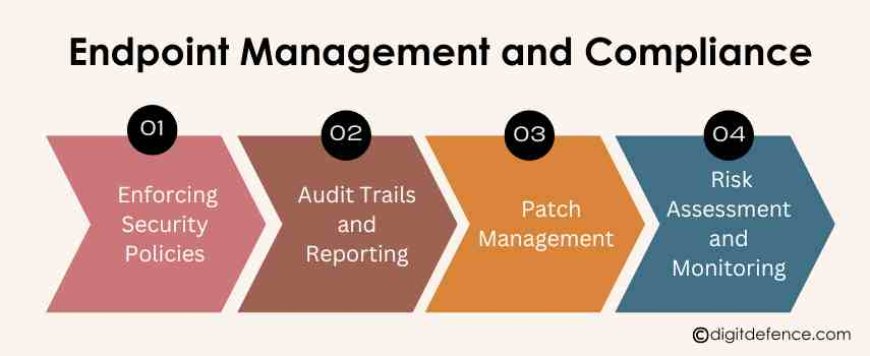
3. Patch Management and Vulnerability Mitigation
Regulations often require businesses to implement regular patching and vulnerability management practices to ensure that systems are secure and up-to-date. Endpoint management solutions automate the process of patching and updating software on all devices, reducing the risk of vulnerabilities being exploited by attackers. By ensuring that all endpoints are running the latest security patches, businesses can remain compliant with regulations and avoid potential penalties.
4. Risk Assessment and Monitoring
Compliance frameworks often require businesses to perform regular risk assessments and monitor their systems for potential vulnerabilities. Endpoint management tools provide real-time monitoring of devices, helping organizations identify and address risks before they can result in a security breach. Continuous monitoring also ensures that endpoints remain secure and compliant over time, even as new threats emerge.
Benefits of Endpoint Management
The benefits of implementing a robust endpoint management strategy extend beyond data protection and compliance. Here are some of the key advantages organizations can expect:
1. Reduced Security Risks
By securing all endpoints and ensuring that they adhere to security best practices, businesses can reduce their exposure to cyber threats. Endpoint management helps identify vulnerabilities, enforce security policies, and deploy protective measures, ensuring that devices are not compromised.
2. Improved Operational Efficiency
Automated endpoint management tools enable IT teams to manage large numbers of devices with minimal effort. Security updates, patches, and software deployments can be done remotely, reducing the need for manual intervention. This not only improves efficiency but also frees up IT staff to focus on other strategic initiatives.
3. Cost Savings
By preventing data breaches and ensuring compliance, endpoint management helps organizations avoid the significant costs associated with data loss, regulatory fines, and reputational damage. Additionally, the automation of device management tasks can reduce the overall operational costs of maintaining a secure IT infrastructure.
4. Scalability
As businesses grow and expand, managing a large number of endpoints can become a challenge. Endpoint management solutions are scalable, allowing organizations to easily add new devices to the network without sacrificing security. This is particularly important in the age of remote work, where employees may be using a variety of personal and corporate devices.
Best Practices for Endpoint Management
To maximize the effectiveness of endpoint management, organizations should follow a set of best practices:
1. Regularly Update Software and Systems
Keeping all devices up-to-date with the latest security patches is crucial for protecting against vulnerabilities. Endpoint management solutions should automate software updates to ensure that endpoints are always running the most current versions.
2. Enforce Strong Authentication Practices
Implementing multi-factor authentication (MFA) and strong password policies can greatly reduce the risk of unauthorized access. Endpoint management tools should enforce these authentication practices across all devices to ensure secure access to sensitive data.
3. Monitor Devices Continuously
Continuous monitoring of endpoints helps detect suspicious activity and potential security breaches in real time. Organizations should use endpoint management solutions that provide 24/7 monitoring and alerting capabilities to stay ahead of potential threats.
4. Implement Least Privilege Access
Enforcing the principle of least privilege ensures that users only have access to the data and systems necessary for their role. Endpoint management tools can help control access and prevent unauthorized users from gaining access to sensitive information.
5. Educate Employees on Security Best Practices
User behavior is often the weakest link in cybersecurity. Providing employees with regular training on security best practices, phishing prevention, and safe use of endpoints is crucial for maintaining a secure environment. Endpoint management solutions should be complemented with ongoing education and awareness programs.
Case Study 1: Microsoft - Strengthening Endpoint Management for Enhanced Data Protection and Compliance
Overview:
Microsoft faced challenges as it expanded its remote workforce, especially regarding data protection and compliance with regulations like GDPR and HIPAA. The company required a solution to manage and secure sensitive data while ensuring its workforce remained productive in a global and highly regulated environment.
Implementation:
Microsoft leveraged its own Microsoft Intune platform for endpoint management. Intune allowed Microsoft to manage both corporate-owned and BYOD (Bring Your Own Device) endpoints securely. The company enforced policies such as encryption, remote wipe capabilities, and multi-factor authentication (MFA) to ensure that only trusted devices could access corporate resources.
Outcome:
-
Enhanced Security: Endpoint management ensured all devices followed strict security protocols, significantly reducing the risk of data breaches.
-
Compliance Assurance: Microsoft successfully met GDPR and HIPAA standards, ensuring regulatory compliance for sensitive data.
-
Operational Efficiency: Automation of updates and device configuration reduced the workload on IT teams while keeping devices up-to-date.
Source: Microsoft Intune
Case Study 2: IBM - Managing Endpoints to Ensure Data Protection and Compliance in the Cloud
Overview:
IBM, with its global presence, needed a solution to secure endpoints and maintain compliance with data protection regulations, such as GDPR and SOX, as the company shifted to a hybrid cloud model and expanded its remote workforce.
Implementation:
IBM implemented a comprehensive endpoint management strategy using IBM MaaS360 and QRadar for mobile device management and threat detection. MaaS360 provided complete visibility and control over all devices, enforcing security policies, encryption, and compliance with internal standards. QRadar integrated AI and machine learning to proactively identify potential security risks.
Outcome:
-
Proactive Threat Detection: IBM's use of AI-driven tools enabled quicker identification of threats, reducing the chances of data breaches.
-
Regulatory Compliance: IBM ensured devices met all relevant GDPR and SOX requirements, avoiding potential fines.
-
Operational Flexibility: Secure management of diverse devices allowed remote workers to access company resources securely without compromising data protection.
Source: IBM Security MaaS360
Endpoint management has become an essential component of any organization's cybersecurity strategy. By effectively managing and securing all devices connected to the network, businesses can protect sensitive data, reduce vulnerabilities, and ensure compliance with industry regulations. With the rise of remote work and the growing sophistication of cyber threats, implementing a comprehensive endpoint management strategy is more critical than ever.