How Endpoint Detection and Response Protects Your Business
Protect your business from advanced threats with Endpoint Detection and Response. Detect, prevent, and respond to attacks in real-time to ensure security and growth.

As a cybersecurity specialist, I have learned that traditional antivirus software is not enough to safeguard a company. With the growing complexity of cyber threats, such as ransomware, phishing, and advanced persistent threats, safeguarding endpoints and endpoint security devices like laptops, desktops, and mobile phones has become a critical priority. Endpoints are often the entry points for attackers, making them vulnerable to breaches that can compromise sensitive data and disrupt operations. That’s where Endpoint Detection and Response (EDR) steps in as a significant solution.
When I implemented EDR for the first time, I was amazed at its ability to detect threats in real-time and respond automatically to neutralize them before they could escalate. Unlike traditional security tools, EDR uses behavioral analytics and machine learning to identify unusual activities and isolate affected devices. It not only provides peace of mind but also empowers businesses to stay ahead of evolving threats. EDR has become an essential layer of defense for any organization aiming to protect its assets, ensure compliance, and maintain trust with customers.
What is Endpoint Detection and Response (EDR)?
Endpoint Detection and Response refers to a set of tools and practices designed to monitor, detect, and respond to cyber threats targeting endpoints. Unlike traditional antivirus solutions that rely solely on signature based detection, EDR employs advanced analytics, machine learning, and behavioral monitoring to identify and mitigate threats proactively.
EDR solutions continuously collect data from endpoints, analyse it for suspicious activities, and respond to potential threats by isolating infected devices or blocking malicious actions. This approach ensures threats are detected before they escalate, minimizing the impact on your business.
Why Endpoint Detection and Response is Essential for Businesses
-
Growing Cyber Threats
With the rise of ransomware, phishing, and malware attacks, endpoints have become prime targets. EDR provides robust protection against these evolving threats, ensuring your business remains secure.
-
Remote Work Vulnerabilities
The shift to remote work has expanded the attack surface for cybercriminals. Employees often access corporate resources from unsecured networks, increasing the risk of breaches. Endpoint Detection and Response secures remote endpoints and ensures they adhere to organizational policies.
-
Regulatory Compliance
Data protection regulations such as GDPR, HIPAA, and PCI DSS require businesses to implement robust security measures. EDR solutions help businesses comply with these standards by securing endpoints and tracking incidents effectively.
Key Features of Endpoint Detection and Response Solutions
-
Real-Time Monitoring and Analysis
EDR solutions continuously monitor endpoint activities, detecting and analyzing threats as they occur.
-
Behavioral Analysis
By studying user and device behavior, EDR identifies unusual patterns that may indicate a cyber threat.
-
Automated Threat Response
EDR systems isolate infected endpoints, terminate malicious processes, and block unauthorized access automatically.
-
Incident Investigation
Provides detailed forensic data to help IT teams understand the nature and scope of threats.
-
Integration with Other Security Tools
EDR works seamlessly with firewalls, SIEM (Security Information and Event Management), and other tools to provide a comprehensive security framework.
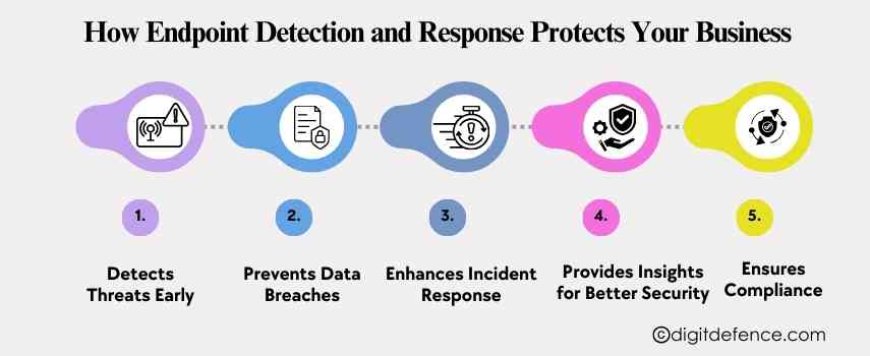
How Endpoint Detection and Response Protects Your Business
-
Detects Threats Early
EDR systems identify threats before they escalate, minimizing potential damage. This is especially useful for advanced persistent threats (APTs) and zero-day vulnerabilities.
-
Prevents Data Breaches
By monitoring endpoints continuously, EDR prevents unauthorized access to sensitive data, protecting intellectual property and customer information.
-
Enhances Incident Response
EDR enables rapid containment and remediation of threats, reducing downtime and ensuring business continuity.
-
Provides Insights for Better Security
EDR tools analyze data from past incidents to help businesses identify vulnerabilities and strengthen their defenses.
-
Ensures Compliance
By securing endpoints and providing detailed reports, EDR helps businesses meet regulatory requirements, avoiding fines and legal complications.
Benefits of Endpoint Detection and Response for Businesses
-
Proactive Threat Prevention
Unlike reactive solutions, EDR detects threats before they can cause harm, giving businesses a proactive edge.
-
Cost Savings
Preventing breaches and minimizing downtime saves businesses significant costs associated with recovery and reputational damage.
-
Improved Productivity
By isolating and addressing threats quickly, EDR minimizes disruptions to business operations.
-
Scalability
EDR solutions can grow with your business, ensuring protection as your operations and networks expand.
-
Increased Customer Trust
A secure business fosters customer confidence, especially when handling sensitive data or transactions.
Popular Endpoint Detection and Response Tools in the Market
-
CrowdStrike Falcon
-
Features: AI-driven threat detection, endpoint visibility, and automated responses.
-
Ideal For: Businesses of all sizes, especially those with complex networks.
-
Microsoft Defender for Endpoint
-
Features: Deep integration with Windows devices, advanced threat analytics, and real-time monitoring.
-
Ideal For: Organizations already using Microsoft ecosystems.
-
Carbon Black (VMware)
-
Features: Comprehensive endpoint visibility and in-depth threat analysis.
-
Ideal For: Businesses seeking enhanced forensic capabilities.
-
SentinelOne
-
Features: Autonomous response capabilities and endpoint protection in one platform.
-
Ideal For: Businesses looking for simplicity and effectiveness.
-
Symantec Endpoint Detection and Response
-
Features: Advanced behavioural analysis and threat hunting capabilities.
-
Ideal For: Enterprises needing robust endpoint security.
Best Practices for Implementing Endpoint Detection and Response
-
Assess Your Security Needs
Understand your business’s unique requirements and choose an EDR solution that aligns with them.
-
Integrate with Existing Systems
Ensure the EDR solution integrates seamlessly with your current security infrastructure.
-
Train Your Employees
Educate employees about endpoint security best practices and how to recognize potential threats.
-
Regular Updates
Keep EDR tools updated to ensure they can handle the latest threats effectively.
-
Monitor and Review
Continuously monitor endpoint activity and review EDR reports to identify areas for improvement.
Future Trends in Endpoint Detection and Response
-
AI-Driven Threat Detection
AI will play a larger role in identifying and mitigating advanced threats.
-
IoT Endpoint Security
As IoT devices become more common, EDR solutions will expand to protect these endpoints.
-
Zero Trust Integration
EDR will align with zero-trust models, ensuring every device and user is verified before accessing resources.
-
Cloud-Based EDR
Cloud-based solutions will offer greater scalability and flexibility, making EDR more accessible to businesses of all sizes.
Case Study 1: CrowdStrike Enhances Endpoint Security for Sony Pictures
Overview:
After the infamous 2014 cyberattack, Sony Pictures faced vulnerabilities in its endpoint security, putting sensitive data and intellectual property at risk. The company needed a comprehensive solution to prevent similar incidents.
Implementation:
Sony partnered with CrowdStrike, implementing its Falcon Endpoint Detection and Response (EDR) platform. The tool provided real-time threat monitoring, AI-driven analytics, and automated threat responses to protect endpoints.
Outcome:
-
Detected and mitigated threats in real time, reducing response times by 70%.
-
Enhanced endpoint security, ensuring critical data remained secure.
-
Prevented further data breaches, restoring Sony’s reputation for security.
Case Study 2: VMware Carbon Black Protects Deloitte’s Remote Workforce
Overview:
With the rise of remote work during the COVID-19 pandemic, Deloitte, a global consulting firm, faced increased risks of endpoint attacks targeting employees working from home.
Implementation:
Deloitte deployed VMware Carbon Black EDR to secure endpoints across its global remote workforce. The solution offered behavioral threat detection, endpoint visibility, and automated response to contain threats quickly.
Outcome:
-
Reduced endpoint vulnerabilities by 80%.
-
Secured sensitive client data while maintaining remote workforce productivity.
-
Improved incident response times with detailed forensic insights.
Endpoint Detection and Response is a vital tool for businesses seeking to protect their devices, data, and operations from ever-evolving cyber threats. By combining real-time monitoring, behavioural analysis, and automated responses, EDR solutions provide comprehensive protection for endpoints. Whether you’re safeguarding sensitive customer information, ensuring compliance, or preventing costly breaches, EDR is an essential investment.