
How CSPM Helps Businesses Manage Cloud Threats?
Discover how CSPM protects your business from cloud risks while keeping your data safe and secure in a simple, effective way.
Managing cloud security today requires more than just basic firewalls or passwords. With businesses moving critical workloads to the cloud, misconfigurations and vulnerabilities have become the leading causes of breaches
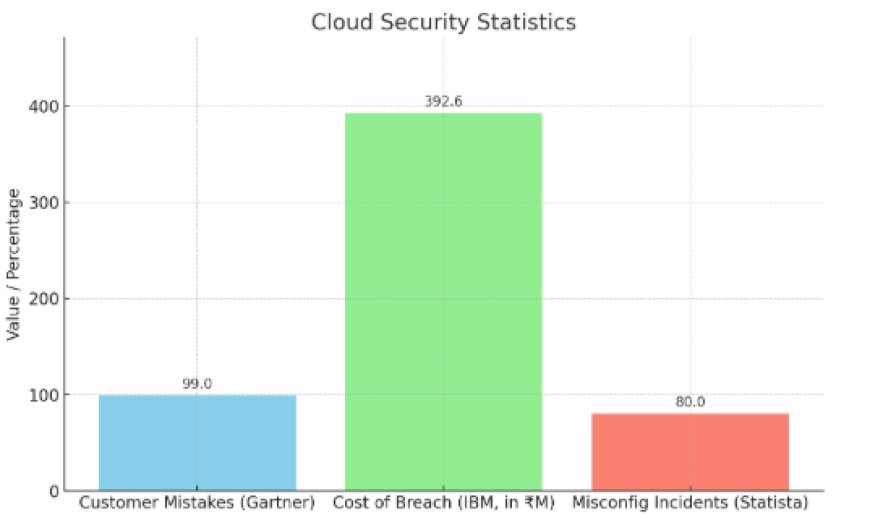
According to Gartner, 99% of cloud security failures are caused by customer mistakes, while IBM reports the average cost of a cloud data breach is ₹392.6 million. Statista notes that 80% of enterprises experience at least one misconfiguration-related incident each year. Cloud Security Posture Management (CSPM) helps businesses detect risks, ensure compliance, and prevent costly data leaks before they happen.
Capital One, one of the largest U.S. banks, migrated significant workloads to the cloud to enhance scalability and customer experience. With over 100 million customers, data security was critical to their operations.
In 2019, a misconfigured AWS firewall left sensitive data exposed. This cloud misconfiguration resulted in a massive breach, compromising customer details and costing the company millions in fines and reputation damage.
The incident highlighted the urgent need for Cloud Security Posture Management (CSPM). By implementing continuous monitoring, automated misconfiguration detection, and compliance enforcement, Capital One could reduce risk and strengthen its cloud posture.
Understanding Cloud Security Posture Management (CSPM)
Cloud Security Posture Management (CSPM) is a specialized solution designed to continuously monitor, detect, and remediate misconfigurations across cloud environments. Its core purpose is to strengthen your overall cloud security posture by ensuring compliance with regulations, detecting risks before they escalate, and preventing costly data leaks.
Think of CSPM as a dedicated security watchdog for your cloud. It works in the background to identify weak spots, enforce security policies, and ensure your business isn’t exposed to vulnerabilities that are often overlooked by traditional security tools.
Why Businesses Need CSPM for Cloud Threat Management
Cloud adoption has transformed the way companies operate, but it has also introduced a new layer of risks. Misconfigurations, compliance gaps, and blind spots in multi-cloud environments are now among the leading causes of breaches. This is where Cloud Security Posture Management (CSPM) becomes critical.
1. Misconfigurations Are the Silent Threat
According to Gartner, nearly 99% of cloud security failures are due to misconfigurations. Something as simple as leaving a storage bucket open can expose sensitive data. CSPM automatically scans for such errors and fixes them before attackers can exploit them.
2. Compliance Is Non-Negotiable
Businesses today must comply with standards like GDPR, HIPAA, PCI-DSS, and ISO 27001. Manually tracking compliance across multiple cloud platforms is overwhelming. CSPM provides automated compliance monitoring and reporting, making audits easier and reducing the risk of penalties.
3. Cybercriminals Exploit Weak Cloud Defenses
Hackers actively search for exposed cloud resources, unused accounts, and open ports. Without CSPM, these vulnerabilities often remain invisible. CSPM offers real-time visibility, ensuring threats are identified before they become breaches.
4. Multi-Cloud Environments Add Complexity
Most enterprises today run workloads on AWS, Azure, Google Cloud, and hybrid platforms. Each has unique security controls. CSPM unifies monitoring across all platforms, giving security teams one dashboard to manage cloud risks efficiently.
5. Protecting Reputation and Customer Trust
A single breach can cost millions in fines and irreparable damage to a brand. By proactively managing risks, Cloud Security Posture Management helps businesses protect not only their data but also their reputation and customer confidence.
How CSPM Protects Businesses from Cloud Threats
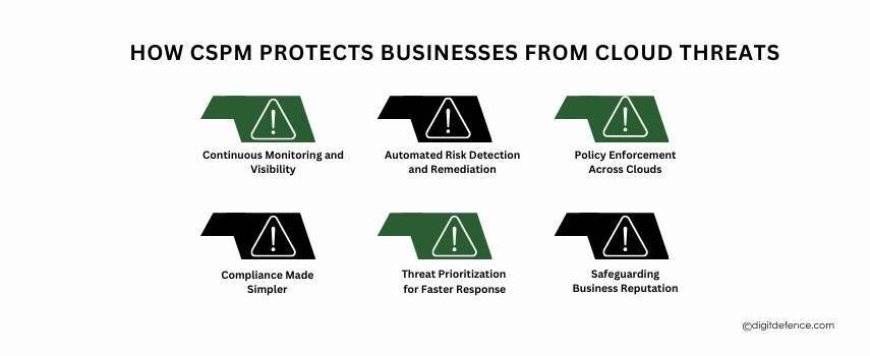
Cloud threats are changing quickly, and traditional security tools alone are not enough to prevent misconfigurations, breaches, or compliance failures. Cloud Security Posture Management (CSPM) provides businesses with a proactive defense strategy by offering continuous visibility, automated fixes, and improved compliance.
Here’s how CSPM protects businesses from cloud threats:
1. Continuous Monitoring and Visibility
CSPM constantly scans cloud environments for vulnerabilities, unusual activities, and misconfigurations. This real-time visibility ensures security teams can detect and respond to threats before they cause serious harm.
2. Automated Risk Detection and Remediation
Instead of depending on manual checks, CSPM tools identify risks automatically and, in many cases, remediate them instantly. For example, if a storage bucket is made public by mistake, CSPM can automatically adjust settings to protect sensitive data.
3. Policy Enforcement Across Clouds
Most businesses use more than one cloud provider. CSPM enforces consistent security policies across AWS, Azure, Google Cloud, and hybrid setups, ensuring no blind spots remain.
4. Compliance Made Simpler
CSPM includes built-in compliance frameworks such as GDPR, HIPAA, PCI-DSS, and ISO 27001. It continuously checks cloud settings against these standards, making audits faster and reducing regulatory risks.
5. Threat Prioritization for Faster Response
CSPM not only detects risks but also ranks them based on severity. This means IT teams know which vulnerabilities to fix first, improving efficiency and minimizing potential impact.
6. Safeguarding Business Reputation
By preventing breaches and ensuring compliance, CSPM helps businesses maintain customer trust, brand reputation, and long-term credibility, all of which are crucial in today’s competitive market.
CSPM vs Traditional Cloud Security
|
Feature |
CSPM |
Traditional Tools |
|
Focus |
Ongoing cloud posture monitoring |
Secures only the perimeter |
|
Cloud Visibility |
Real-time, multi-cloud coverage |
Limited and siloed views |
|
Risk Detection |
Auto-scans for misconfigurations |
Relies on manual checks |
|
Compliance |
Built-in standards & reporting |
Needs custom audit work |
|
Remediation |
Instant, automated fixes |
Mostly manual processes |
Steps to Implement CSPM in Your Business
Adopting Cloud Security Posture Management (CSPM) requires a structured approach to ensure maximum effectiveness. Here are the key steps:
1. Assess Your Current Cloud Environment
Start by identifying misconfigurations, shadow IT, and compliance gaps across all your cloud platforms. This baseline helps you understand where risks exist.
2. Choose the Right CSPM Solution
Select a CSPM tool that supports multi-cloud environments (AWS, Azure, GCP) and offers automated compliance, risk detection, and remediation features.
3. Define Security Policies and Compliance Needs
Align CSPM with your industry standards (GDPR, HIPAA, ISO 27001, PCI-DSS). Set policies that the CSPM platform will continuously enforce.
4. Automate Monitoring and Remediation
Enable automated detection and fixing of misconfigurations. This reduces human error and speeds up incident response.
5. Train IT and Security Teams
Ensure staff understand how CSPM works, how to respond to alerts, and how to integrate CSPM insights into broader security practices.
6. Continuously Review and Optimize
Cloud environments evolve rapidly. Regularly update policies, review reports, and refine CSPM workflows to stay ahead of new threats.
Cloud Security Posture Management is no longer optional , it is a must for every business today. As cloud threats rise, mistakes in setup increase, and rules get stricter, CSPM gives companies the control and safety they need.
With CSPM, you can lower risks, stay compliant, and stop data leaks. This means you can grow your business with confidence, without worrying about hidden problems in the cloud.
Ready to secure your cloud? Contact us at [email protected]