
How to Connect IoT Devices to the Internet and Prevent Hacks
Learn how to connect IoT devices to the internet securely while preventing hacks with essential tips and best practices.

As a cyber security specialist and someone who has been actively involved in helping businesses manage their online presence, I’ve seen how the Internet of Things (IoT) is rapidly transforming the way businesses operate. IoT devices are now integrated into everything from smart home devices to industrial equipment, making them a crucial part of many businesses’ operations. But as much as IoT devices have revolutionized industries, they also bring with them a range of security challenges. When you’re looking at how to connect IoT devices to the internet, cybersecurity should be your top priority.
Over the years, I’ve worked with companies that use IoT devices to streamline operations, increase productivity, and enhance customer experiences. However, one of the biggest challenges that come with the growth of IoT is the vulnerability to cyberattacks. When I first started exploring the connection between IoT devices and the internet, I quickly realized that just setting up devices wasn’t enough; securing these devices was equally important. Without proper precautions, these devices can easily become gateways for hackers to infiltrate networks and steal sensitive data. In this blog, I’ll guide you through the steps of how to connect IoT devices to the internet, while also sharing key strategies to prevent hacks and ensure your devices remain secure.
Why IoT Security Matters
Every IoT device, whether it’s a smart thermostat, industrial sensor, or security camera,a has the potential to be a point of entry for cybercriminals. Insecure devices can easily be hacked and used to launch Distributed Denial of Service (DDoS) attacks, steal data, or even hijack connected systems. The increasing number of connected devices means the potential for security risks is also increasing.
Here are some key reasons why securing IoT devices is a top priority:
-
Sensitive Data Protection: IoT devices often collect sensitive data, such as personal information or business-critical data. Without the proper security, this data can be compromised, leading to serious consequences.
-
Network Protection: Insecure IoT devices can serve as entry points into your broader IoT network, allowing hackers to exploit vulnerabilities and cause damage.
-
Brand Reputation: A cyberattack on your IoT devices can damage your brand’s reputation, leading to loss of customer trust and potentially legal ramifications.
Steps for Connecting IoT Devices to the Internet Securely
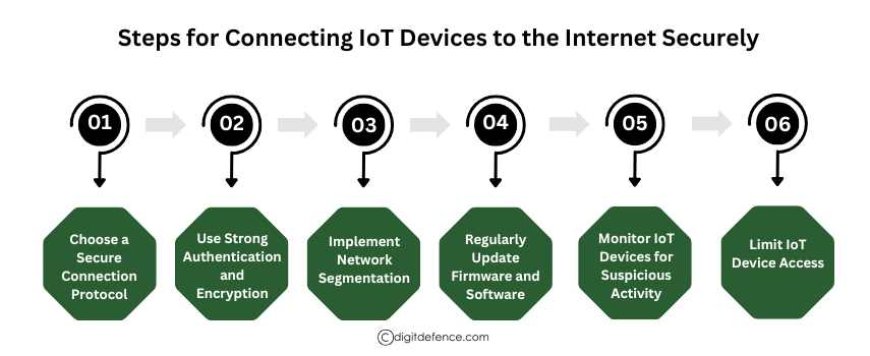
1. Choose a Secure Connection Protocol
When learning how to connect IoT devices to the internet, the first step is choosing the appropriate connection protocol. Several protocols allow IoT devices to connect to the internet, including Wi-Fi, Bluetooth, Zigbee, and cellular networks. However, not all of these protocols are equally secure, so it’s important to consider their security features before making a decision.
-
Wi-Fi: Wi-Fi is a common choice for connecting IoT devices due to its convenience and wide availability. However, it’s important to make sure the Wi-Fi network is encrypted using WPA2 or WPA3, and you should use strong passwords to prevent unauthorized access.
-
Bluetooth: While Bluetooth is suitable for short-range communication, it’s essential to enable encryption and authentication to prevent unauthorized devices from connecting.
-
Zigbee: Zigbee is another protocol often used for IoT devices, especially in smart home networks. Zigbee supports encryption and authentication, making it a secure option when properly configured.
-
Cellular Networks: Cellular connections, while secure, can be costly. However, for critical applications, cellular connectivity can offer high levels of security, particularly when using private cellular networks.
2. Use Strong Authentication and Encryption
Authentication and encryption are two of the most effective ways to secure IoT devices from hackers. When setting up how to connect IoT devices to the internet, you should always ensure that your devices require strong authentication methods. This means using multi-factor authentication (MFA) and complex passwords for each device. Encryption, both for data in transit and at rest, is another key measure to secure IoT devices. Ensure that data transmitted between devices and servers is encrypted using robust protocols like SSL/TLS. This will prevent hackers from intercepting sensitive information.
3. Implement Network Segmentation
Another step in securing IoT devices is network segmentation. Instead of connecting IoT devices directly to the main network, segment the IoT devices into a separate network. This helps to isolate the IoT devices from critical business systems, limiting the potential damage caused by a security breach. For example, a smart thermostat on the same network as financial data could provide an entry point for hackers to access more valuable information. By isolating these devices, you reduce the risk of a widespread attack.
4. Regularly Update Firmware and Software
Outdated software is a prime target for cyberattacks. When learning how to connect IoT devices to the internet, it's important to regularly update the firmware and software of all connected devices. Many IoT devices are equipped with automatic updates, but it's always a good practice to verify that the latest security patches are installed. Vulnerabilities in outdated firmware can be exploited by hackers, so staying up-to-date ensures that any security flaws are fixed.
5. Monitor IoT Devices for Suspicious Activity
Once your IoT devices are connected to the internet, constant monitoring is essential for ensuring they remain secure. Use monitoring tools that can track the behavior of each IoT device on your network. This will help identify any unusual activity or attempted breaches. If an IoT device starts transmitting excessive data or behaving erratically, it could be a sign that it’s been compromised. By catching such activity early, you can prevent significant damage from occurring.
6. Limit IoT Device Access
When configuring IoT devices, limit access to the necessary personnel and devices only. Don’t leave your devices open to anyone who doesn’t need access. For instance, remote access should be limited to authorized personnel only and administrative privileges should be tightly controlled. By controlling access, you minimize the risk of internal or external threats gaining unauthorized access to your IoT devices.
Case Studies
Case Study1:
Amazon, one of the leading players in IoT with products like the Amazon Echo, has made considerable investments in securing its IoT devices and networks. As Amazon continues to expand its smart device offerings, ensuring the security of these devices is a top priority.
Challenge:
With millions of Echo devices and other smart home products connected to the internet, Amazon faces a large-scale challenge in preventing cyberattacks targeting its IoT devices. The company needed to ensure that customers' data and devices were protected from potential hacks.
Solution:
Amazon implemented end-to-end encryption on Echo devices, ensuring that all communication between IoT devices and Amazon servers is securely encrypted. Additionally, Amazon introduced automatic software updates and continuous monitoring to identify vulnerabilities and patch them in real-time.
Case Study2:
Philips, a global leader in smart lighting, introduced the Philips Hue system, a set of IoT-powered light bulbs that can be controlled via an app or voice commands. While innovative, these devices required robust security measures to prevent potential breaches.
Challenge:
As Philips expanded its IoT offerings, the company faced the risk of cyberattacks that could compromise users’ home networks or personal data.
Solution:
Philips integrated multi-factor authentication and encryption to secure the connection between the Philips Hue system and the user’s smartphone app. Additionally, the company provided automatic software updates to fix vulnerabilities and ensure that IoT devices remained secure over time.
How to connect IoT devices to the internet is a process that requires careful planning and implementation to ensure security. As IoT continues to play a larger role in businesses and homes worldwide, securing these devices is more important than ever. By selecting the right protocols, using encryption, segmenting networks, updating software, and monitoring device behavior, you can protect your IoT devices from potential hacks and cyber threats. As IoT continues to grow, staying vigilant and proactive about security will help ensure that your devices remain safe and your business stays protected. By following IoT security best practices, you can confidently connect IoT devices to the internet while keeping hackers at bay.