Cyber Security Policy Tips for Small Businesses
Protect your small business from costly cyber threats with easy, effective cybersecurity policy tips. Start securing your future today!

Are you confident that your small business is protected against cyber threats? Wondering what steps you need to take to secure your sensitive data and avoid costly breaches?
Research indicates that 60% of small businesses will close within six months of a cyberattack, which demonstrates the need for proper cybersecurity. On top of that, cybercrime is predicted to cause damage to the global economy of more than ₹871.5 trillion by 2025. And 43% of cyberattacks are carried out against small businesses that have limited security features.

ABC Logistics Company relies on client and operational data that is sensitive and essential to their business as a regional transportation company. In the logistics industry, ABC Logistics Company understands that client trust and smooth operations are essential to their success and reputation.
There was a ransomware incident that brought the company to a standstill and caused operational uncertainty, along with a risk of exposing confidential information. The event exposed the organization's vulnerabilities with security policy and procedures, which included weak password guidelines, poor employee awareness, and a lack of a proper incident response plan.
To react, ABC Logistics overhauled its entire cybersecurity framework by creating a detailed cybersecurity policy. This included establishing effective password controls, rolling out regular training sessions for staff that increased overall awareness, and developing a substantive incident response plan that allowed the business to respond quickly to various threats when they arose. While these changes did not reverse any breaches, they did help the company avert more, amass collective trust amongst clients, and ensure adherence to governance.
What is a Cyber Security Policy?
A cybersecurity policy is an organized set of policies and rules that guide how an organization protects its information systems and data from cyberattacks and other vulnerabilities. It lays out employee responsibilities, acceptable use of tech, and response protocols to an incident. Although cybersecurity policies are important for any organization, small businesses must have an actionable policy to help reduce risk and ensure compliance with the law.
This policy is the foundation of everything we do in the security spectrum of our company and is part of a larger mission of developing a uniform practice around protecting sensitive data, a communications concern that has significant repercussions for customer trust and information protection in a digital world.
Cyber Security Policy Tips for Small Businesses
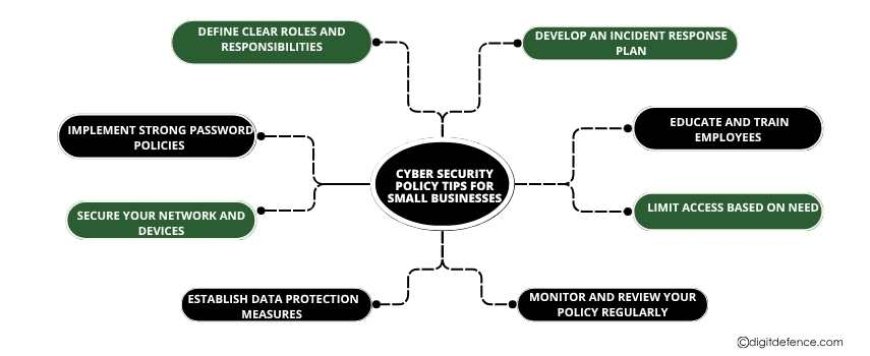
1. Define Clear Roles and Responsibilities
Assign specific roles related to cybersecurity within your business. This includes appointing a security officer or IT lead responsible for implementing and monitoring the policy. Communicate each employee’s role in protecting sensitive data.
2. Implement Strong Password Policies
Enforce the use of strong, unique passwords and consider multi-factor authentication (MFA) for accessing company systems. Password policies should include regular updates and prohibit sharing or writing down passwords.
3. Secure Your Network and Devices
Require the use of firewalls, antivirus software, and secure Wi-Fi connections. Regularly update and patch software to protect against known vulnerabilities.
4. Establish Data Protection Measures
Include guidelines for handling sensitive information, such as encrypting data, backing up regularly, and securely disposing of old data and devices.
5. Educate and Train Employees
Conduct ongoing training sessions on recognizing phishing scams, safe internet use, and incident reporting. An informed team is the first line of defense against cyber threats.
6. Develop an Incident Response Plan
Outline clear steps for detecting, reporting, and responding to cyber incidents. This plan should include contact information for IT support and authorities if needed.
7. Limit Access Based on Need
Adopt the principle of least privilege by granting employees access only to the information and systems necessary for their roles.
8. Monitor and Review Your Policy Regularly
Cyber threats change constantly. Regularly review and update your cybersecurity policy to address new risks and incorporate feedback from employees and security audits.
Small businesses can no longer afford to neglect the need for a cybersecurity policy. By putting in place a few clear and easily understood guidelines that are suited to their specific needs, you will greatly reduce their risks, protect what they need safeguarded, and give them continued operation. Protecting your business with cybersecurity is protecting your business's future.
There is no need to let a breach interrupt your operations. Protect your business from the experts today. Contact [email protected], and we'll discuss customized cybersecurity solutions for you as a small business.