How Types of Firewalls Can Boost Your Cybersecurity
Discover how the right types of firewalls can protect your business from cyber threats and boost your cybersecurity instantly. Learn more now!

Are you positive that your business is secure from cyber threats?
Or is your data at risk due to weak defenses? There’s never been a more important time to pay attention to cybersecurity. One of the best ways you can safeguard your business is to implement the right firewalls. Firewalls are important tools to protect your network from unwanted access or malicious attacks, and they help prevent data breaches.
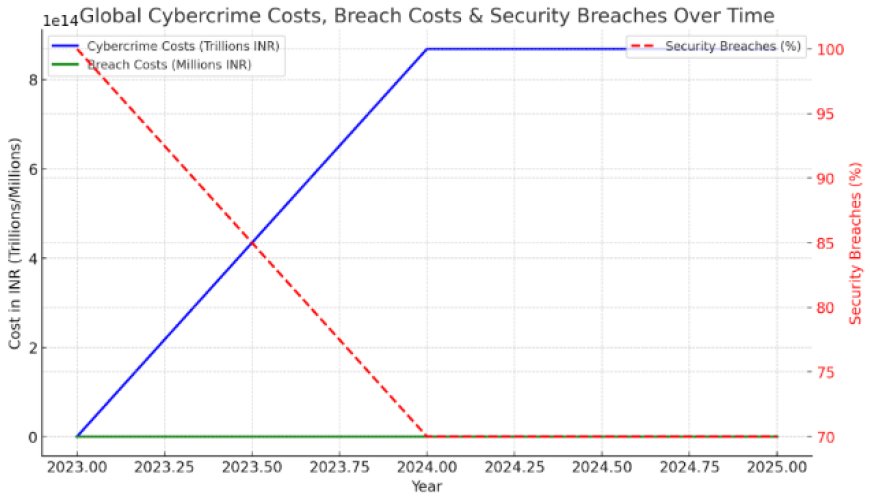
Once again, in a report published earlier this year, Cybersecurity Ventures estimated annual global cybercrime costs would reach ₹ 868.77 trillion by 2025. In addition, businesses that are breached can expect the average breach cost to be ₹319.38 million, which emphasises the need for strong cybersecurity systems. In reality, organizations with advanced firewall systems, multi-layered cybersecurity see 30% fewer security breaches as well as a significant increase in system performance.
AWS (Amazon Web Services) serves as an excellent example of how deploying the appropriate type of firewalls can enhance cybersecurity. AWS employs a combination of conventional firewalls and cloud-based security solutions to secure its cloud infrastructure. To help businesses secure their cloud infrastructure, each AWS service generally has a firewall option in the AWS Virtual Private Cloud (VPC) that can enable businesses to customize security rules for their cloud services.
For example, a large organization using AWS can set up the VPC firewalls to separate traffic between areas of its network to make sure it is properly segregating sensitive data from less-sensitive applications. This is an example of a firewall that has allowed AWS customers to take advantage of improved security of cloud applications and provided compliance with standards and regulations.
Understanding Firewalls and Their Role in Cybersecurity
A firewall is designed to protect your internal network and the outside session by analyzing incoming and outgoing communications to allow only specific information. Firewalls are essential to protect your sensitive business data, stop unauthorized user access, and eliminate unwanted traffic. Firewalls are often the first line of defense for many businesses' protection against cybercriminals.
While every firewall is intended to protect a network, firewalls come in many types of firewalls offering different levels of protection as well as security features. You need to choose the right firewall for your situation depending on the size of your business, the complexity of your network, and how much security you feel you require.
Types of Firewalls and How They Boost Cybersecurity

1. Packet-Filtering Firewalls
Packet-filtering firewalls are the most basic type of firewall. They work by examining packets of data that pass through the network and checking them against a set of predefined rules. If the data matches the criteria, it is allowed through; otherwise, it is blocked.
How It Boosts Cybersecurity:
Packet-filtering firewalls are efficient at blocking unauthorized access and basic threats. However, they lack the depth of security features provided by more advanced firewalls. For businesses with simple networks and lower security needs, packet-filtering firewalls provide a lightweight, cost-effective solution.
2. Stateful Inspection Firewalls
Unlike packet-filtering firewalls, stateful inspection firewalls keep track of the state of active connections. They analyze traffic flows and use this information to determine whether an incoming packet is part of an existing, approved connection or a potentially malicious request.
How It Boosts Cybersecurity:
Stateful inspection firewalls provide more comprehensive security by not only inspecting the packet header but also the state of the connection. This prevents attackers from bypassing the firewall by manipulating session information, significantly increasing protection for businesses with more complex needs.
3. Proxy Firewalls
Proxy firewalls, also known as application firewalls, work by acting as an intermediary between a user’s computer and the web. When a request is made, the proxy firewall intercepts the request, evaluates it, and then forwards it to the target server if it meets the security criteria.
How It Boosts Cybersecurity:
Proxy firewalls provide a higher level of security by hiding the internal network’s IP addresses and preventing direct access to your systems. This makes it harder for cyber attackers to target your network and offers an extra layer of defense, particularly for businesses handling sensitive data like customer information or intellectual property.
4. Next-Generation Firewalls (NGFW)
Next-generation firewalls are advanced firewalls that combine the features of traditional firewalls with additional capabilities, such as deep packet inspection, intrusion prevention, and application awareness. NGFWs can identify and block sophisticated attacks by inspecting traffic at a deeper level than traditional firewalls.
How It Boosts Cybersecurity:
NGFWs provide a comprehensive security solution by protecting against both known and unknown threats. They are particularly useful for businesses that require high levels of security due to complex networks, remote workforces, or high-value assets. NGFWs offer real-time monitoring and automatic updates to stay ahead of emerging threats.
5. Cloud Firewalls
Cloud firewalls, or Firewall-as-a-Service (FWaaS), are hosted in the cloud and provide scalable, on-demand protection for businesses using cloud-based applications and services. These firewalls are designed to protect cloud infrastructure and virtual environments from external and internal threats.
How It Boosts Cybersecurity:
Cloud firewalls offer flexibility, scalability, and cost-efficiency. For businesses moving to the cloud, they provide a crucial security layer, protecting data and applications stored in cloud environments. They also ensure consistent security policies across multiple locations and networks.
As the complexities of cyber threats have increased, choosing the correct forms and methods of dealing with firewalls is a challenge any company must deal with if it wants to protect its network and sensitive data. Knowing what the different types of firewalls are and how those firewalls can improve your cybersecurity will help you make better choices about your security posture, in addition to protecting your overall business.
If you've reached a point where you are ready to improve your cybersecurity, it is highly recommended that you explore consulting with a security expert to find and implement a firewall that fits your business. For expert guidance and solutions, reach out to us at [email protected].