Why Your Business Needs a Cyber Security Agency
Learn why partnering with a cyber security agency can protect your business from threats, enhance data security, and ensure regulatory compliance.

As a cybersecurity specialist, I know that cybersecurity isn’t just a technical issue; it's a fundamental part of safeguarding the future of my company. With the increasingly advanced character of cyberattacks, it's no longer enough to rely on basic security measures. Hackers constantly find new ways to infiltrate systems, steal sensitive data, or cause disruptions that can severely impact business operations. This is where a professional cybersecurity agency comes in. They bring specialized expertise, constantly monitoring threats and implementing advanced strategies to protect against breaches, data loss, and other security risks that could otherwise destroy a business.
By partnering with a cybersecurity agency, I can stay ahead of potential threats and focus on growing my business without worrying about security breaches. These experts provide more than just reactive measures; they take a proactive approach, identifying vulnerabilities before they can be exploited. With their help, I ensure that my company's digital infrastructure is robust, compliant with industry standards, and capable of withstanding the changing nature of cyber threats. In a world where a single breach can have devastating consequences, working with a trusted cybersecurity partner isn’t just an option; it’s a necessity.
What is a Cyber Security Agency (CSA)?
A cyber security agency is a dedicated governmental or organizational body responsible for protecting digital infrastructure, enforcing security protocols, and mitigating cyber threats. CSAs work at the intersection of law enforcement, technology, and intelligence to defend against cyber-attacks, data breaches, and other forms of cybercrime. They typically employ a combination of technological, legal, and organizational strategies to ensure the highest level of cybersecurity.
The Importance of Cyber Security in Preventing Hacks
1. Protecting Sensitive Data: Cybersecurity safeguards personal, financial, and business data from theft or misuse, preventing identity theft, fraud, and intellectual property loss.
2. Maintaining Trust: A cyberattack can damage an organization’s reputation, causing loss of customer trust and legal issues. Strong cybersecurity helps maintain credibility.
3. Securing National Infrastructure: Cyberattacks on critical systems like power grids and healthcare can have severe consequences. Cybersecurity ensures the safety of national infrastructure.
4. Supporting Economic Stability: Cyberattacks can disrupt businesses and damage economies. By protecting digital systems, cybersecurity helps maintain smooth economic operations and growth.
Key Cyber Security Agency Strategies for Preventing Hacks
1. Threat Intelligence and Early Detection
One of the most proactive approaches to preventing hacks is leveraging threat intelligence. Cyber Security Agencies continuously monitor global cyber threat landscapes to detect emerging vulnerabilities, malware, phishing campaigns, and new hacking techniques.
Early detection tools, such as Intrusion Detection Systems (IDS) and Security Information and Event Management (SIEM) systems, are used to monitor and analyze traffic across networks. By identifying suspicious activity before it becomes a full-fledged attack, CSAs can mitigate risks in real time.
-
Collaboration with Global Networks: Cyber Security Agencies often collaborate with international organizations, private companies, and cybersecurity vendors to share threat intelligence and leverage collective knowledge. This helps in faster identification of zero-day vulnerabilities (previously unknown flaws) and emerging attack vectors.
2. Vulnerability Management
Vulnerability management is an ongoing strategy used to identify, prioritize, and patch vulnerabilities within a system or network. CSAs conduct regular penetration testing and vulnerability assessments to spot weaknesses that could be exploited by hackers.
-
Patch Management: Regular software and firmware updates are critical to patching security holes. A CSA ensures that patches are applied promptly and that systems remain protected from known threats.
-
Red Team and Blue Team Exercises: CSAs often run "red team" and "blue team" exercises to simulate attacks and test how quickly vulnerabilities can be identified and addressed.
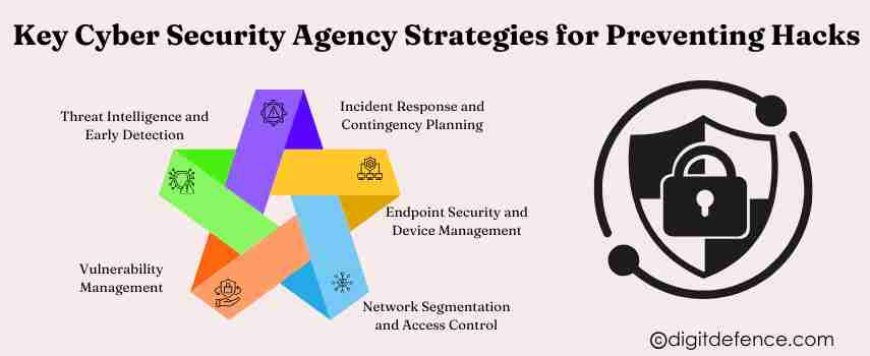
3. Network Segmentation and Access Control
One of the most effective strategies for minimizing the risk of a successful hack is to segment networks. This approach divides the network into smaller, isolated zones, ensuring that if one part of the network is compromised, the entire system isn’t at risk.
-
Zero Trust Architecture (ZTA): In a zero-trust model, users and devices are continuously verified, even if they are within the network perimeter. Every request for access to sensitive data is scrutinized, preventing unauthorized access.
-
Access Control Policies: Implementing strict access control policies is crucial. Role-based access control (RBAC) ensures that individuals only have access to the data and resources necessary for their role, minimizing the damage that could be caused by a compromised account.
4. Endpoint Security and Device Management
Endpoint security refers to securing devices that connect to a network, such as computers, mobile phones, and IoT devices. These devices can often serve as gateways for hackers to infiltrate a network. CSAs employ advanced endpoint detection and response (EDR) tools to monitor and protect devices from malware, ransomware, and other threats.
-
Mobile Device Management (MDM): As mobile devices are frequently used for both personal and business purposes, managing and securing these devices is essential. CSAs enforce policies that ensure devices are encrypted, secured with strong authentication, and regularly updated.
-
IoT Security: The increasing number of connected devices also increases the potential attack surface. CSAs ensure that IoT devices are securely configured and regularly monitored for vulnerabilities.
5. Incident Response and Contingency Planning
Despite all preventive measures, no system is entirely immune from cyber-attacks. That’s why having a well-defined incident response plan (IRP) is essential. A CSA needs to be prepared to respond quickly and effectively if a breach occurs.
-
Forensic Analysis: Following an attack, forensic teams analyze logs, traces, and system behavior to understand how the attack occurred, the extent of the damage, and how to prevent future breaches.
-
Disaster Recovery and Business Continuity: In addition to responding to the immediate threat, a CSA ensures that organizations have disaster recovery plans in place, enabling them to quickly restore services and data, reducing downtime, and minimizing operational disruptions.
Case Study 1: Uber (2016 Data Breach)
Overview:
In 2016, Uber suffered a data breach that exposed the personal data of over 57 million riders and drivers. The breach was hidden for a year and only disclosed in 2017. The hackers accessed sensitive data like names, emails, and driver’s license numbers.
Implementation:
-
Uber conducted internal audits and improved security measures after discovering the breach.
-
Affected users received credit monitoring services.
-
The company fired key executives involved in the breach cover-up.
Outcome:
-
Uber faced lawsuits and a $148 million fine.
-
The breach damaged the company’s reputation and trust with users and drivers.
Case Study 2: Sony Pictures Entertainment (2014 Hack)
Overview:
In 2014, Guardians of Peace attacked Sony, exposing confidential emails, unreleased movies, and employee data. The breach was believed to be retaliation for the movie The Interview.
Implementation:
-
Sony engaged cybersecurity experts and shut down affected systems.
-
The company strengthened its network security and improved employee authentication.
Outcome:
-
Sony faced lawsuits and lost millions in reputational damage.
-
The company paid $15 million in settlements and fines.
In an era where cyber-attacks are becoming increasingly complex and frequent, cybersecurity Security agencies are at the forefront of defending against digital threats. By adopting a comprehensive and proactive approach incorporating threat intelligence, vulnerability management, endpoint security, and robust incident response strategies, CSAs can minimize the risk of hacks and protect the digital ecosystem.