Why Endpoint Security is Important for Your Business?
Discover why endpoint security is crucial for protecting your business from cyber threats, and data breaches, and ensuring secure network access.


As a cybersecurity specialist, I've seen how important endpoint security is for businesses of all sizes. Where remote work and cloud-based systems are the norm, every device connected to your network, laptops, smartphones, tablets, and even IoT devices, acts as a potential entry point for cyber threats. These “endpoints” are a gateway for hackers, malware, and other security risks, making it essential to secure each one individually.
Endpoint security isn’t just about protecting data, it’s about safeguarding the business itself. A single compromised device can lead to data breaches, operational shutdowns, and significant financial loss, not to mention damage to your brand reputation. Think of endpoint security as a crucial layer of defense that keeps your business, employees, and customers safe.
I'll share with you why endpoint security is not just an IT concern but a core part of a secure business strategy. Whether you’re running a small startup or a large corporation, understanding endpoint security is a must in today’s threat-filled environment.
What is Endpoint Security?
Endpoint security refers to the process of securing various endpoints, or entry points of end-user devices, on a network. This approach involves protecting devices like desktops, laptops, tablets, smartphones, and Internet of Things (IoT) devices. These devices, while integral to your business, are also often the primary targets for cyber-attacks. Endpoint security ensures that each of these entry points is safeguarded against malware, unauthorized access, data breaches, and other cyber threats.
Unlike traditional network security, which focuses primarily on protecting the entire network, endpoint security zeroes in on individual devices, offering a more comprehensive and granular approach to cyber protection. It incorporates a range of solutions, including antivirus software, endpoint detection and response (EDR) tools, firewalls, and more.
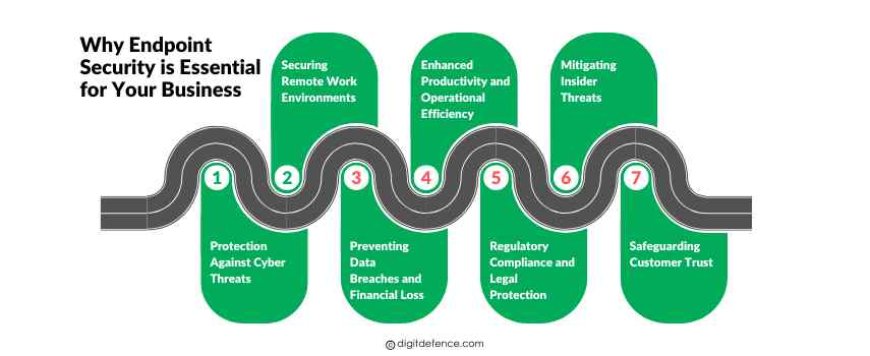
Why Endpoint Security is Essential for Your Business
1. Protection Against Cyber Threats
Endpoint security is essential for protecting businesses from a growing list of cyber threats, including malware, ransomware, phishing, and zero-day attacks. Cybercriminals are continuously innovating, making traditional defenses insufficient on their own.
Endpoint security solutions provide multi-layered defenses to detect and block malicious activity before it compromises your systems or data. Advanced systems use machine learning and AI to identify anomalies, adapting in real-time to new and evolving threats.
2. Securing Remote Work Environments
With the rise of remote and hybrid work models, employees access sensitive data from various locations using different devices. This flexibility increases security risks, as remote networks aren’t always secure, and personal devices may lack adequate protection.
Endpoint security solutions can secure connections and monitor access points regardless of the device’s location. Features like virtual private networks (VPNs), secure authentication, and encryption protect remote work environments just as thoroughly as office-based ones.
3. Preventing Data Breaches and Financial Loss
Data breaches can have devastating consequences for businesses, from financial loss to reputation damage. Endpoint security solutions provide a robust defense system that can identify unauthorized access attempts, prevent data theft, and mitigate financial risks.
4. Enhanced Productivity and Operational Efficiency
A cyber-attack can disrupt business operations, leading to costly downtime and productivity loss. Endpoint security minimizes downtime by rapidly detecting and responding to threats, ensuring business processes remain unaffected.
5. Regulatory Compliance and Legal Protection
Many industries are legally required to implement cybersecurity measures to protect sensitive data, especially in finance, healthcare, and retail. Endpoint security helps businesses comply with regulations like GDPR, HIPAA, and PCI DSS, which protect businesses in case of an audit or legal inquiry.
6. Mitigating Insider Threats
Endpoint security solutions often include access control, monitoring, and alerting features that identify unusual behavior or unauthorized access attempts. This visibility helps mitigate insider threats effectively, whether intentional or accidental.
7. Safeguarding Customer Trust
In today’s market, customers are increasingly concerned about data privacy and security. By implementing strong endpoint security measures, you demonstrate your commitment to data protection, enhancing customer trust and loyalty.
Key Components of a Comprehensive Endpoint Security Solution
A strong endpoint security solution should encompass a variety of features to protect against the full spectrum of cyber threats. Key components include:
-
Antivirus and Anti-Malware Software: These tools identify and block malicious software.
-
Endpoint Detection and Response (EDR): EDR systems offer advanced threat detection and incident response, allowing for rapid threat mitigation.
-
Encryption: Data encryption ensures that sensitive information remains secure, even if a device is compromised.
-
Application Control: Prevents unauthorized applications from being installed or run on devices, reducing the risk of malware.
-
Firewall: A firewall acts as a barrier, controlling and monitoring network traffic to block suspicious connections.
-
Data Loss Prevention (DLP): DLP systems monitor and control data movement, reducing the risk of data leakage.
-
Patch Management: Automated patch management ensures that all devices are running the latest software versions, which helps close security gaps.
-
Access Control and Multi-Factor Authentication (MFA): Strong access controls prevent unauthorized access to sensitive data.
How to Choose the Right Endpoint Security Solution for Your Business
When selecting an endpoint security solution, it’s essential to consider the unique needs and scale of your business. Here are a few key factors:
-
Scalability: Choose a solution that can grow with your business.
-
Cloud vs. On-Premises: Cloud-based solutions offer flexibility and remote management capabilities, whereas on-premises solutions may provide more control.
-
Integration with Existing Tools: Ensure the solution can integrate seamlessly with your current systems.
-
Real-Time Monitoring and Alerts: A solution with real-time threat monitoring and alerts can help your team respond to incidents quickly.
-
User-Friendly Interface: Opt for an intuitive platform that your IT team can manage effectively without extensive training.
Case Study
How Endpoint Security Protected Maersk from a Devastating Ransomware Attack
Maersk, one of the world’s largest shipping companies, operates in over 130 countries with thousands of employees and a vast global supply chain network. With such an expansive operation, the company is heavily reliant on digital infrastructure, connecting countless endpoints such as computers, servers, and IoT devices.
In 2017, Maersk became one of the many global companies affected by the NotPetya ransomware attack, a particularly devastating cyber-attack originating from a software update on a third-party application widely used in Ukraine. The malware spread through Maersk’s network, targeting endpoint devices across its offices and port facilities.
The Incident
Once the malware infiltrated Maersk’s network, it encrypted files and effectively paralyzed the company’s digital operations. NotPetya was particularly insidious because it exploited Windows vulnerabilities, allowing it to propagate rapidly without human intervention, affecting thousands of devices within hours. Maersk’s entire digital network was brought to a standstill, impacting email communications, shipping, and port operations worldwide.
The incident was so severe that Maersk’s terminals, including the largest container terminal in the Port of Los Angeles, were shut down. The ransomware not only disrupted operations but also left the company facing substantial financial losses, estimated at around $300 million.
Response and Solution
Maersk’s initial endpoint security measures were insufficient to contain the spread of NotPetya. However, their recovery efforts were extraordinary, and their response offered a critical lesson in the importance of comprehensive endpoint security combined with disaster recovery planning. Here’s how they responded:
-
Immediate Isolation and Rebuilding of Systems: Maersk’s IT team immediately took steps to isolate infected devices and began the massive task of rebuilding their IT infrastructure from scratch. They reinstalled approximately 4,000 servers, 45,000 PCs, and 2,500 applications in a matter of weeks.
-
Improved Endpoint Detection and Response (EDR) Implementation: Following the attack, Maersk implemented an advanced endpoint detection and response system that could quickly detect and isolate suspicious activities on individual devices. This EDR solution also allowed for proactive monitoring to identify anomalies before they spread.
-
Strengthening Backup and Disaster Recovery Protocols: Maersk re-evaluated its disaster recovery and backup protocols. They implemented more rigorous backup solutions to ensure critical data was safeguarded and could be quickly restored in case of another cyber-attack.
-
Global System Redundancy and Resilience Measures: After recovering from the incident, Maersk focused on building a resilient system that included network segmentation, redundancy across data centers, and improved cybersecurity hygiene across endpoints.
Outcome
Despite the substantial costs and disruption, Maersk’s robust response to the ransomware attack allowed it to fully recover within a matter of weeks. Their commitment to implementing a comprehensive endpoint security solution, coupled with improved backup and disaster recovery plans, transformed their security posture. By adopting these measures, Maersk significantly reduced its vulnerability to future cyber threats and ensured faster recovery capabilities.
The NotPetya attack underscored the importance of robust endpoint security in protecting large, distributed systems. For Maersk, the experience was a catalyst for strengthening cybersecurity across all endpoints and enhancing resilience against potential future threats.
In the of digital transformation, endpoint security has evolved from a nice-to-have feature to a critical component of a company’s cybersecurity strategy. By protecting the devices and entry points connected to your network, endpoint security helps defend against the growing number of cyber threats, ensures regulatory compliance, maintains productivity, and fosters customer trust.
Investing in robust endpoint security is no longer an option but a necessity for businesses that want to thrive in today’s competitive landscape. A proactive approach to endpoint security can protect your business from potentially devastating breaches and cyber-attacks, allowing you to focus on growth and innovation with peace of mind.