What Security Testing Means for Your Business?
Discover how security testing can protect your business from cyber threats, safeguard data, and keep your brand secure. Start testing today!

Is your business susceptible to countless forms of cyberattacks?
How can you be certain that your digital assets are secure from the persistent threats on the internet? What is security testing, and why should your business prioritize it now? As the internet continues to advance, especially due to the pandemic, businesses must carry out intensive security testing to protect sensitive data protect customer data, and help assure confidence. Security testing identifies weaknesses before hackers do, and should be an integral part of any modern organization's security strategy.
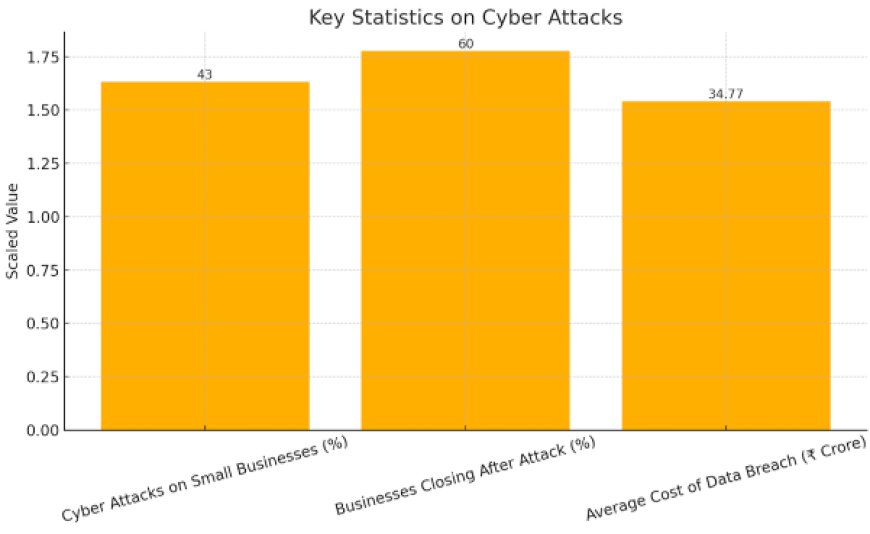
Recently released statistics show that 43% of cyber attacks are against small business, and of those businesses that experience (or have an experience of) a cyber attack, 60% will go out of business within 6 months. Additionally, the average cost of a data breach for a company can be as high as ₹34.77 crore, depending on the seriousness of the breach. The statistics outlined above underline the importance of regularly implementing a security test and utilizing an effective cybersecurity posture.
A great illustration of the role of security testing can be found in the Equifax data breach, which is one of the largest overall breaches in history. The Equifax data breach occurred in 2017 when failings with a web application allowed cybercriminals to exploit weaknesses in Equifax' digital security posture, where they acquired the personal data of 147 million people. Ultimately, it was known vulnerabilities due to Equifax not patching its own software, despite being made aware of the security update.
If Equifax had performed consistent and extensive security testing, such as vulnerability assessments and penetration testing, they would have likely been able to stop the breach and/or identify the breach sooner. The breach cost the company millions in fines and lawsuits, and more importantly, it was damaging to its reputation. The case above illustrates the value of security testing, which should be used to proactively assess possible risks and potential events before they occur.
What is Security Testing?
Security testing refers to the process of evaluating and verifying the security features of a system or application to ensure that data remains protected from threats. It involves identifying potential vulnerabilities, weaknesses, and risks in a company’s IT infrastructure, networks, software applications, and even hardware systems. The main goal of security testing is to prevent unauthorized access, data breaches, and potential disruptions caused by cyberattacks.
This testing can be done through various methods, including vulnerability scanning, penetration testing, risk assessments, and system audits. The testing process typically involves:
-
Vulnerability Assessment: Identifying and evaluating potential security weaknesses in your system.
-
Penetration Testing (Pen Testing): Simulating a cyberattack to test how well your system can resist real-world threats.
-
Risk Analysis: Assessing the potential risks posed by certain vulnerabilities to the business operations.
Why Is Security Testing Important for Your Business?
Security testing is essential for several reasons:
-
Protecting Sensitive Data
One of the most important roles of security testing is to protect sensitive data, including customer information, financial records, and intellectual property. In an era where data breaches are common, it’s vital for businesses to ensure that personal and financial data is not exposed or stolen.
-
Maintaining Trust and Reputation
Data breaches and security incidents can severely damage a company’s reputation. Customers are more likely to trust businesses that actively protect their data. Regular security testing ensures that businesses can quickly identify and fix vulnerabilities before they can be exploited by cybercriminals.
-
Regulatory Compliance
Many industries are subject to strict data protection regulations, such as GDPR in Europe or CCPA in California. Failing to comply with these regulations can lead to significant fines and legal consequences. Security testing helps businesses comply with these regulations by ensuring that their data protection practices are robust and up to date.
-
Avoiding Financial Losses
Cyberattacks can result in substantial financial losses. According to IBM, the average cost of a data breach is around ₹34.77 crore. By conducting regular security testing, businesses can identify vulnerabilities before an attack occurs, reducing the likelihood of costly breaches.
How to Implement Effective Security Testing for Your Business
-
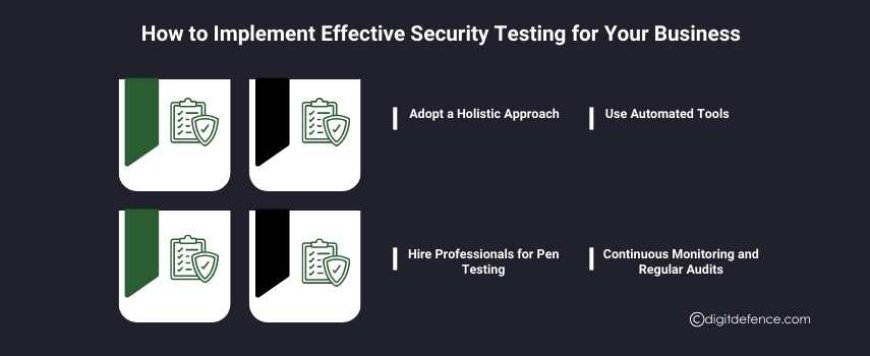
Adopt a Holistic Approach
Security testing should be comprehensive, covering all aspects of your IT infrastructure, including networks, web applications, databases, and endpoints. Regularly testing for vulnerabilities at every layer ensures robust protection.
-
Use Automated Tools
Leveraging automated tools for vulnerability scanning and risk assessments can help businesses quickly identify weaknesses without requiring constant manual intervention. These tools provide continuous monitoring to detect new threats.
-
Hire Professionals for Pen Testing
Hiring a professional cybersecurity firm to conduct penetration testing can simulate real-world attack scenarios and help identify weaknesses that automated tools might miss.
-
Continuous Monitoring and Regular Audits
Cybersecurity threats are constantly evolving, so it's crucial to continuously monitor your systems and conduct regular security audits to ensure your defenses are up to date.
In productive business practices today, you cannot ignore security testing as it is essential in securing data, upholding customer trust, maintaining compliance with regulations and not seeing a loss in revenue.
Don't wait for the next cyber-attack to think about protecting your business! Act now and contact [email protected] today to start security testing and protect your assets!