
The Untold Advantages of Cloud Computing for Business
Discover the untold advantages of cloud computing for your business: boost efficiency, cut costs, and scale effortlessly. Unlock your business’s true potential today!

Are you looking to streamline your business operations and boost productivity?
Are you ready to take your business to the next level without worrying about your IT infrastructure? Cloud computing can open up a whole world of possibilities that can help you do just that. The cloud is being adopted by businesses of all shapes and sizes because it offers unparalleled flexibility, scalability, and cost-effectiveness.
A report from Gartner indicates that 94% of enterprises are using cloud services, and 72% of enterprises state that cloud computing allows them to innovate more quickly. Studies show that companies using cloud computing can reduce overall IT costs by almost 40% on average, and cloud-enabled businesses experience 19.6% more revenue growth than businesses with no cloud adoption. Furthermore, cloud computing also produces flexibility in a business's ability to grow, holding the power to enable meaningful market flexibility without the financial burden of upgrading hardware.

Netflix, a prominent subscription-based streaming service, is an excellent illustration of how cloud computing benefits can be used for business advantage. When Netflix transitioned to cloud computing in 2008, it moved its data and operations to the Amazon Web Services (AWS) cloud. Initially, the cloud benefits allowed Netflix to scale its services to a truly global offering without the constraints of a traditional data center.
By moving to the cloud, Netflix was able to exponentially increase capacity in streaming content to millions of users across the globe. Additionally, they benefited from the flexibility of the cloud computing service, which also allowed the company to scale up or down depending on demand due to large content releases or holidays. The cloud provided the reliability Netflix needed to ensure that its streaming service would run seamlessly and consistently for users around the world.
Today, Netflix has 200 million subscribers across the globe, and its enormous success can be partially attributed to the benefits of cloud computing that allowed it to grow, innovate, and discontinue its deliverable content without interruption.
What Is Cloud Computing?
Cloud computing is the use of computing resources (servers, storage, databases, networking, many software, etc.) via the internet instead of using physical data centers and servers when running business operations. Utilizing the functionalities of cloud computing, businesses can leverage data remote from the data created in their own physical space, therefore providing flexibility and cost savings, as well as increased operational efficiency.
Rather than investing in hardware and IT infrastructure, businesses can use cloud services on a subscription or usage basis. This helps reduce upfront costs and also puts IT management into cloud service providers' hands, allowing businesses to invest in what truly matters, their core business.
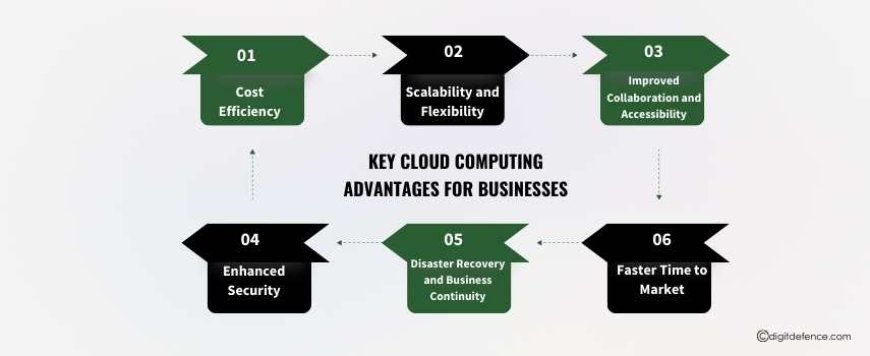
Key Cloud Computing Advantages for Businesses
-
Cost Efficiency
One of the most significant cloud computing advantages is the cost savings. Businesses no longer need to invest in expensive hardware, maintain on-site servers, or employ large IT teams for system management. Cloud computing operates on a pay-as-you-go model, meaning companies only pay for what they use. This helps businesses save money on hardware, software, and maintenance costs. With cloud solutions, companies can also benefit from reduced energy costs since they don’t need to power and cool on-site servers.
-
Scalability and Flexibility
Cloud computing allows businesses to scale their operations with ease. Whether you’re experiencing a sudden increase in demand or need to downscale during quieter periods, the cloud gives you the flexibility to adjust resources as needed. This dynamic scalability is one of the key cloud computing advantages for businesses that need to be agile and responsive to changing market conditions. Companies can quickly expand their infrastructure without the need for additional hardware or a large upfront investment.
-
Improved Collaboration and Accessibility
With cloud computing, employees can access data and applications from anywhere, using any device connected to the internet. This fosters better collaboration, as teams can work together in real-time regardless of their physical locations. Whether it’s sharing documents, communicating via integrated platforms, or accessing important data, cloud-based solutions allow businesses to enhance their workflow and productivity. The accessibility provided by cloud computing is particularly advantageous for remote teams or businesses with multiple locations.
-
Enhanced Security
Many businesses worry about the security of their data when moving to the cloud. However, leading cloud service providers offer robust security measures, including data encryption, multi-factor authentication, and 24/7 monitoring, which ensure that sensitive information remains protected. Cloud services also allow for regular data backups, reducing the risk of data loss due to system failures. Cloud computing advantages also extend to compliance, as cloud providers typically offer solutions that meet industry standards for data protection.
-
Disaster Recovery and Business Continuity
In the event of a disaster or system failure, cloud computing provides businesses with reliable disaster recovery solutions. Cloud systems are designed to ensure data is regularly backed up and stored in secure, remote locations. This means that if something goes wrong with your primary systems, you can quickly recover your data and continue operations. For businesses that rely on uptime, cloud computing advantages include built-in continuity plans that help prevent downtime, ensuring minimal disruption to operations.
-
Faster Time to Market
By using cloud-based services, businesses can significantly reduce the time it takes to develop, test, and launch new products and services. Cloud computing facilitates rapid deployment and real-time collaboration, allowing teams to work together more efficiently and deliver products to market faster. This speed is crucial in today’s competitive business environment, where companies that can move quickly often have the advantage.
The benefits of cloud computing for businesses are beyond question. Cloud computing enables businesses to save money, scale, collaborate more efficiently, and improve their security. New businesses and well-established corporations have the ability to leverage cloud computing to improve their business operations, their efficiencies, and flexibility to scale.
Are you ready to take the next step to unlock the power of cloud computing? Then partner with us now! Contact [email protected] to get started!