
Understanding the Penetration Testing Network Process
Want to protect your network from hackers? Find out how penetration testing uncovers hidden vulnerabilities and strengthens your security. Learn how now!

As a cybersecurity specialist, I’ve seen personally how critical a network breach can be for any organization. The risks are real, and they’re growing every day. That’s why penetration testingis crucial it’s one of the most effective ways to identify vulnerabilities before attackers do. Think of it as a simulated cyberattack, but instead of causing damage, it helps us uncover weaknesses and shore up defenses.
Penetration testing network process, showing you how we find security gaps, assess potential risks, and ensure that a network is protected against the latest threats. Whether you’re a business owner or an IT professional, understanding how this process works is essential for safeguarding your data and systems. Let’s dive in and explore how penetration testing can be the key to a stronger, more secure network.
What is Penetration Testing?
Penetration testing, often referred to as "ethical hacking" or "white-hat hacking," is a simulated cyber attack carried out by trained security experts to evaluate the security of an IT system or network. The goal is to discover vulnerabilities before malicious hackers can exploit them. When conducted on a network, penetration testing aims to identify weaknesses in firewalls, servers, applications, and other network components that could be targeted for unauthorized access, data breaches, or other harmful actions.
A Penetration Testing Network specifically focuses on evaluating a network’s security. This type of testing provides a comprehensive assessment of the network's infrastructure to ensure that it is secure from common attack vectors. It simulates real-world cyberattacks to understand how an adversary might exploit vulnerabilities, including unauthorized access, privilege escalation, and data exfiltration.
Why is Penetration Testing Important?
-
Identifying Vulnerabilities: Organizations may have security gaps that are overlooked during routine security audits. Penetration testing helps uncover vulnerabilities that could leave a network open to attack.
-
Mitigating Risks: By identifying and addressing vulnerabilities early, businesses can mitigate the risks of costly data breaches and cyberattacks that can damage their reputation and bottom line.
-
Compliance with Regulations: Many industries, especially those that handle sensitive data (like healthcare, finance, and government sectors), are bound by regulatory requirements for cybersecurity. Regular penetration testing of networks ensures compliance with standards such as PCI DSS, HIPAA, and GDPR.
-
Improving Response Plans: Penetration testing also provides insights into how well a network responds to an intrusion. It offers a chance to test incident response protocols and identify areas for improvement.
-
Enhancing Security Awareness: By conducting penetration testing, companies increase awareness about cybersecurity within their teams, helping them better understand and manage security risks.
The Stages of Penetration Testing Network
Penetration testing is not a one-time event; it’s a thorough process with various stages that must be followed meticulously to achieve the best results. Let’s take a closer look at the typical stages involved in a Penetration Testing Network process:
1. Planning and Scoping
The first step in the Penetration Testing Network process involves planning and scoping. During this phase, the testing team works closely with the organization to define the scope of the penetration test, which typically includes identifying:
-
The systems and networks to be tested
-
The tools and techniques to be used
-
Any specific goals or objectives for the test
-
The schedule and timeline
-
The rules of engagement (e.g., whether the testing should be conducted during business hours or after hours)
The planning phase also includes gathering essential information about the network, such as IP addresses, network topology, and assets. This step ensures that the testing is comprehensive and that the testers have all the necessary information to proceed.
2. Reconnaissance (Information Gathering)
Reconnaissance, also known as information gathering or footprinting, is the phase where the penetration tester collects as much information as possible about the target Penetration Testing Network. The goal is to understand the network’s structure, services, and open ports, which might reveal potential vulnerabilities. Reconnaissance can be classified into two types:
-
Passive Reconnaissance: In this phase, the tester gathers publicly available information about the target, such as domain names, email addresses, and IP addresses, without directly interacting with the network.
-
Active Reconnaissance: This involves directly interacting with the target system to gather more detailed information about its services, open ports, and potential weaknesses. This may include scanning tools to identify vulnerabilities and weaknesses.
Reconnaissance is crucial because it allows penetration testers to form a detailed map of the Penetration Testing Network, which is essential for crafting the attack strategy.
3. Scanning and Vulnerability Assessment
Once the reconnaissance phase is complete, the next step is to scan the network and perform vulnerability assessments. Penetration testers use a variety of tools to identify potential weaknesses in the Penetration Testing Network. These include:
-
Port Scanners: Tools like Nmap can be used to scan for open ports, which can be potential entry points for attackers.
-
Vulnerability Scanners: Tools like Nessus or OpenVAS can identify known vulnerabilities in systems and services running on the network.
-
Network Analyzers: These tools help penetration testers analyze network traffic to identify potential security issues like insecure protocols.
The scanning process allows testers to identify potential vulnerabilities in the network’s configuration, devices, and applications. After this, the testers will create a list of security flaws that may be exploitable and prioritize them based on the severity.
4. Exploitation
In the exploitation phase, penetration testers attempt to actively exploit the vulnerabilities they discovered in the previous stages. The objective is to see whether attackers can gain unauthorized access to systems, escalate privileges, or exfiltrate sensitive data.
This is the most hands-on phase of the Penetration Testing Network, where testers attempt to penetrate the system using techniques such as:
-
SQL Injection: Injecting malicious code into databases to retrieve sensitive information.
-
Cross-Site Scripting (XSS): Exploiting vulnerabilities in web applications to steal cookies or session data.
-
Password Cracking: Attempting to guess or crack weak passwords to gain access to systems.
Exploitation helps determine how serious a discovered vulnerability might be, and whether it can result in significant damage if exploited by malicious actors.
5. Post-Exploitation and Privilege Escalation
After successfully exploiting a vulnerability, penetration testers move on to post-exploitation activities. In this phase, testers aim to:
-
Escalate privileges: Gain higher-level access or administrator privileges to further compromise the network.
-
Maintain persistence: Set up backdoors or other mechanisms to maintain access to the system after the test is over.
-
Extract data: Testers may attempt to extract sensitive data, including files, credentials, or other confidential information.
The purpose of this phase is to determine how far an attacker could go once they’ve penetrated the network. Post-exploitation testing helps in understanding the potential damage a real attacker could inflict.
6. Reporting and Recommendations
Once the penetration test is completed, the final step involves compiling the findings into a detailed report. This report should outline:
-
A summary of the testing process
-
Detailed descriptions of the vulnerabilities found
-
A risk assessment for each vulnerability
-
Exploitation results (if any)
-
Recommendations for remediation, including patches or configuration changes
The report is an essential component of the Penetration Testing Network process, as it provides organizations with a clear and actionable roadmap for addressing identified vulnerabilities.
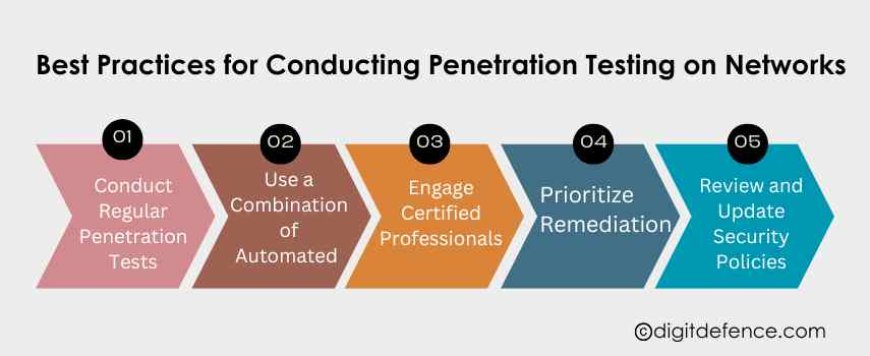
Best Practices for Conducting Penetration Testing on Networks
To maximize the effectiveness of a Penetration Testing Network, organizations should follow the best practices:
-
Conduct Regular Penetration Tests: Cyber threats evolve quickly, and so should your security measures. Regular penetration testing ensures that new vulnerabilities are identified promptly.
-
Use a Combination of Automated and Manual Testing: While automated tools are helpful, manual testing is essential for identifying complex vulnerabilities that automated tools may miss.
-
Engage Certified Professionals: Penetration testing requires a deep understanding of hacking techniques and ethical standards. Certified professionals like those holding CEH (Certified Ethical Hacker) or OSCP (Offensive Security Certified Professional) credentials should conduct the tests.
-
Prioritize Remediation: After vulnerabilities are identified, it’s crucial to prioritize the remediation efforts based on the severity of the risks and the potential impact on the business.
-
Review and Update Security Policies: The findings from penetration testing should be used to update security policies, training, and practices across the organization.
Case Study 1: Target Corporation's 2013 Data Breach
Overview:
In 2013, Target suffered a data breach affecting 70 million customers, exposing financial information due to a vulnerability in its payment system.
Implementation:
Target conducted vulnerability scans, but the vulnerability was not prioritized. A more comprehensive penetration testing approach could have detected the issue before the breach.
Outcome:
The breach caused significant financial losses and reputation damage. Target strengthened its security practices by improving penetration testing and vulnerability management moving forward.
Source: Emagined.com
Case Study 2: Specialist Bank's AWS Penetration Testing
Overview:
A specialist bank used AWS for sensitive data and hired Kroll to perform a penetration test to identify security vulnerabilities in its cloud infrastructure.
Implementation:
Kroll conducted testing on internal and external systems, web applications, and firewalls, uncovering weak configurations and outdated protocols.
Outcome:
The test revealed critical vulnerabilities, which the bank quickly fixed. This strengthened their cloud security and helped ensure compliance with data protection regulations.
Source: Kroll.com
The Penetration Testing Network process is an invaluable tool for identifying and mitigating security risks within a network’s infrastructure. By simulating real-world attacks, organizations can gain critical insights into potential vulnerabilities and take the necessary steps to secure their networks. Whether you’re a small business or a large enterprise, regular penetration testing is essential to maintaining a strong security posture and safeguarding your data against malicious threats.
The complexity and rapid evolution of cyber threats mean that traditional security measures may not always be enough. By investing in Penetration Testing Network services, businesses can proactively strengthen their cybersecurity defenses and ensure that their networks remain secure, resilient, and compliant with regulatory standards.