Top Characteristics of Cloud Computing for Modern Businesses
Explore key characteristics of cloud computing that enhance business efficiency, scalability, security, and cost-effectiveness.

As a cybersecurity specialist, I have had the privilege of working with businesses of all sizes, helping them understand and leverage the power of cloud computing to enhance their operations. Over the past decade, cloud technology has revolutionized the way businesses operate, allowing them to scale their infrastructure, improve collaboration, and protect data. Understanding the characteristics of cloud technology is crucial for any modern business seeking growth in the digital time.
Instead of owning their infrastructure or data centers, businesses rent these services from cloud providers. The cloud is both highly scalable and flexible, offering businesses the ability to access powerful computing resources without upfront investments. The characteristics of the cloud make it an invaluable tool for modern businesses, and understanding these features is key to fully exploiting its potential. Here, I will share with you the most important characteristics of cloud computing and how businesses can use them to drive growth, efficiency, and innovation.
What is Cloud Computing and How Does It Work?
Cloud computing refers to the delivery of computing services such as servers, storage, databases, networking, software, and analytics over the Internet. This service model is based on the concept of shared resources, allowing businesses to access data and applications remotely via the Internet.
In traditional IT setups, businesses would have to invest heavily in on-premise infrastructure, including physical servers, storage devices, and software, which comes with high maintenance costs. The cloud eliminates the need for such investments by providing access to remote, scalable resources on a subscription basis.
How does it work? Here’s a simple breakdown:
-
Cloud Service Providers (CSPs): Large tech companies, such as Amazon Web Services (AWS), Microsoft Azure, and Google Cloud, offer cloud computing services. These providers maintain the infrastructure, data centers, and software, ensuring availability, security, and performance.
-
Pay-as-you-go Model: Instead of buying servers or storage outright, businesses rent these resources from CSPs. The services are billed based on usage, making it cost-effective.
-
Remote Access: Employees can access cloud services from anywhere with an internet connection, allowing businesses to operate in a flexible and scalable manner.
-
Data Storage & Management: Data is stored on cloud servers, which are managed by the service provider. These data centers are equipped with state-of-the-art technology and security measures to protect your business data.
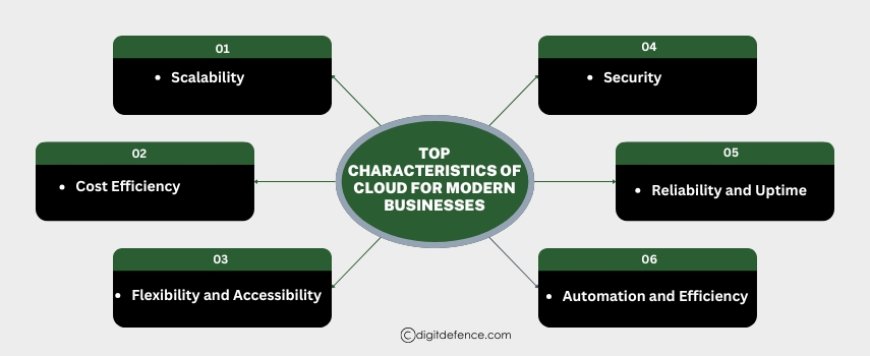
Top Characteristics of Cloud for Modern Businesses
-
Scalability
-
Scalability is one of the key characteristics of the cloud that sets it apart from traditional IT infrastructure. Cloud services are highly scalable, meaning businesses can easily scale up or down based on their needs. Whether you're experiencing a surge in traffic or need to expand your resources as your business grows, the cloud offers the flexibility to scale quickly.
-
Cost Efficiency
-
Another prominent characteristic of cloud computing is its cost efficiency. With traditional infrastructure, businesses are required to purchase and maintain servers, which can incur significant upfront costs. Additionally, they must pay for ongoing maintenance, software updates, and staffing. The cloud eliminates this burden by offering a pay-as-you-go model. Businesses only pay for the computing resources they use, making it much easier to manage costs.
-
Flexibility and Accessibility
-
The cloud allows businesses to store and access data from any location, as long as there is an internet connection. This level of flexibility is essential for businesses with remote teams or global operations. Employees can access work files, collaborate on projects, and communicate in real-time, all from the convenience of their own devices.
-
Security
-
Cloud providers invest heavily in security infrastructure to ensure that your data is protected. This includes encryption, firewalls, multi-factor authentication, and secure data centers. For businesses, this means that their data is stored in a highly secure environment, protected from cyber threats and unauthorized access.
-
Many leading cloud providers offer built-in disaster recovery options, ensuring that even in the event of a system failure, your data is safe and recoverable. Additionally, cloud service providers perform regular updates and patch management, which ensures that their systems remain protected from the latest security vulnerabilities.
-
Reliability and Uptime
-
Reliability is a critical characteristic of cloud services. With cloud computing, businesses can ensure that their services remain up and running with minimal downtime. Cloud service providers typically guarantee high uptime, with some offering service-level agreements (SLAs) that ensure availability rates of 99.99% or higher.
-
By using cloud-based systems, businesses can mitigate the risk of downtime due to infrastructure failure. If one data center faces issues, services can be automatically shifted to another data center, ensuring continuity of operations.
-
Automation and Efficiency
-
Cloud platforms often include automated features, allowing businesses to save time and improve efficiency. For example, software updates, backups, and security patches can be automated, reducing the need for manual intervention and freeing up valuable time for employees to focus on more strategic tasks.
-
Cloud platforms can also integrate with other software applications, streamlining workflows and ensuring that data is synced across all business systems. This kind of automation reduces the chances of errors and improves overall business efficiency.
Case Studies
Case Study1:
Overview: Dropbox, a leader in cloud storage and collaboration, has revolutionized the way businesses store, share, and collaborate on files in real-time. The company’s cloud-based platform offers businesses a secure and scalable solution for document management.
-
Implementation: Dropbox uses cloud computing to store files and facilitate collaboration. Employees can access shared documents from anywhere, reducing the need for email attachments and allowing for seamless teamwork.
-
Outcome: Dropbox’s use of the cloud has enabled it to scale efficiently, offering businesses easy access to a powerful file management solution. The service has helped millions of businesses save time, improve collaboration, and enhance productivity.
Case Study 2:
Overview: Netflix, one of the largest streaming services in the world, has embraced cloud computing to handle massive data storage and processing requirements. With millions of users globally, Netflix relies on the cloud to provide seamless service without interruptions.
-
Implementation: Netflix uses Amazon Web Services (AWS) to store and process the vast amount of data required to deliver high-definition streaming services. The company has automated much of its infrastructure management, utilizing cloud services to adjust capacity based on demand.
-
Outcome: By leveraging the cloud, Netflix has been able to scale its operations smoothly, providing an uninterrupted user experience for its global audience. The cloud has played a critical role in Netflix’s growth, enabling the company to handle massive amounts of data and traffic.
Cloud computing has revolutionized the way businesses operate. From scalability and cost efficiency to enhanced security and reliability, the characteristics of the cloud provide a range of benefits that traditional IT solutions cannot match. By embracing cloud services, businesses can streamline operations, reduce costs, and scale seamlessly. Whether you're looking to improve collaboration, enhance security, or increase your business’s operational efficiency, cloud computing offers the tools you need. Understanding the characteristics of the cloud will enable you to use its full potential and stay ahead in the competitive business world. Start exploring the cloud and unlock the power of these characteristics of the cloud to fuel your business growth.