The Biggest Challenges in Cloud Security Explained
Discover the hidden risks in cloud security that could be costing your business. Learn how to tackle them and protect your data now!


Are your cloud security practices as sound as you think? Or do you have hidden vulnerabilities that are exposing your business to threats? Cloud security is becoming increasingly complex as businesses move to the cloud and create new risks.
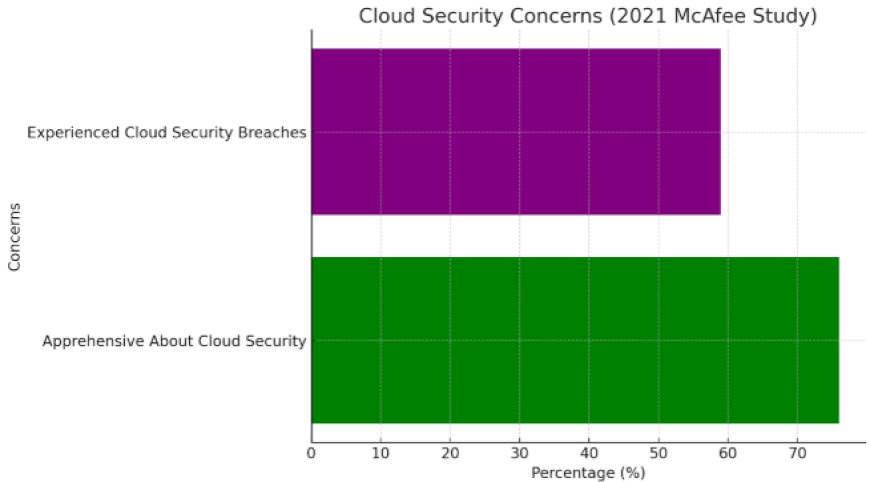
In a 2021 study by McAfee, 76% of organizations said they were apprehensive about threats to cloud security, and 59% of organizations said they had security breaches regarding the cloud.
In 2019, the Capital One data breach represented one of the largest breaches in the United States, impacting over 100 million customers. This breach compromised various sensitive personal information, including credit scores, names, addresses, and social security numbers. This incident was especially alarming because the source of the breach was due to the company’s cloud infrastructure misconfigurations, which ultimately enabled an attacker to exploit Capital One’s cloud-based servers' vulnerability and access sensitive data from millions of customers.
The incident drew attention to the risks that come with cloud adoption, and it emphasized how weaknesses in cloud security could result in more than just financial and reputational damage. Capital One's breach was a wake-up call for many organizations to take a serious look at the security-related risks of the cloud and develop an understanding of the challenges, as well as provide reasonable attention to address them.
Understanding Cloud Security Challenges
Cloud security involves the technologies and practices that protect data, applications, and services hosted in cloud environments. While the cloud offers businesses substantial benefits in terms of scalability and operational efficiency, the cloud also presents a series of security challenges to be faced and solved proactively. Here are some of the key challenges facing cloud security today:
1. Data Breaches and Loss
One of the most common and impactful challenges in cloud security is the risk of data breaches. When businesses migrate sensitive information to cloud platforms, they must ensure that the data is securely stored and protected from unauthorized access. Even though cloud service providers implement advanced security measures, breaches can still occur if proper data encryption, authentication, and access controls are not in place.
2. Insecure APIs and Interfaces
Cloud service providers offer APIs (Application Programming Interfaces) and interfaces that allow businesses to manage their cloud services. However, insecure APIs and interfaces are a significant security risk. If these interfaces are not adequately secured, they can become vulnerable entry points for cybercriminals. Weak or poorly designed APIs can lead to unauthorized access and allow attackers to exploit security flaws in the system.
3. Lack of Visibility and Control
When businesses move to the cloud, they often lose direct control over their infrastructure and data. While cloud providers are responsible for maintaining the physical infrastructure, the responsibility for securing data, applications, and user access remains with the business. Many organizations struggle with visibility into their cloud environments, making it difficult to monitor and manage access to critical resources effectively.
4. Insufficient Data Encryption
Data encryption is crucial for protecting sensitive information from unauthorized access. However, many organizations fail to properly encrypt data both in transit and at rest in the cloud. Without encryption, data can be exposed to cybercriminals who may intercept it during transmission or gain unauthorized access to it when stored in the cloud.
Encryption is a fundamental security measure that should be part of any comprehensive cloud security strategy. It ensures that even if data is intercepted or accessed by unauthorized parties, it remains unreadable and useless. Unfortunately, many businesses still fail to implement encryption properly, leaving their data vulnerable to attacks.
5. Compliance and Legal Risks
As cloud adoption increases, so do the regulatory and compliance challenges. Businesses must comply with a variety of laws and regulations, such as GDPR, HIPAA, and PCI-DSS, which govern how data should be handled, stored, and protected. Cloud providers may offer tools and solutions to help with compliance, but it’s ultimately the responsibility of the business to ensure they meet regulatory requirements.
How to Address Cloud Security Challenges
To overcome these challenges in cloud security, businesses must adopt a multi-layered approach that combines strong technical measures with comprehensive policies and procedures. Here are a few strategies to consider:
-
Implement Strong Encryption: Ensure all sensitive data is encrypted both in transit and at rest. Use strong encryption protocols and regularly review your encryption practices.
-
Monitor Cloud Environments: Invest in cloud security tools that provide visibility and monitoring for cloud-based resources. Implement logging and auditing to detect suspicious activity early.
-
Regularly Update APIs: Secure your APIs with proper authentication and access controls. Regularly test your APIs for vulnerabilities and apply patches as needed.
-
Develop an Incident Response Plan: Have a plan in place for responding to cloud security incidents, including data breaches and system failures. Ensure that all employees are trained on security best practices.
-
Stay Up-to-Date with Compliance: Regularly review and update your compliance requirements. Work closely with your cloud service provider to ensure they meet regulatory standards.
Solutions to Address Cloud Security Challenges

-
Cloud Security Configuration Management: It’s crucial for businesses to ensure that their cloud services are configured properly and securely. Implementing automated tools for configuration management can help detect misconfigurations and vulnerabilities in real-time. Regular audits and vulnerability assessments should also be performed to ensure that configurations align with best security practices.
-
Comprehensive Access Control Policies: Businesses must establish clear policies for managing access to cloud resources. This includes using the principle of least privilege, where users are given only the access necessary for their tasks. Multi-factor authentication (MFA) should be enabled for all users accessing cloud systems, and regular reviews of access privileges should be conducted to minimize the risk of unauthorized access.
-
Enhanced Monitoring and Logging: Continuous monitoring of cloud environments is essential to detect and respond to potential threats promptly. Implementing a robust security information and event management (SIEM) system can help monitor all activities in real-time. These systems can generate alerts for suspicious behavior, enabling businesses to take immediate action. Additionally, logging all actions in the cloud provides valuable insights into what happened during a breach, helping to prevent future incidents.
-
Data Encryption and Backup: Encrypting data both in transit and at rest is essential to protecting sensitive information in the cloud. Even if attackers gain access to data, encryption ensures that the information remains unreadable. Businesses should also implement regular backups of their critical data to ensure they can recover quickly if an incident occurs.
The challenges with cloud security are real, and getting worse as more and more companies rely heavily on the cloud as their operating platform. A data breach, insecure APIs, lack of visibility, and compliance issues are significant risks you face, with the potential to greatly impact your business. Although the risks associated with cloud are real, there are ways to mitigate those risks by developing strong security measures, monitoring cloud environments, and navigating compliance requirements, which will allow you to reap the rewards of operating in the cloud. Cloud security is not optional, it’s an essential avenue to create trust and protect your data and customers.
Prepared to protect your cloud infrastructure? Email us at [email protected] to find out how we can help you tackle challenges in cloud security and protect your business today.