How Smishing in Cyber Security Targets Companies?
Learn how smishing attacks target companies, trick employees, and put business data at risk. Protect your organization today.
Is your business really safe from online threats?
Many businesses feel their security is strong, yet small issues are often ignored. Hackers use these weak spots to attack, and one of the biggest tricks today is smishing. This is when criminals send fraud messages through text to fool employees into clicking bad links or giving away private details.
Smishing is dangerous because it slips past normal security systems and directly targets people. A text that looks like it’s from a bank, courier, or even your HR team could actually open the door to stolen data, money loss, and serious damage to your reputation.
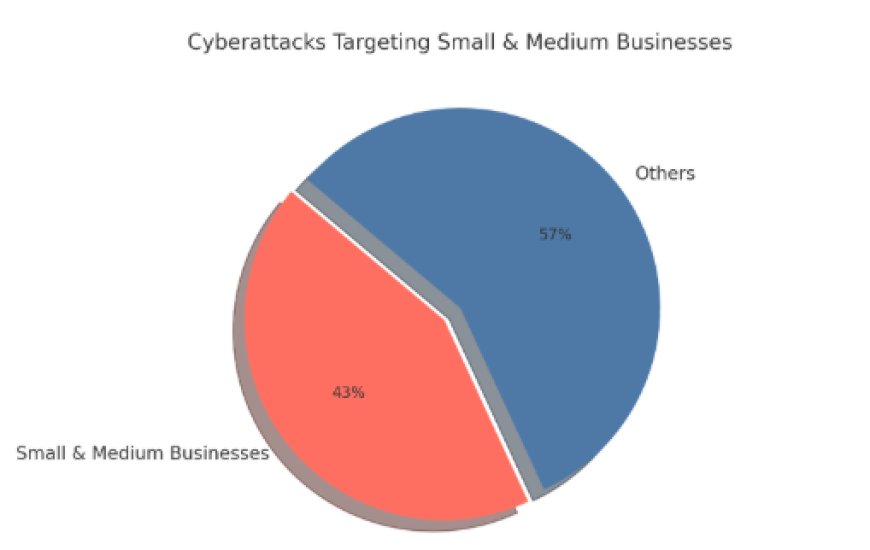
In fact, 43% of cyberattacks hit small and medium-sized businesses, proving that no company is too small to be a target. That’s why professional cybersecurity services matter. They help stop smishing attacks and build stronger protection to keep your business safe.
In 2020, the Bank of Ireland experienced a significant smishing attack targeting its customers. Fraudulent SMS messages were sent to account holders, falsely informing them that their accounts had been compromised and prompting them to click on a link to update their personal information.
The main challenge in this smishing attack was customer vulnerability. Many recipients of the fake SMS messages trusted the messages because they appeared to come from their bank. The urgency in the text prompted immediate action, and customers were unaware of how smishing works
To address these challenges, the bank focused on customer education and awareness. They implemented campaigns to teach customers how to identify suspicious messages and avoid clicking on unknown links. Multi-factor authentication (MFA) was reinforced to add an extra security layer.
What Exactly is Smishing?
If you’ve ever wondered what smishing is, it’s simple, smishing is a form of SMS phishing that uses mobile text messages and messaging platforms to trick people into sharing confidential information or downloading harmful software. Unlike email phishing, which often lands in spam folders, smishing messages go straight to an employee’s phone, making them harder to ignore.
Typical smishing messages often:
-
Impersonate legitimate brands, government agencies, or company departments.
-
Use urgency (“Act now to avoid suspension”).
-
Contain shortened links or fake callback numbers.
Clicking such links can lead to fake login portals designed to steal credentials or to malware downloads that compromise both personal and corporate systems.
Why Companies are Prime Targets for Smishing
Smishing attacks are not random, they are carefully planned. Businesses provide a bigger “payout” for cybercriminals than individuals, and here’s why:
-
Heavy Dependence on Mobile Devices
Modern workplaces run on mobility. With employees using smartphones for email, file sharing, and communication, attackers know that targeting SMS offers direct access to business workflows.
-
Larger Pools of Sensitive Data
A single company account often holds thousands of customer details, financial records, and proprietary information. Compromising one phone can open the door to entire databases.
-
Lower Awareness Levels
Many companies focus training on phishing emails but ignore smishing in cyber security. Employees may not view text messages as threats, making them easier targets.
-
Exploiting Human Trust
Texts feel more personal and immediate than emails. If a message seems to come from a manager, HR, or IT, employees are less likely to question it.
How Smishing Works – Step by Step (Simple and Clear)
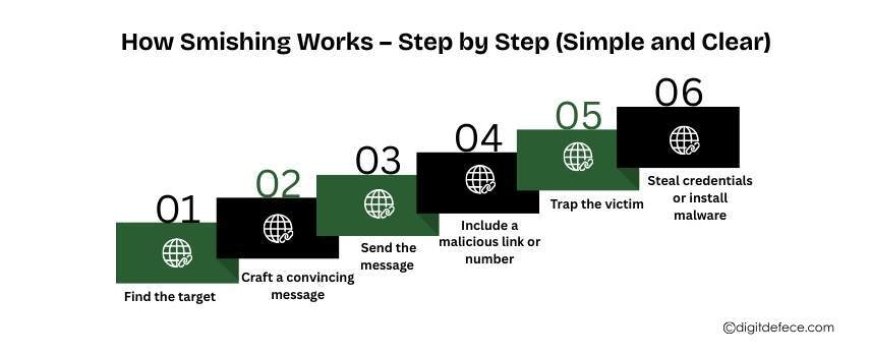
1. Find the target
Attackers pick employees whose phone numbers are public or available.
Tip: Keep employee contact info private where possible.
2. Craft a convincing message
They create a short, believable SMS posing as a bank, HR, or IT with urgent words like “Verify now.”
Tip: Be suspicious of urgent requests that arrive by text.
3. Send the message
The SMS is sent directly to the phone, ensuring visibility.
Tip: Train staff to treat unexpected SMS with caution.
4. Include a malicious link or number
The text contains a disguised link or fake callback number.
Tip: Never click links or call numbers in unexpected texts.
5. Trap the victim
Clicking the link leads to a fake site asking for login details or malware downloads.
Tip: If a site asks for sensitive info via SMS, it’s fake.
6. Steal credentials or install malware
Attackers grab usernames, OTPs, or passwords, or gain control of the device.
Tip: Multi-factor authentication helps block stolen credentials.
Smishing vs. Phishing: What’s the Difference?
At first, smishing may look like phishing, and in many ways, it is. Both are social engineering tricks designed to steal information and damage a company’s money and reputation. The main difference lies in how they are delivered and how employees respond.
|
Aspect |
Phishing (Email) |
Smishing (SMS/Text) |
|
Delivery Channel |
Email inbox |
SMS / Messaging apps |
|
Common Filters |
Spam filters, email gateways |
Limited mobile filtering |
|
Open Rate |
~20% |
~98% |
|
Perceived Trust |
Lower (email fatigue high) |
Higher (texts feel personal) |
|
Training Coverage |
Widely covered in companies |
Often overlooked |
This is why many experts now highlight the trio of phishing, vishing, and smishing as the most common methods cybercriminals use to break into businesses.
How Smishing in Cyber Security Targets Companies?
Smishing exploits employees’ trust in text messages and the growing use of mobile devices for work. Fraudulent SMS appear to come from trusted sources like banks, HR teams, or executives, and usually carry urgent instructions.
Once an employee clicks the link or responds, attackers can:
-
Steal login credentials to access corporate systems.
-
Install malware on devices that connect to networks.
-
Exploit trust internally by impersonating staff.
-
Escalate privileges to access bigger systems.
Because texts bypass most security filters and employees often use personal devices for work, smishing becomes a direct doorway into company networks.
Hackers are smarter than ever, using phishing, vishing, and smishing to exploit weak points in business systems. Methods like SMS phishing, ransomware, and data theft are common, and if ignored, they can lead to major financial losses, reputational damage, and loss of customer trust.
The solution is to work with professional cybersecurity services. With expert support, businesses can prevent attacks before they happen, protect sensitive data, and build strong defenses against fraud messages and evolving threats.
Call us at 7996969994 | Email: [email protected]