What are examples of ransomware attacks?
Explore real examples of ransomware attacks, their impact on businesses, and how to prevent future threats with strong cyber protection measures.

Imagine waking up one morning to find all your company files locked. Customer data, invoices, reports, everything gone. Then a message flashes on the screen:
“Pay 10 Bitcoin to get your data back.”
That’s ransomware, one of the biggest and most damaging types of cybercrime businesses face today. It locks your data, disrupts work, and demands payment to restore access.
A report from Cybersecurity Ventures says that by 2031, ransomware could cause losses of over ₹22 lakh crore every year. Another report from Sophos in 2024 found that about 66% of companies around the world faced at least one ransomware attack last year.
Ransomware can stop company work, damage customer trust, and cause heavy financial loss if not handled properly.
What Is Ransomware?
Ransomware is a malware that locks your files and devices, demanding payment to unlock them. It blocks access to your data until ransom is paid.
How It Works:
-
Infection: Hackers send malicious attachments, phishing emails, or exploit vulnerabilities.
-
Encryption: Once inside, ransomware locks important files or systems.
-
Ransom Demand: Victims receive a note demanding payment, usually in cryptocurrency.
-
Data Threat: Some attackers threaten to leak sensitive data publicly if payment isn’t made.
Two Main Types of Ransomware
-
Encrypting Ransomware: Locks or encrypts your files (e.g., WannaCry, LockBit).
-
Leakware / Doxware: Steals sensitive data and threatens to leak it online if you don’t pay (e.g., Maze, Akira).
Why Businesses Are Prime Targets
Ransomware attacks used to hit individuals, but now businesses are the main focus. Why? Because:
-
They have more valuable data.
-
They’re more likely to pay to recover quickly.
-
Many still lack proper cybersecurity systems.
Top Real-World Examples of Ransomware Attacks
Let’s look at some major ransomware incidents that shook the world and the lessons they taught every organization.
1. Colonial Pipeline Attack (2021)
Industry: Energy
Ransomware Group: DarkSide
Ransom Paid: ₹36.7 crore
In 2021, hackers from the DarkSide group breached the systems of Colonial Pipeline, the largest fuel pipeline in the U.S. They accessed systems through a compromised VPN account that didn’t use multi-factor authentication (MFA).
Impact:
-
The pipeline shut down for six days, disrupting fuel supply across the East Coast.
-
Panic buying caused fuel shortages in several states.
-
The company paid ₹36.7 crore in Bitcoin to restore access.
Lesson for Businesses:
Never ignore MFA. Remote access tools and weak passwords are the easiest ways for attackers to break in.
2. WannaCry Global Attack (2017)
Industry: Multiple (Global)
Ransomware Used: WannaCry
Ransom Demanded: ₹25,000–₹50,000 INR per computer
WannaCry was one of the largest ransomware outbreaks in history, affecting over 200,000 computers across 150+ countries. The malware exploited a vulnerability in outdated Windows operating systems.
Impact:
-
Hospitals in the UK’s National Health Service (NHS) had to cancel surgeries.
-
Companies like FedEx and Honda temporarily stopped operations.
-
Estimated global damage: ₹33,000 crore.
Lesson for Businesses:
Always apply software updates and security patches. Outdated systems invite attacks.
3. British Library Attack (2023)
Industry: Government / Public Sector
Ransomware Group: Rhysida
In late 2023, the British Library faced a devastating ransomware attack. The Rhysida group encrypted servers and demanded 20 Bitcoin (around ₹60 lakh).
Impact:
-
The library’s website and digital catalog were offline for months.
-
Over 600 GB of internal data was leaked.
-
The total recovery cost exceeded ₹70 crore.
Lesson for Businesses:
Even non-profit or public organizations need strong data backup and threat detection systems.
4. Ascension Health System Attack (2024)
Industry: Healthcare
Ransomware Group: Black Basta
In 2024, Ascension Health, a major U.S. healthcare provider, suffered a massive ransomware breach that crippled patient records, appointment systems, and emergency care networks.
Impact:
-
Over 5.6 million patient records were compromised.
-
Downtime costs the network over ₹10,725 crore
-
The attack disrupted multiple hospitals for weeks.
Lesson for Businesses:
Healthcare institutions must invest in data segmentation, secure backups, and employee training.
5. Akira Ransomware Campaign (2023–2024)
Industry: Multiple (SMEs and Corporations)
Ransomware Group: Akira
The Akira ransomware group began targeting organizations worldwide using a double-extortion model, encrypting and stealing data.
Impact:
-
Over 250+ companies affected globally.
-
Estimated ransom payments exceeded ₹330 crore.
-
The group even created a dark website to auction stolen data.
Lesson for Businesses:
Small and medium-sized businesses are no longer safe. Every organization should have an incident response plan.
6. AIIMS Delhi Ransomware Attack (India, 2022)
Industry: Healthcare
Ransomware Group: Unknown
India’s top hospital, AIIMS (All India Institute of Medical Sciences), faced a severe ransomware attack in November 2022. Hackers encrypted crucial patient data and demanded an undisclosed ransom.
Impact:
-
Patient care systems were offline for over two weeks.
-
Data of 3–4 crore patients was reportedly compromised.
-
The hospital had to restore systems manually with the help of NIC and DRDO experts.
Lesson for Businesses:
Indian organizations must upgrade cybersecurity infrastructure and conduct regular penetration testing to avoid similar attacks.
7. Kaseya Supply Chain Attack (2021)
Industry: IT Services
Ransomware Group: REvil
REvil, a notorious ransomware gang, exploited a vulnerability in Kaseya’s VSA software, which many managed service providers used.
Impact:
-
Over 1,500 businesses were indirectly affected worldwide.
-
Attackers demanded ₹580 crore in Bitcoin for a decryption key.
-
Businesses from Sweden to New Zealand faced downtime.
Lesson for Businesses:
Third-party risk management is critical. If your vendor’s systems aren’t secure, neither are yours.
8. Garmin Attack (2020)
Industry: Technology / Fitness
Ransomware Group: Evil Corp (WastedLocker)
Garmin, known for its GPS and wearable devices, suffered a massive ransomware attack that brought down its services for days.
Impact:
-
Cloud services and user syncing were offline for five days.
-
Hackers reportedly demanded ₹83 crore.
-
Production in Asian factories was disrupted.
Lesson for Businesses:
Every connected system, even IoT, is a potential entry point. Companies must secure every layer of their digital ecosystem.
What These Attacks Teach Businesses
|
Lesson |
Description |
|
Prioritize Cyber Hygiene |
Keep all software updated and remove unused applications. |
|
Backup Frequently |
Store encrypted backups offline and test restoration regularly. |
|
Use Multi-Factor Authentication (MFA) |
Protects accounts even if passwords are stolen. |
|
Train Employees |
Human error is responsible for most breaches. Awareness is key. |
|
Monitor 24/7 |
Invest in threat intelligence and endpoint detection tools. |
|
Have a Recovery Plan |
A quick response reduces downtime and loss. |
Business Impact of Ransomware
Ransomware doesn’t just steal data. It cripples entire businesses. Here’s how:
1. Financial Damage
-
Direct ransom payments.
-
Cost of downtime, system repair, and recovery.
-
Legal fees and regulatory fines.
2. Reputational Damage
Once data is leaked, customer trust declines quickly. 67% of consumers say they would stop doing business with a company that mishandled their data.
3. Operational Disruption
Systems go offline, production stops, and service delays lead to revenue loss.
4. Compliance Issues
Failure to protect data can result in penalties under GDPR, HIPAA, or India’s new Digital Personal Data Protection Act (DPDP).
How to Protect Your Business from Ransomware
1. Use Next-Gen Cyber Threat Intelligence (CTI)
CTI helps track ransomware groups, identify early indicators of attack, and block threats before they reach you.
2. Segment Your Networks
Separate critical systems so that even if one part is breached, the rest remains safe.
3. Implement Zero Trust Security
Never trust, always verify. Every login, device, or network access must be authenticated and monitored.
4. Regular Employee Training
Phishing remains the most common entry point. Employees should know how to identify suspicious links and attachments.
5. Backup and Recovery Strategy
Maintain 3-2-1 backup rule:
-
3 copies of your data
-
2 on different media
-
1 stored offline
6. Partner with Cybersecurity Experts
Companies like DigitDefence, Seqrite, or CloudSEK offer specialized ransomware prevention and incident response services.
The Role of AI in Preventing Ransomware
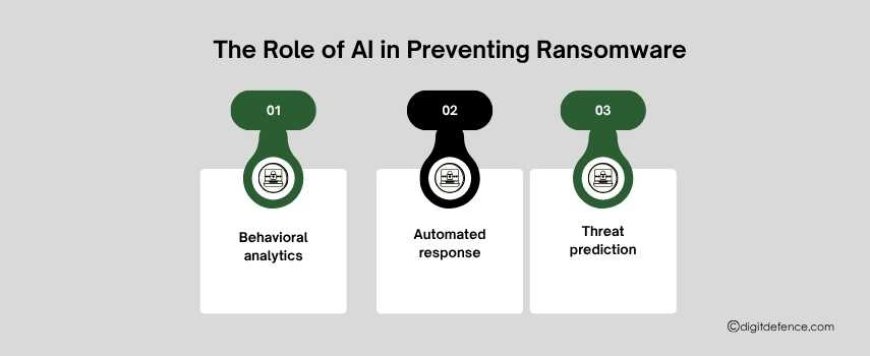
AI-driven tools can detect unusual network behavior and stop attacks before they spread.
-
Behavioral analytics: Identifies abnormal user actions.
-
Automated response: Isolates infected systems instantly.
-
Threat prediction: Flags suspicious IPs and domains in real time.
Using AI with human expertise offers the strongest defense against modern ransomware threats.
Ransomware attacks are increasing every year, and no business is completely safe. These attacks can stop work, steal data, and cause huge financial loss. Many big companies and even small businesses have faced this problem.
The best way to stay safe is to learn from past attacks, use strong security tools, and train your team to spot suspicious emails or links. Always keep backups, update your systems, and check security settings often.