How to Protect Sensitive Business Data & Digital Privacy
Protect sensitive business data and digital privacy with encryption, strong passwords, employee training, and compliance with data protection laws.

Do you know if your business data is fully safe?
Are your customer details, financial records, and company secrets protected from hackers or leaks? Keeping business data secure and ensuring digital privacy is not optional , it is essential for the growth and trust of your business.
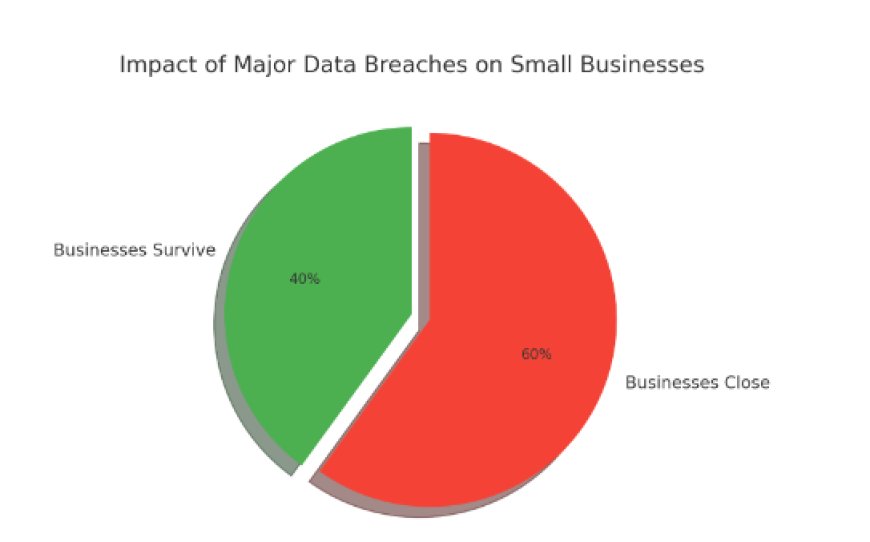
In fact, research shows that 60% of small businesses close within six months after a major data breach, showing how important it is to protect sensitive information.
In 2024, AT&T faced major data breaches exposing sensitive customer information, including Social Security numbers and call/text records. These incidents raised serious concerns about the company’s data security.
The breaches put millions at risk of identity theft, caused legal and financial consequences, and damaged AT&T’s reputation, highlighting gaps in cybersecurity practices.
AT&T responded by offering a ₹1,469 crore. settlement, providing credit monitoring to affected customers, and strengthening security protocols and oversight of third-party systems.
What is Business Data and Digital Privacy?
Business data refers to all the information a company collects, uses, and stores in the course of its operations. This may include customer details, employee records, financial transactions, contracts, business strategies, informational privacy, and other critical files. It serves as the foundation for decision-making and ensures smooth business operations.
Digital privacy is the practice of protecting this information from unauthorized access or misuse. It ensures that data stored on computers, servers, or cloud systems is protected and only accessible to authorized individuals. In simple terms, business data represents the information, while digital privacy is the framework that keeps this information secure.
Why Businesses Must Protect Their Data
Every business, regardless of size, depends on its data. This includes customer information, financial records, employee details, and critical business insights. If this data is compromised, the organization risks losing customer trust, facing legal consequences, and incurring significant financial losses.
Data protection goes beyond preventing cyber attacks, it ensures business continuity, safeguards the company’s reputation, and supports sustainable growth.
Key Reasons to Protect Data:
-
Customer Trust – People stay loyal when they know their information is safe.
-
Financial Safety – Prevents losses from fraud, fines, or ransom demands.
-
Business Reputation – A secure company looks more professional and reliable.
-
Legal Compliance – Many laws require businesses to keep data safe.
-
Business Continuity – Strong security avoids downtime and keeps work running smoothly
Key Threats to Digital Privacy
Understanding the main threats is essential for protecting sensitive business information. Common risks include:
-
Phishing Attacks – Fraudulent emails or messages designed to trick employees into revealing passwords or confidential information.
-
Ransomware – Malicious software that encrypts data and demands payment to restore access.
-
Insider Threats – Employees or contractors who intentionally or unintentionally misuse or expose sensitive data.
-
Weak Passwords – Easily guessable credentials that provide attackers with quick access.
-
Unsecured Networks – Public Wi-Fi or poorly protected internal networks that make data vulnerable to interception.
By identifying these threats, businesses can implement targeted measures to safeguard their data and maintain digital privacy.
Difference Between Data Privacy and Data Security
|
Aspect |
Data Privacy |
Data Security |
|
Definition |
Controls who can access and use data |
Protects data from unauthorized access or breaches |
|
Focus |
Usage and sharing of information |
Technical protection of data |
|
Goal |
Ensure data is handled according to policies and laws |
Prevent data loss, theft, or cyberattacks |
|
Measures |
Privacy policies, consent, access rights |
Encryption, firewalls, strong passwords, and multi-factor authentication |
|
Importance |
Builds trust and ensures compliance |
Protects sensitive information and reduces business risk |
How to Protect Sensitive Business Data & Digital Privacy
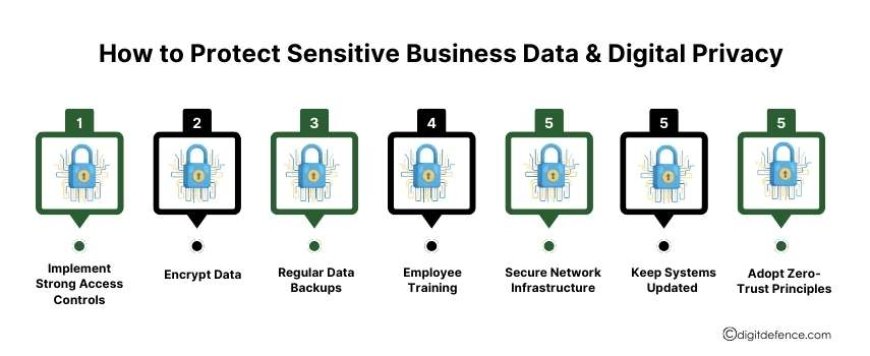
Protecting sensitive business data and maintaining digital privacy is essential for the security and growth of any organization. Companies must take a proactive approach to safeguard their information from unauthorized access, cyberattacks, and accidental leaks.
Key strategies include:
-
Implement Strong Access Controls – Limit access to sensitive data only to employees who need it for their roles. Use multi-factor authentication (MFA) to add an extra layer of security.
-
Encrypt Data – Protect data both in storage and during transmission using strong encryption methods. Even if data is intercepted, encryption ensures it remains unreadable.
-
Regular Data Backups – Maintain secure and frequent backups of critical data. Store backups in a separate location or secure cloud environment to ensure recovery in case of cyber incidents.
-
Employee Training – Educate staff about cybersecurity best practices, including identifying phishing emails, using secure passwords, and avoiding unsafe downloads.
-
Secure Network Infrastructure – Use firewalls, VPNs, and secure Wi-Fi networks. Segment networks to prevent unauthorized access and monitor for unusual activity.
-
Keep Systems Updated – Regularly apply software updates and security patches to close vulnerabilities that hackers could exploit.
-
Adopt Zero-Trust Principles – Assume that no one inside or outside the organization can be fully trusted. Continuous monitoring and verification of access help prevent unauthorized data use.
Do’s and Don’ts of Data Protection and Digital Privacy
Protecting business data and maintaining digital privacy requires following best practices while avoiding common mistakes. Here are key guidelines:
Do’s
-
Use Strong, Unique Passwords – Create complex passwords for all accounts and update them regularly.
-
Implement Multi-Factor Authentication (MFA) – Add an extra layer of security beyond passwords.
-
Encrypt Sensitive Data – Protect files both in storage and during transmission.
-
Regularly Back Up Data – Maintain secure backups and test them frequently.
-
Train Employees – Educate staff on cybersecurity awareness and safe practices.
-
Keep Systems Updated – Apply software updates and security patches promptly.
Don’ts
-
Do Not Reuse Passwords – Avoid using the same password across multiple accounts.
-
Do Not Share Credentials – Never share login information with unauthorized personnel.
-
Do Not Ignore Security Alerts – Investigate warnings and suspicious activity immediately.
-
Do Not Store Data in Plain Text – Avoid keeping sensitive information unprotected.
-
Do Not Skip Employee Training – Neglecting staff awareness increases security risks.
By following these do’s and don’ts, businesses can strengthen data security, reduce risks, and maintain digital privacy effectively.
Partnering with cyber security experts or a trusted IT security provider can help you put data protection measures into action and protect your business effectively.
Strong data security and digital privacy practices protect sensitive information, reduce the risk of breaches, and ensure business continuity. With the right tools, policies, and employee training in place, businesses can focus on growth while keeping customer and company data safe.