How DNS Security Can Block Malware Attacks
Learn how DNS security blocks malware, prevents hidden attacks, and protects business networks and sensitive data from cyber threats effectively.

Is Your Network Safe from Hidden DNS Threats?
Most businesses focus on firewalls and antivirus software to stay safe from cyberattacks. But hackers often find ways around these tools by targeting DNS, the system that connects website names to IP addresses.
DNS security helps protect this critical part of your network. It can block dangerous websites, stop malware from communicating with hacker servers, and prevent hidden attacks from spreading. By securing DNS, businesses can stop threats before they reach computers or sensitive data, keeping networks safe and employees productive.
JPMorgan Chase is one of the largest banks in the world, handling millions of financial transactions and sensitive customer data every day. Protecting its network from cyberattacks is critical.
Hackers tried to steal sensitive information by using hidden DNS channels to communicate with malware inside the network. Traditional security tools like firewalls and antivirus software could not detect this activity.
The bank implemented DNS security with continuous monitoring, filtering of suspicious domains, and advanced endpoint protection. Employees were also trained to recognize suspicious websites and phishing attempts.
What Is DNS Security?
The Domain Name System (DNS) is often called the "phonebook of the internet." It ensures users can access websites using easy-to-remember domain names instead of long IP addresses.
But cybercriminals exploit DNS by:
-
Redirecting traffic to malicious sites (DNS hijacking)
-
Injecting malware through DNS tunneling
-
Phishing scams using fake DNS records
-
Command-and-control (C2) attacks, where malware communicates with hacker servers through DNS
DNS security uses protective measures such as filtering, monitoring, encryption, and threat intelligence to stop these attacks before they reach users or business systems.
Common Ways Hackers Exploit DNS Weaknesses
Hackers exploit DNS (Internet DNS) because it is one of the most trusted yet least monitored parts of a network. Some of the most common techniques include:
1. DNS Hijacking
Attackers manipulate DNS settings so users are unknowingly redirected to malicious websites. This allows them to capture login credentials or install malware by disguising fake websites as legitimate ones.
2. DNS Cache Poisoning
Also called DNS spoofing, this technique inserts false information into a DNS resolver’s cache. As a result, when users try to visit a trusted domain, they are taken to a malicious IP address controlled by attackers.
3. DNS Tunneling
Cybercriminals use DNS queries to secretly send data in and out of a network. This method is often used for data theft or to maintain hidden communication channels with malware inside a system.
4. DNS Amplification Attacks
In this distributed denial-of-service (DDoS) attack, hackers exploit open DNS resolvers to flood a target with large volumes of traffic. This overwhelms systems and causes downtime for critical business services.
5. Pharming Attacks
Unlike phishing, which tricks users into clicking fake links, pharming manipulates DNS to automatically redirect users to fraudulent websites, even if they type the correct domain name.
6. Typosquatting and Lookalike Domains
Attackers register domain names that look very similar to trusted brands (for example, “go0gle.com” instead of “google.com”). These domains are then used for phishing, malware downloads, or scams.
How DNS Security Blocks Malware Attacks
DNS security works as a protective layer between users and the internet. Since most malware relies on DNS (DNS Android) to connect with external servers, stopping threats at this stage prevents attacks before they cause damage. Here’s how DNS security helps
-
Blocking Malicious Domains
DNS security tools use threat intelligence to identify domains linked to malware, phishing, or ransomware. When a device tries to reach one of these domains, the connection is blocked instantly, cutting off the attack before it begins.
-
Stopping Phishing Websites
Many phishing scams trick users into entering details on fake websites. DNS security prevents these fake domains from loading, ensuring employees never reach harmful login pages.
-
Detecting Hidden Malware Communication
Some malware communicates with hacker-controlled servers through DNS queries. DNS security can spot unusual traffic patterns and block these connections, isolating the infection before it spreads.
-
Preventing Data Theft via DNS Tunneling
Cybercriminals sometimes hide stolen data in DNS traffic. DNS security solutions analyze requests for suspicious patterns and shut down tunneling attempts, protecting sensitive information.
-
Protecting Remote and On-Site Workers
Because DNS security operates at the network and cloud level, it protects employees whether they’re in the office or working remotely. Every DNS request is filtered, making it much harder for malware to sneak through.
Benefits of DNS Security for Businesses
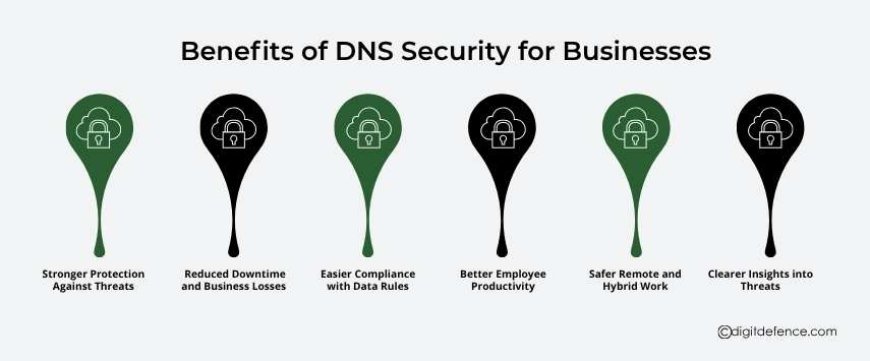
Adding DNS security isn’t just about blocking malware , it’s about making your business stronger, safer, and more reliable. Since DNS is often the first stop for cybercriminals, protecting it comes with big advantages:
1. Stronger Protection Against Threats
DNS security blocks dangerous websites and suspicious connections before they can harm your systems. This lowers the risk of ransomware, phishing, or spyware affecting your business.
2. Reduced Downtime and Business Losses
Cyber attacks can shut down websites, apps, and operations. With DNS security stopping attacks early, your business can avoid costly downtime and keep running smoothly.
3. Easier Compliance with Data Rules
If your business handles sensitive data, you need to follow laws like GDPR or HIPAA. DNS security helps by blocking data leaks and keeping private information safe.
4. Better Employee Productivity
When risky websites are blocked, employees stay focused on work instead of being distracted , or worse, clicking on harmful links that lead to IT issues.
5. Safer Remote and Hybrid Work
Today’s teams work from anywhere, not just the office. DNS security protects every employee, whether they’re in the office, at home, or on the go.
6. Clearer Insights into Threats
DNS security tools provide reports on which threats were blocked and where they came from. This gives IT teams valuable information to strengthen security even more.
Future of DNS Security
Cyberattacks are getting more advanced every year, and DNS security will be one of the key ways to stay safe. In the future, businesses can expect DNS security to become smarter, faster, and more reliable.
-
AI and Machine Learning
DNS security will use artificial intelligence (AI) to quickly spot strange activity. This will help block new kinds of threats that humans may not catch in time.
-
Cloud-Based Protection
With more people working from home or on the go, cloud DNS security will protect employees everywhere, not just in the office.
-
Zero Trust Security
In the future, DNS security will work with the “Zero Trust” model, meaning nothing will be trusted automatically. Every request will be checked before access is given.
-
Global Threat Sharing
DNS tools will share information about new, dangerous websites across the world in real time. This will make blocking attacks faster and more accurate.
-
Support for More Devices
As more smart devices and 5G networks come online, DNS security will expand to protect all these connections, keeping businesses safe from new risks.
Can DNS Security Protect Your Business from Hidden Threats?
Yes. Using DNS security tools like monitoring and filtering helps businesses spot and stop hidden attacks before they do harm. Teaching employees about online risks and checking networks regularly makes it easier to catch suspicious activity early.
Investing in good DNS security and working with cybersecurity experts keeps sensitive data safe, helps follow rules, and protects your company’s reputation. With DNS security in place, businesses can stay safe, avoid big problems, and focus on growing with confidence.