
The Role of Network Traffic in Cybersecurity Strategy
Is your network traffic secure? Learn how monitoring network traffic is key to detecting threats, preventing breaches, and strengthening your cybersecurity strategy.

Is your company aware of the dangerous threats hiding in your network traffic?
How well do you monitor and protect that data as it flows around your systems?
In today’s digital era, analyzing and managing traffic to your networks and then monitoring that traffic is a critical aspect of any company's cybersecurity framework. It provides you with information on the status of your network, helping you approve or reject possible threats, and ultimately allows you to secure your data and systems from cyberattacks.
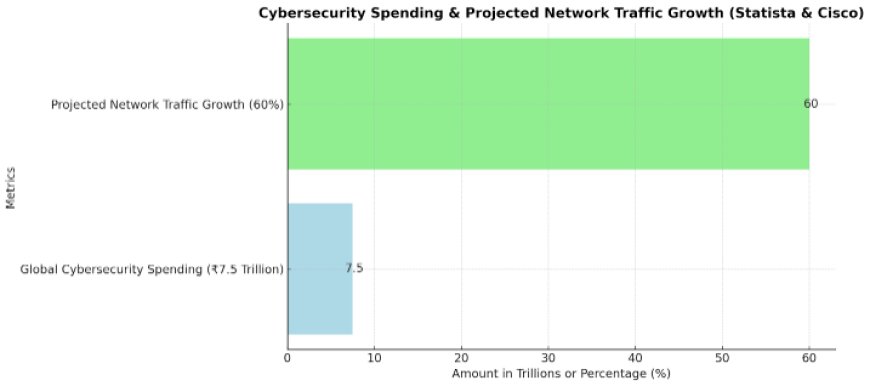
Statista predicts that global cybersecurity spending will exceed ₹7.5 trillion in 2023, demonstrating the rising value of securing digital-based assets. Cisco, the network hardware giant anticipates network traffic to rise by 60% in 2024, demonstrating a strong need to manage and monitor that traffic.
In 2011, Sony's PlayStation Network (PSN) was the target of one of the largest data breaches in history, impacting the personal and financial information of over 77 million users. In this instance, the breach was due to the attacker's purposeful breakdown of the PSN via a targeted cyberattack that exploited weaknesses in Sony's network. The attacker, or attackers, exploited these weaknesses and ultimately gained access to the PSN containing users' sensitive data, credit card information, passwords, and personal information of millions of gamers around the globe.
Sony's inability to monitor network traffic thoroughly during the attack resulted in the breach going unnoticed for several days. It wasn't until the outage due to maintenance that they were aware of the attack. This incident identified the need for continuous network traffic monitoring to provide the capability of detecting anomalous traffic in real-time, and providing the involvement for companies to react to the active breach before it caused damage.
Subsequently, Sony implemented rapid changes to rebuild its security architecture. They simplified their network traffic monitoring technology and adopted real-time traffic analysis to watch out for any abnormal behaviours that may signal unauthorized access. Sony also adopted multi-factor authentication and improved encryption for user data, and took a new approach to security, limiting access to sensitive data and increasing scrutiny of vendor access.
What Is Network Traffic and Why Does It Matter?
The data and information moving over a network is referred to as network traffic. Network traffic can be local (intranets) or somewhere broader (the internet) and consists of everything from emails and file transfer requests to web requests and streaming data. Network traffic can also be described as volume of data (amount or size of Transmission) and speed (the time it took to transmit).
It is important to monitor and analyze network traffic for early indications of any cyberattacks like Distributed Denial of Service (DDoS) attacks, malware infections or unauthorized data access. As cybersecurity agencies monitor network traffic, they can spot irregular data flows, respond to security threats, and take actions to protect systems.
The Role of Network Traffic in Cybersecurity

1. Detecting Unusual Behavior
One of the most significant roles of network traffic in cybersecurity is its ability to reveal unusual or suspicious activity. By continuously monitoring data flows, security teams can detect anomalies that could indicate a potential security breach. For example, if there is an unexpected spike in traffic from a particular IP address or a sudden increase in outbound traffic, it could be a sign of a malware infection or a data exfiltration attempt.
2. Preventing Distributed Denial of Service (DDoS) Attacks
Network traffic monitoring is crucial for detecting and mitigating DDoS attacks, which are designed to overwhelm a network with massive amounts of traffic, rendering it unavailable to legitimate users. In many cases, DDoS attacks are used as smokescreens for more serious breaches, such as hacking or data theft.
By analyzing network traffic, businesses can identify early signs of DDoS attacks, such as an abnormal increase in traffic from a specific source. With the right tools and strategies, cybersecurity teams can block malicious IPs, divert traffic, or deploy traffic filtering solutions to ensure that the network remains operational. Real-time traffic analysis and DDoS protection systems can help businesses avoid downtime and maintain service availability during an attack.
3. Detecting Malware and Intrusions
Malware often communicates with external servers to receive instructions, exfiltrate data, or download additional malicious files. By monitoring network traffic, businesses can identify this malicious communication and take immediate action. Network traffic analysis tools can identify indicators of compromise (IOCs), such as unusual communication with an unfamiliar server or an increase in encrypted traffic that doesn’t match typical patterns.
4. Data Loss Prevention (DLP)
Another important function of network traffic analysis is preventing data leakage or unauthorized data transfers. Businesses often handle sensitive customer information, intellectual property, and confidential documents, making it essential to ensure that such data does not leak outside the organization.
By monitoring outgoing network traffic, businesses can detect unauthorized file transfers or emails containing sensitive data. Network traffic analysis tools can flag suspicious activities, such as large-scale file uploads to an external server, and block these actions before sensitive information is exposed.
5. Compliance and Risk Management
For businesses in regulated industries, such as finance, healthcare, or e-commerce, monitoring network traffic is critical for ensuring compliance with data protection regulations. Laws like GDPR, HIPAA, and PCI-DSS require companies to protect sensitive customer data and take appropriate steps to secure their network traffic.
Regular monitoring of network traffic helps ensure that no unauthorized access occurs and that data is transferred securely. By logging all network activity, businesses can demonstrate compliance during audits and identify areas of improvement in their cybersecurity posture.
Network traffic is a pivotal component of any organization’s cybersecurity strategy. Constantly analyzing and monitoring these data flows means that organizations can spot threats early, stop attacks from taking place, and protect their sensitive data.To improve your overall cybersecurity, it's important to implement strong network traffic monitoring solutions. Identifying threats and proactively protecting network traffic will help protect your business from costly data breaches and cyberattacks.
Got questions about securing your network traffic? Give us a shout at [email protected], and we'll provide you expert guidance and solutions customized for your business cybersecurity needs.