
How Intrusion Detection Systems in Cybersecurity Protect You
Shield your business from cyber threats using an Intrusion Detection System. Discover, alert, and respond to attacks in real time to protect your network.

Are you sure your network is not impervious to any cybersecurity threats?
Would your business be able to stay operational if an intruder were able to work its way into your systems? There are more cyber threats than ever before in our digitized global economy, from hacking attempts to malware attacks and even ransomware issues. As cybercriminals are becoming more advanced, a proper security system is necessary. One of the best ways to protect yourself and your business from threats is by utilizing an Intrusion Detection System in Cybersecurity (IDS).
Research indicates that 91% of enterprises undergo a cyber event of some type every year, while the average cost of a data breach is approximately ₹319.42 crore. A great way to counteract this risk is with an Intrusion Detection System in CyberSecurity to proactively detect and respond to possible breaches before major harm to systems can take place.

Another way that an Intrusion Detection System in cybersecurity can be used to protect organizations is illustrated by Bank ABC, a financial institution that handles sensitive financial information about its customers. The bank has been increasingly concerned about cyber threats, including various attempts to breach its online banking system to gain access to customers' personal and financial information.
In turn, Bank ABC rolled out a strong IDS solution that enabled constant monitoring of its network and systems. The IDS quickly knew that one of their employees had been subjected to a phishing attack. The employee unknowingly clicked on a malicious link. The IDS flagged the phishing event immediately and informed the bank's cybersecurity team. That way, the team was able to quickly isolate the affected network and neutralize the threat before it became a breach.
Due to this proactive detection, Bank ABC was able to avert a massive data breach that could have released sensitive financial data. The system also detected multiple attempts to exploit known vulnerabilities in the network. By blocking these attempts in real time, the bank avoided losing funds, damage to its reputation, and possible legal repercussions.
What is an Intrusion Detection System in Cybersecurity?
An Intrusion Detection System (IDS) in Cybersecurity is a security tool that reviews the input and output of network traffic and activities, as well as monitors for evidence of suspicious behavior or unauthorized access. Network administrators will be using IDS to analyze input traffic and detect anomalies, in this case, varying traffic patterns, attempts to log in without authorization, or excessive data being exported from the network. When the IDS detects an anomalous event, the IDS will notify or alert the system administrators, who can then take appropriate steps to prevent an attack from occurring or mitigate damage from occurring.
IDS is an important part of a company's overall cyber defense strategy, allowing assessment of threats to be accomplished in real-time and enabling fast responses. Depending on the type of IDS used, they may also log the incidents and help the cybersecurity team and subsequent investigators understand the threat before it was engaged.
How Does an IDS Protect Your Business?
An Intrusion Detection System in Cybersecurity can protect your business in several critical ways:
1. Early Detection of Threats
The primary benefit of an IDS is its ability to detect potential threats early. By continuously monitoring network traffic, the system can identify malicious activity as soon as it starts. This early detection allows your business to respond quickly, often before the attacker has a chance to exploit any vulnerabilities. Whether it's a hacking attempt, a virus, or a ransomware attack, an IDS gives you a head start in preventing or minimizing damage.
2. Reduced Response Time
When an IDS detects suspicious behavior, it immediately alerts your security team, allowing them to take action quickly. The faster you can identify and respond to a threat, the less likely it is to cause widespread damage. In many cases, an IDS can help prevent a minor security breach from turning into a full-scale attack.
3. Enhanced Network Monitoring
An IDS constantly monitors your network and systems, keeping track of all incoming and outgoing traffic. This constant vigilance ensures that even subtle or stealthy attacks are detected. It helps identify vulnerabilities and areas where the network may be at risk, allowing your IT team to implement the necessary protections before an attack occurs.
4. Compliance and Regulatory Requirements
For many businesses, maintaining compliance with industry regulations is crucial. An IDS can help ensure that your company meets security standards, particularly those related to data protection and privacy. Many industries, such as finance, healthcare, and retail, are required to follow strict cybersecurity regulations, and an IDS can help ensure that you comply with these requirements.
5. Real-Time Threat Analysis
One of the key advantages of an Intrusion Detection System in Cybersecurity is its ability to provide real-time threat analysis. IDS not only detects potential threats but also offers insights into the nature of the attack. This can help your security team understand the method and scope of the breach, aiding in faster decision-making and improving your overall security posture.
Why Your Business Needs an Intrusion Detection System
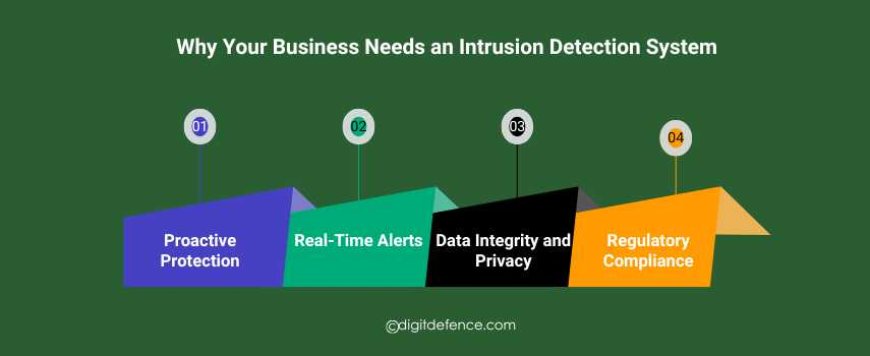
As the frequency and sophistication of cyberattacks continue to increase, businesses must prioritize proactive cybersecurity measures. An Intrusion Detection System in Cybersecurity offers several key benefits:
-
Proactive Protection: It helps detect threats before they can cause significant damage.
-
Real-Time Alerts: It reduces response time by alerting your security team immediately.
-
Data Integrity and Privacy: It helps maintain the integrity of sensitive data by preventing unauthorized access.
-
Regulatory Compliance: It ensures compliance with industry-specific security standards.
In an increasingly digital world, it is becoming more and more important to institute solid cybersecurity measures. Intrusion Detection Systems can be an important part of cybersecurity to prevent your business from falling victim to cybercriminals. If you implement an IDS the business will be able to protect networks, proprietary data, and customers, and remain resilient and secure to the evolving cybercriminal activities.If you are interested in improving your cybersecurity measures, it's time to consider developing an Intrusion Detection System in Cybersecurity.
Reach out to us today via email at [email protected], and we can discuss how our cybersecurity solutions will help protect your business. Don't wait until it is too late - get ahead of an intrusion and protect your digital assets!